


Technical and Procedural Assessment of the 2026 West Bengal Assembly Election
Statistical “fingerprints” and turnout velocity reveal clandestine ballot entries that defy human behavior and the physical constraints of polling hardware. In a high-stakes election, the speed of data entry can provide conclusive evidence of fraud.
By Rakesh Raman
New Delhi | May 9, 2026
1. Strategic Context of the Electoral Integrity Challenge
The 2026 West Bengal Assembly election represents a critical inflection point for Indian democratic stability. Within the framework of a modern republic, electoral integrity serves as the primary pillar of political legitimacy; when this pillar is compromised, the foundational trust between the electorate and the state dissolves. Empirical observations from the 2026 cycle indicate a profound crisis, where allegations of a “looted mandate” threaten to transform a constitutional exercise into a trigger for systemic instability. This outcry is not isolated to the state; it follows a trajectory of national dissent, most notably exemplified by the “Vote Chor Gaddi Chhod” rally led by Rahul Gandhi in December 2025, which characterized the ruling administration as a “vote thief.”
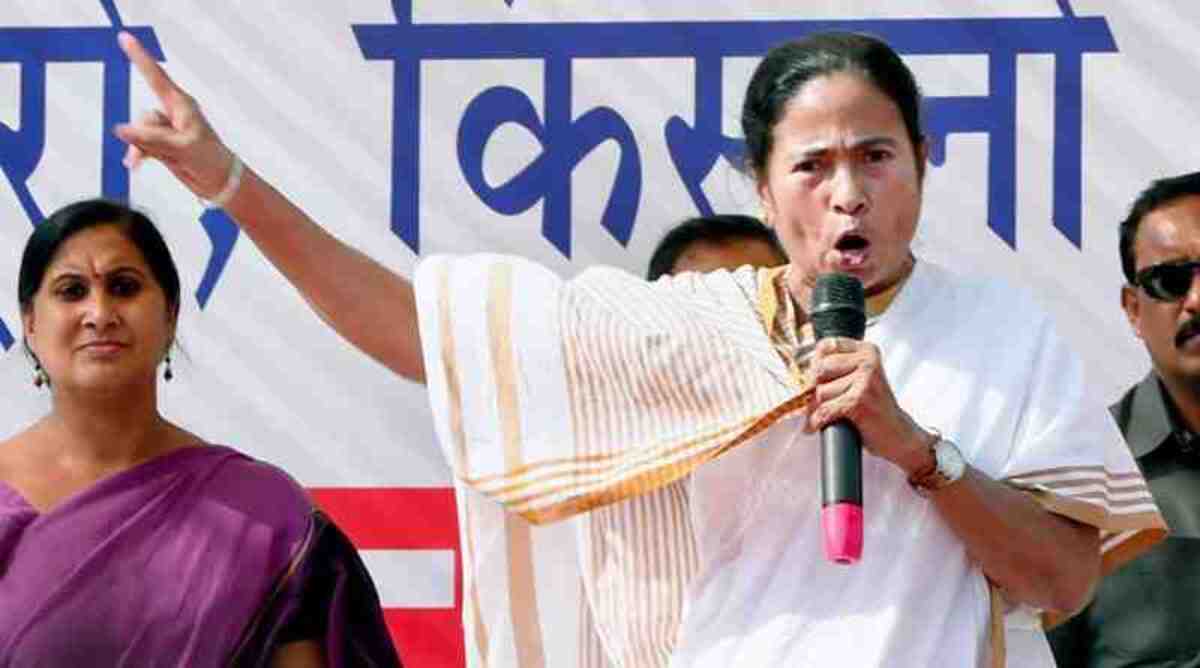
Chief Minister Mamata Banerjee has leveled severe accusations of “direct interference” by the central government, asserting that the Trinamool Congress (TMC) did not lose the election, but rather had at least 100 seats “stolen” through a coordinated conspiracy involving the Election Commission of India (ECI). She explicitly linked this outcome to a broader pattern, stating, “This is how they stole elections from Maharashtra, Haryana, Bihar and now Bengal.” These claims, while politically charged, suggest a sophisticated breakdown of oversight. This assessment deconstructs these political assertions into technical and procedural vectors of investigation, ranging from hardware discrepancies to statistically impossible turnout data.
2. Technical Evaluation of EVM Integrity and Hardware Discrepancies
Hardware security is the bedrock of electronic voting systems. In a high-integrity environment, the physical and logic-based security of the Electronic Voting Machine (EVM) must remain inviolate throughout the secure chain of custody. Discrepancies in hardware identifiers or unexplained power consumption patterns serve as critical indicators of systemic compromise, suggesting either unauthorized machine swapping or the introduction of pre-programmed units into the counting hall.
Data provided by TMC General Secretary Abhishek Banerjee highlights significant technical anomalies. Foremost is the reported mismatch between the serial numbers of EVMs on counting tables and those officially recorded in Form 17C during the polling phase. Furthermore, the “battery charge anomaly” presents a staggering technical paradox: machines utilized for 12 continuous hours of polling were found to retain 92–95% of their battery charge during the counting process. Abhishek Banerjee claims this occurred in 90% of the machines used. Given standard discharge rates, such high energy retention suggests these units were either never active during the polling window or were swapped with fresh, un-polled devices prior to the tally.
Primary Technical Allegations: Hardware and Logic
| Alleged Discrepancy | Observed Data Point | Structural Risk |
| Unauthorized Swapping | EVM serial numbers on tables did not match Form 17C records (e.g., 10 machines in Kalyani). | Replacement of polled units with pre-programmed devices containing fraudulent data. |
| Power Logic Anomaly | 90% of machines used for 12 hours retained 92–95% battery charge. | Indicates machines were likely not active during the actual 12-hour polling window. |
| Regional Hardware Breach | Documented mismatches in specific hubs including Kalyani and Memari. | Localized failure of the secure chain of custody and physical security protocols. |
| Surveillance Blackout | CCTV cameras disabled/off during critical intervals (12:00 PM – 6:00 PM). | Elimination of the primary visual audit trail for hardware handling and counting. |
These technical discrepancies shift the focus from the machines themselves to the procedural environment of the counting halls, where oversight mechanisms were reportedly dismantled.
3. Procedural Irregularities and the Oversight Environment
The strategic role of counting agents and neutral observers is to maintain a transparent chain of custody. By providing a multi-party verification process, these agents prevent unilateral manipulation. When this environment is compromised through force or administrative slowing, the result is no longer a verifiable count but a manufactured outcome.
Detailed allegations suggest a deliberate “manufactured atmosphere” of a BJP lead. Reports indicate the forcible removal of TMC counting agents from approximately 100 centers after 2:00 PM. This tactical removal coincided with a deliberate slowdown in the counting process; in certain constituencies, as many as 20 to 24 rounds remained pending while media narratives—supported by selective data releases—declared a BJP victory.
Mamata Banerjee’s personal testimony provides a stark account of this procedural breakdown. She reported being assaulted and “pushed out” of a counting station by Central forces, while CCTV surveillance was conspicuously disabled. These lapses are not merely behavioral; they are structural failures that effectively neutralize post-election audits and prevent the verification of the final result.
4. Quantitative Analysis of Turnout Anomalies and “Impossible” Voting Speeds
Statistical “fingerprints” and turnout velocity reveal clandestine ballot entries that defy human behavior and the physical constraints of polling hardware. In a high-stakes election, the speed of data entry can provide conclusive evidence of fraud.
The Mechanical Constraint vs. Fraudulent Peak
The integrity of the EVM system is bound by a physical mechanical reset time of 14 seconds between each vote. According to technical findings, the average post-midnight voting rate was recorded at a plausible one vote every 20 seconds. However, investigative data from specific booths revealed a “fraudulent peak” of one vote every 6 seconds. This 6-second interval is a physical impossibility for the EVM hardware, confirming that votes were logged through means other than legitimate manual interaction by voters.
The Andhra Pradesh 2024 Blueprint
The 2026 anomalies follow a model identified in the April 2, 2026 India Today report. Analyzing the 2024 Andhra Pradesh elections, economist Parakala Prabhakar deconstructed a “blueprint” of delayed aggregation shifts, where turnout data underwent massive, late-stage revisions:
- Initial Reported Turnout (5:00 PM): 68.04%
- Midnight Revision: 76.50%
- Final Figure (4 Days Post-Polling): 81.79%
Such delayed shifts are a hallmark of manipulation, providing a window to “fudge” electoral rolls to match pre-determined outcomes after the actual polling has concluded.
The “Late-Night Voting Window” (8:00 PM to 2:00 AM)
Data synthesized from this blueprint reveals staggering anomalies that suggest a clandestine entry of ballots during hours when polling activity should be non-existent:
- Approximately 17 lakh votes (4.16% of the total) recorded between 11:45 PM and 2:00 AM.
- A total of 52 lakh votes cast across 3,500 booths during the late-night window (8:00 PM to 2:00 AM).
These figures defy conventional voter behavior and point directly toward the systemic insertion of fraudulent data into the tally.
5. The “Smokescreen” Framework and Regional Patterns of “Vote Theft”
The strategic use of national security rhetoric serves as a “smokescreen” to mask the technical manipulation of the vote. According to the Smokescreen 2026 research report, the government utilizes frequent rhetoric regarding terrorism and false blame on Pakistan as a deliberate maneuver to divert public attention from the “fudging” of electoral rolls and EVM manipulation.
This strategy involves selective targeting. The BJP is accused of focusing its manipulation efforts on high-stakes regions like West Bengal, Maharashtra, Haryana, and Bihar, while allowing opposition wins in “insignificant” regions like Tamil Nadu or Kerala to maintain a facade of competition. This mirrors the “North Korean Model” of democratic projection. Recently, the North Korean regime recorded a tiny 0.07% “no” vote—the first since 1957—specifically to manufacture an image of a “realistic” democracy for global observers while maintaining an absolute grip on power. In the Indian context, manufacturing small margins of dissent or allowing minor losses in low-priority states mitigates international pressure while ensuring the “theft” of the broader mandate.
6. Impact on Democratic Classification and Institutional Erosion
The geopolitical consequences of these findings are severe. When the world’s most populous nation is reclassified by international monitors, it signals a significant shift in the global democratic order.
The V-Dem 2026 Democracy Report, titled “Unraveling the Democratic Era?”, has officially classified India as an “electoral autocracy.” India is now grouped with China, Indonesia, and Pakistan as one of the four most populous autocracies. The report cites the “slow but systematic dismantling” of institutions, specifically the complicity of the Election Commission of India (ECI), which Mamata Banerjee has accused of playing “nasty games” as a biased participant rather than a neutral arbiter.
Finally, a “Shadow of Power” has induced a state of “hibernation” among opposition leaders. While Mamata Banerjee initially promised to fight like a “tiger cub,” the subsequent silence of leaders like her and Rahul Gandhi is increasingly viewed as a response to the threat of state retaliation. Historical evidence cited by analysts suggests that vociferous opponents of the current regime have faced imprisonment or died in “mysterious circumstances,” including plane crashes, road accidents, and murders presented as natural deaths.
In summary, the 2026 West Bengal election provides a comprehensive case study in institutional erosion. The convergence of hardware mismatches, the dismantling of procedural oversight, and statistically impossible voting speeds suggests that the current electoral framework no longer guarantees a free and fair democratic process. The resulting classification of India as an electoral autocracy reflects a reality where the “looted mandate” has replaced the popular will.
By Rakesh Raman, who is a national award-winning journalist and social activist. He is the founder of the humanitarian organization RMN Foundation which is working in diverse areas to help the disadvantaged and distressed people in the society.
💛 Support Independent Journalism
If you find RMN News useful, please consider supporting us.