


The Unrest: From Digital Omerta to Sovereign AI
The Collapse of the Managed Narrative: Inside the August 2026 Shift from Digital Omerta to Sovereign AI
Raman Media Network The Unrest Desk
New Delhi | August 1, 2026
The Hook: Beyond the Managed Narrative
For nearly 75 years, the structures of global and national governance have operated under a veneer of stability that masks a much darker reality of systemic looting. Today, this “illusion of growth” is maintained by a heavily managed public relations machinery—a multi-billion dollar industry dedicated to ensuring that the gap between polished state-driven narratives and the grim ground reality remains invisible to the casual observer.
However, as revealed in the first August 2026 issue of The Unrest, this machinery is beginning to stutter. The disconnect is no longer just a crack; it is a canyon. From the halls of justice in the U.S. to the streets of India, the “managed narrative” is colliding with a digital age that both facilitates repression and provides the tools for its exposure. We are witnessing a moment where the theater of politics is being laid bare, and the stakes—for the economy, for technology, and for civic freedom—have never been higher.
This column distills the most impactful revelations from the latest reports on global upheavals. We explore how the breaking of cultural silences, the rise of sovereign technology, and the raw data of leadership criminality are converging to demand a total reset of the political system.
The Cultural Breach: When ‘Digital Omerta’ Fails
In high-stakes political regimes, the “digital omerta”—an unspoken code of silence among cultural elites—is the glue that holds the status quo together. When the “narrative drivers,” those celebrities whose influence sustains the regime’s cultural hegemony, begin to defect, the machinery of state control faces a crisis. The decision by actor Salman Khan to publicly endorse student protesters challenging “educational rot” represents such a stunning breach.
This is not merely a celebrity endorsement; it is a failure in dictatorial coordination. By siding with anonymous students facing police brutality and a deadly paper-leak crisis, Khan has punctured the carefully curated aura of invincibility surrounding the current administration.
Standing with anonymous students struggling with police brutality on the streets and a deadly paper leak crisis, Salman Khan has broken the spell of a decade-long cultural control. When the system’s biggest ‘narrative driver’ rebels, it is clear evidence of a failure in dictatorial coordination.
The $1.5 Billion AI Watershed
The intersection of technology and law has reached a definitive turning point. The landmark $1.5 billion settlement between Anthropic and author class-action plaintiffs is a watershed moment for AI governance. It signals that the era of “move fast and break things” regarding intellectual property is facing its first massive financial reckoning. As noted by the European Audiovisual Observatory, the legal friction between rapid AI training and copyright law is no longer a peripheral concern but a central conflict.
However, the real strategic shift lies in the emergence of “Sovereign AI.” While legal settlements like Anthropic’s create a regulatory “checkbox” for Western corporations, Sovereign AI offers a competitive differentiator. By controlling their own AI infrastructure, organizations can bypass the legal and ethical “friction” inherent in third-party platforms. In this new landscape, technology is not just a tool for efficiency; it is a means of achieving strategic autonomy from the very legal structures currently attempting to rein it in.
Protest as Theater: The Gap Between Reels and Revolution
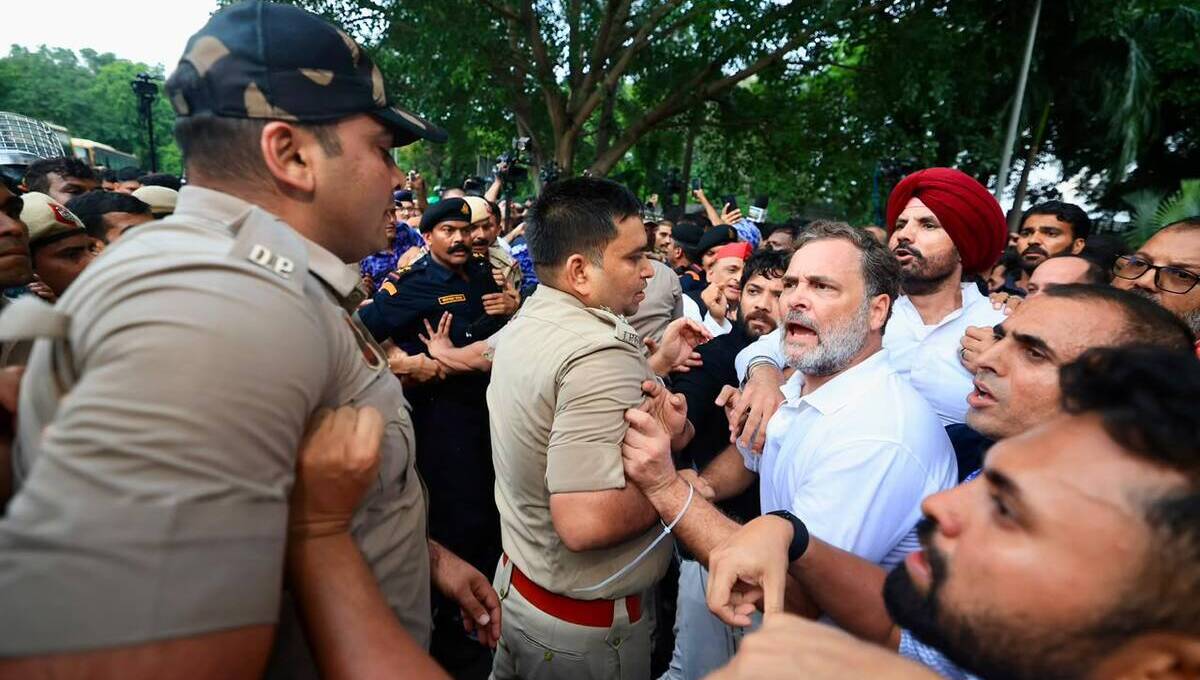
While cultural figures may be breaking their silence, the formal political opposition is facing a different critique: that their resistance is more performative than substantive. The report offers a biting analysis of recent agitations, characterizing them as “all bark, no bite.”
Rahul Gandhi’s recent protests, while effective at garnering social media metrics, are criticized for lacking the grit required for a genuine challenge to the regime. Similarly, Sonam Wangchuk’s hunger strike ended not with the resignation of officials, but with a “medical exit facilitated by the Modi government.” This suggests that even the most seemingly radical acts of protest are being absorbed and managed by the state, transformed into “reels” rather than catalysts for revolution.
Rahul Gandhi’s protest was a cynical exercise in political theater that prioritized social media metrics over a genuine challenge to the regime. His brand of opposition is built on temporary “reels” rather than the grit for revolution.
The “Repressed” Reality of Civic Freedom
As the battle for narrative control intensifies in the digital sphere, the reality of civic freedom on the ground continues to darken. The CIVICUS Monitor Watchlist has officially added India to its “Watchlist,” downgrading the nation’s status to “Repressed.”
This is the second-lowest rating a nation can receive, a designation shared by some of the world’s most restrictive regimes. This rating reflects a rapid deterioration in the space allowed for civil society, independent journalism, and peaceful assembly. As civic freedoms are “repressed” physically, the regime’s reliance on digital intimidation and narrative management becomes its primary defensive posture.
The Statistics of Leadership: Criminality at the Top
The “illusion of growth” is most effectively dispelled by looking at the raw data of those in power. While the state’s public relations machinery projects an image of clean governance, an analysis of 31 Chief Ministers reveals a staggering prevalence of criminality:
- 45% of Chief Ministers currently face criminal charges.
- 35% are involved in “serious offenses” such as bribery and attempt to murder.
This systemic rot is mirrored on the global stage. The report highlights the U.S. Department of Justice’s suspect decision to abandon a $250 million bribery and securities fraud case against Gautam Adani. When $250 million cases of alleged fraud are simply “abandoned” at the highest levels of international law, it reinforces the conclusion that the system is not broken—it is functioning exactly as intended for those who control it.
The Global Copyright “Intimidation” Campaign
Beyond the halls of high government, a new form of digital risk is targeting the modern creator. The Germany-based company Copytrack has been identified as leading a “global intimidation campaign.” Under the guise of enforcing copyright for stock image agencies, the company allegedly targets small businesses and individuals with aggressive legal threats. This represents a new frontier of digital harassment, where the complexity of copyright law is weaponized to stifle independent media and small-scale digital entrepreneurship.
Conclusion: A New Political Literacy
The evidence presented—from the criminal records of state leaders to the DOJ’s abandonment of the Adani case—points toward a singular conclusion: the current global structures have been engaged in a process of looting for approximately 75 years. Simple reform is no longer a viable path.
There is an urgent need for a completely new political system. However, this change cannot begin without a shift in the mindset of the citizenry. The report issues a specific warning to the youth—the young men and women of the next generation—against becoming “fans or blind followers” (andhbhakts) of political leaders.
To be a “follower” in this climate is to be a willing participant in your own dispossession. As we navigate this era of “repressed” freedoms and “sovereign” technologies, we must ask ourselves: can systemic reform ever be achieved through the very leadership that benefits from the rot, or is the only path forward a total reset of the system itself?
💛 Support Independent Journalism
If you find RMN News useful, please consider supporting us.