


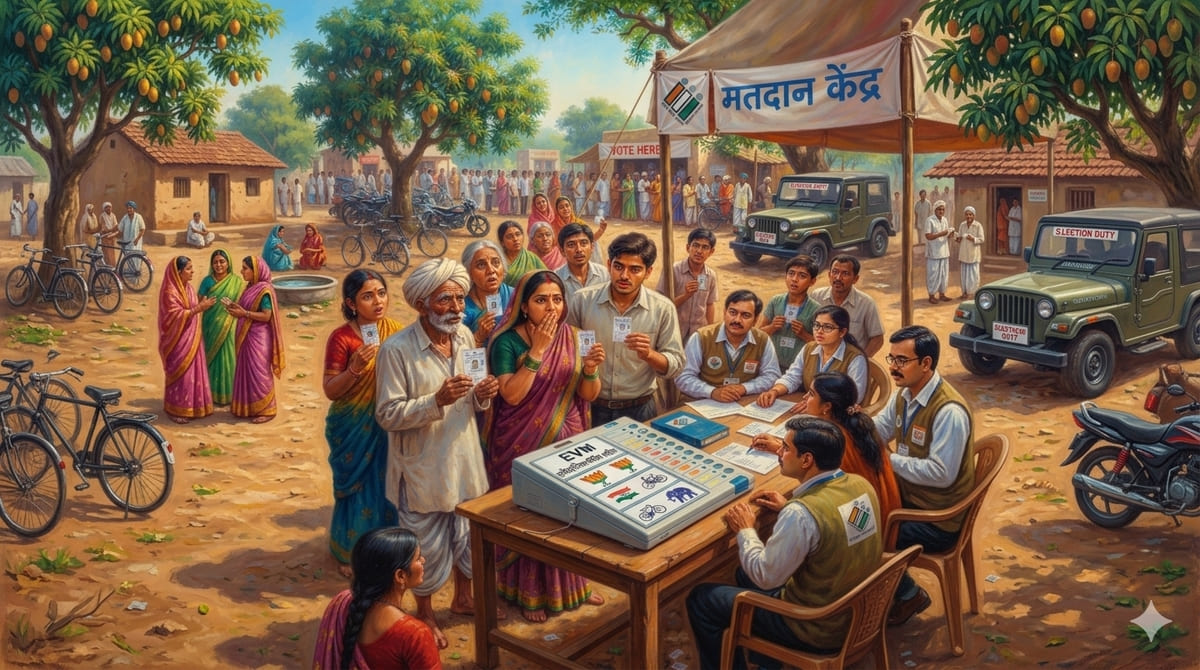
RMN EVM Research & Transparency Hub Examines Electronic Voting Machines, VVPAT Safeguards, and Public Confidence in Indian Elections
Electronic Voting Machines remain central to India’s electoral system, yet questions of security, auditability, and public trust continue to drive national debate. Raman Media Network’s EVM Research & Transparency Hub consolidates official positions, independent research, court developments, and political claims to help citizens evaluate election integrity. The resource prioritizes documented evidence over unverified allegations while tracking ongoing developments.
Raman Media Network Political Desk
New Delhi | October 2, 2026
Electronic Voting Machines (EVMs) form the backbone of modern Indian elections. Introduced to streamline voting and reduce traditional paper-ballot irregularities, the machines—paired with Voter Verifiable Paper Audit Trails (VVPATs)—have become the standard method for recording and counting votes across the country.
At the same time, sustained questions about security, transparency, chain of custody, and independent verification have kept the issue at the center of political, legal, and public discussion. Raman Media Network has therefore established the EVM Research & Transparency Hub as an evolving knowledge resource. The hub gathers official Election Commission of India (ECI) material, court proceedings, independent research, political statements, and documented concerns in one place.
The central democratic question remains straightforward: How can voters, candidates, and parties independently confirm that votes are recorded and counted exactly as cast?
According to the Election Commission, an EVM system consists of a Ballot Unit for the voter, a Control Unit managed by polling officials, and a VVPAT that prints a paper slip for visual verification before the slip drops into a sealed compartment. The ECI maintains that the machines are standalone devices protected by technical and administrative safeguards covering manufacture, testing, randomization, storage, transportation, mock polls, and counting.
Critics and opposition parties, however, raise a wider set of issues. These include the limited scope of VVPAT slip verification, access to hardware and software, independence of technical evaluation, and the practical ability of researchers or political parties to audit results. Some leaders have called for a complete return to paper ballots. Recent statements by figures such as Mayawati have reiterated these demands, while earlier interventions by other opposition leaders and global commentary—including remarks attributed to figures such as Elon Musk and Donald Trump on paper ballots—have kept the conversation alive.
The Supreme Court has examined petitions relating to EVMs and VVPATs, issuing directions aimed at strengthening confidence in the process. The 2024 Lok Sabha elections further intensified scrutiny, with debates focusing on the proportion of VVPAT slips counted and the handling of any mismatches between electronic and paper records.
Raman Media Network’s hub does not treat every allegation as proven fact. It distinguishes political claims from independently verified evidence and places official responses alongside critical analysis. Key areas under continuous review include:
- Technical and procedural safeguards
- VVPAT verification protocols and sampling rates
- Chain-of-custody documentation
- Randomization and allocation of machines
- Court judgments and Election Commission updates
- Independent research findings
- Public confidence indicators
Election integrity rests on more than technical security. It also depends on procedural consistency, auditability, transparency, and the willingness of competing political actors to accept the outcome. By compiling primary material and tracking new developments, the RMN EVM Research & Transparency Hub seeks to equip citizens with clearer information rather than partisan narratives.
The resource will be updated as fresh research, court orders, official clarifications, and investigative reporting become available. Readers are encouraged to examine both institutional assurances and documented concerns when forming their own assessment of electronic voting in India.
💛 Support Independent Journalism
If you find RMN News useful, please consider supporting us.