


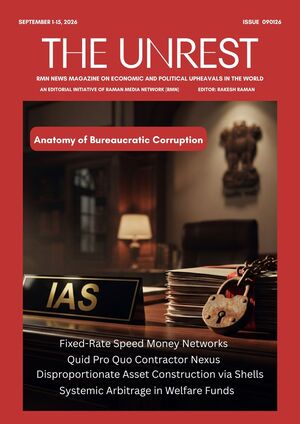
The Unrest Magazine Uncovers Systemic Corruption and Legal Impunity in India’s Administrative Service
The September 1–15, 2026 issue of The Unrest magazine delivers a detailed investigation into entrenched corruption within the Indian Administrative Service, highlighting fixed-rate bribery networks, contractor collusion, and near-total legal protection for officers. The report also examines related issues of press restrictions, rising municipal graft, geopolitical tensions, and advances in AI governance. This diagnostic frames India’s bureaucratic challenges as systemic and urgent.
Raman Media Network The Unrest Desk
New Delhi | September 1, 2026
India’s administrative machinery faces a severe crisis of integrity, according to the latest investigative findings from The Unrest, the fortnightly open-access publication by RMN News Service. The September 1–15, 2026 issue, archived on the CERN-operated Zenodo platform, presents a comprehensive analysis of bureaucratic dysfunction, arguing that the Indian Administrative Service operates under conditions of widespread corruption shielded by legal protections that limit accountability.
The lead report, titled “Anatomy of Bureaucratic Corruption,” identifies several interlocking mechanisms that sustain illicit practices. These include standardized speed-money arrangements designed to accelerate official processes, collusive relationships between officers and private contractors, the channeling of illicit funds into high-value assets through shell entities, and the exploitation of loopholes in public welfare schemes. The investigation asserts that these structures have rendered the administrative framework effectively terminal, with officers enjoying substantial impunity.
At the local level, the report notes a steady rise in corruption and crime within Delhi’s residential housing societies. In response, RMN’s Clean House editorial service continues to document cases, provide guidance to affected residents, and press for accountability from management committees and officials. Parallel patterns of alleged fraud in public utilities are illustrated by ongoing legal proceedings involving former officials linked to the Delhi Jal Board.
Beyond domestic administration, the issue addresses efforts to control media narratives during high-level international engagements and the use of diplomatic awards as tools for image management. Political developments in Punjab receive attention, including the establishment of the RMN Election Hub for governance-focused analysis rather than conventional horse-race coverage, critiques of campaign messaging, and shifts toward social media outreach targeting younger voters. Bilateral economic diplomacy also features, with references to meetings aimed at expanding India-Japan investment flows.
In technology and governance, the report highlights the launch of the CAIO Hub by RMN Digital, a platform supporting corporate leaders transitioning into AI-focused roles, alongside international initiatives such as OpenAI’s accelerator program with Thailand’s higher education ministry. Creative applications of AI in storytelling are noted as tools that can enhance, rather than replace, human narrative integrity.
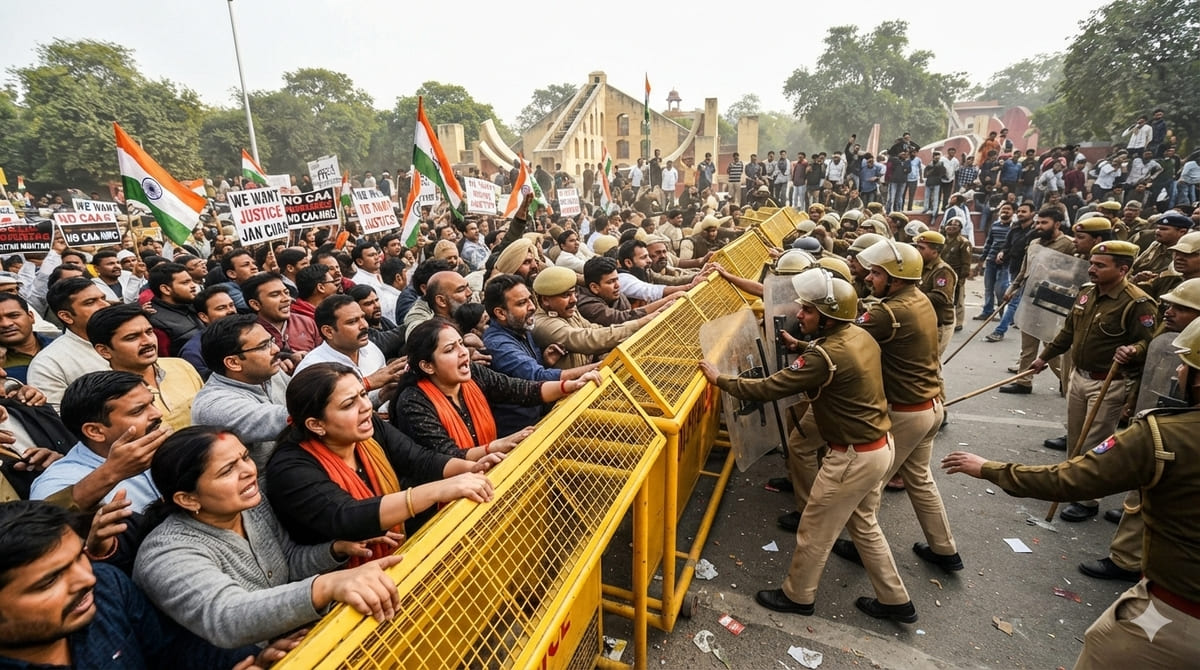
Human rights and geopolitical concerns form another strand. The European Court of Human Rights has begun a public access initiative allowing monthly visits to its Strasbourg premises. Domestically, investigations by Amnesty International’s Evidence Lab have documented instances of excessive force against protesters. Shipping security in the Strait of Hormuz has drawn heightened attention amid statements claiming strategic control over the waterway.
Entertainment and media integrity issues include scrutiny of box-office data practices in Bollywood and the need for empirical auditing over passive aggregation. The Academy of Motion Picture Arts and Sciences has opened technical achievement submissions for its 2026 Scientific and Technical Awards, with a firm deadline of September 8.
The Unrest positions itself as an independent, research-driven publication covering governance, democracy, human rights, technology, and global affairs. Each issue is permanently archived with DOI records to support transparency and scholarly reference. The findings underscore the need for structural reforms to restore accountability within India’s administrative systems while situating these challenges within broader domestic and international developments.
💛 Support Independent Journalism
If you find RMN News useful, please consider supporting us.