


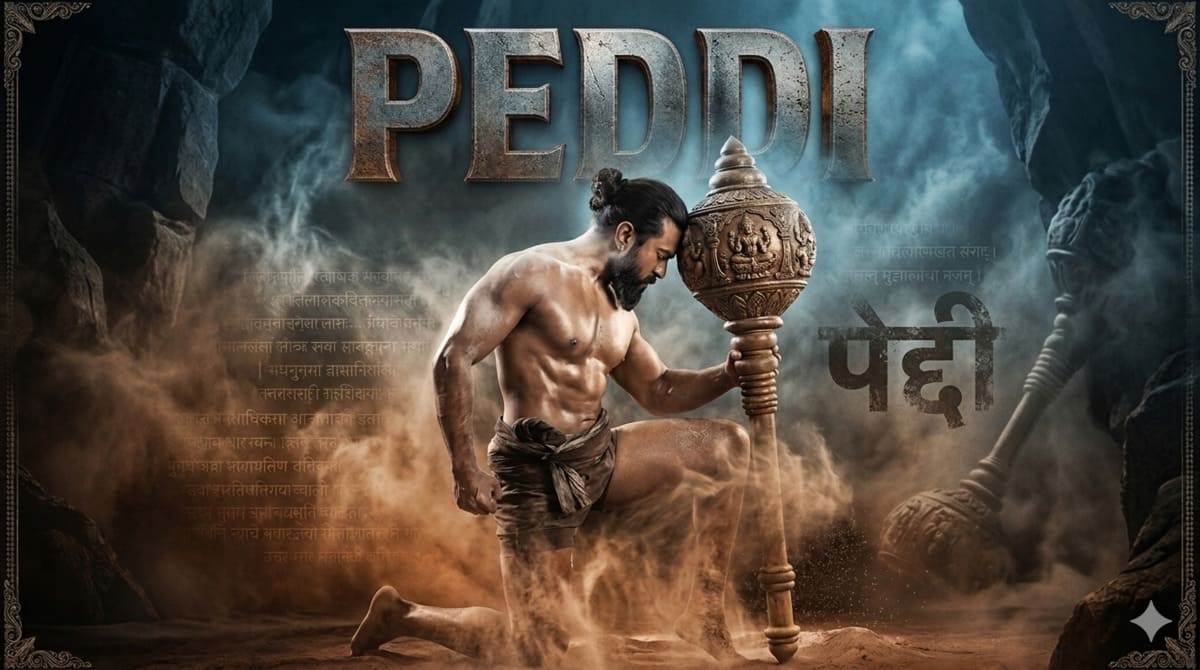
Peddi, Modi, and Viksit Bharat: The Strategic Expansion of State Propaganda into South Indian Cinema
The upcoming release of the Telugu film Peddi signals a strategic breach in the regional independence of South Indian cinema, as production houses align with state-managed “Viksit Bharat” narratives. This alliance between dynastic film families and the ruling regime trades artistic integrity for administrative immunity, effectively turning cinematic storytelling into a tool for political preservation.
Raman Media Network Entertainment Desk
New Delhi | June 3, 2026
The Southward Expansion of Narrative Control
The release of Peddi on June 4, 2026, represents a significant shift in the Indian cultural landscape. While Bollywood has increasingly served as a venue for state-sycophantic features, South Indian cinema had largely remained a bastion of independent storytelling. Peddi confirms a process of “Gleichschaltung”—the forced coordination of culture to serve a centralized political power—has now moved into the South.
The evidence for this shift is found in admissions from the film’s lead actor, Ram Charan, who explicitly linked the movie to Prime Minister Narendra Modi’s electoral branding. Charan stated that the film’s concept mirrors the “Viksit Bharat” initiative regarding the empowerment of villages, effectively tattooing a state slogan onto the film’s identity.
The Dynastic Alliance and Administrative Immunity
This systemic surrender by industry elites is viewed as a transactional relationship. Dynastic families, or “nepo” hierarchies, often leverage political compliance to maintain their non-meritocratic hegemony in a competitive market. With Ram Charan’s uncle, Pawan Kalyan, serving as the Deputy Chief Minister of Andhra Pradesh—a role heavily influenced by central regime dynamics—the alliance is solidified. In exchange for acting as state messengers, these families receive administrative immunity, tax concessions, and state-backed distribution support.
Institutional Compliance: Information Poisoning
To maintain the facade of a unified and successful “Viksit Bharat,” the industry employs “Information Poisoning”. This involves the forensic manipulation of the public record, where unverified box office data is laundered through mainstream media to create an echo chamber of organic success. By using ambiguous tracking frameworks to mask actual theater occupancies, the industry ensures that politically compliant filmmakers are insulated from the commercial consequences of their work.
The Systemic Propaganda Grid
Peddi is only one component of a broader propaganda grid utilizing various genres to project state-approved realities:
- Religious Demagoguery: Projects like Ramayana serve as cinematic fuel for identity politics.
- Border Narrative Revisions: Films such as Battle of Galwan (or Maatrubhumi) project narratives of military triumph.
- Electoral Conflict Rhetoric: Productions like Lahore 1947 utilize cross-border hostilities to stoke nationalist fervor.
The “Viksit Bharat” Paradox
The triumphs projected on screen stand in jarring contrast to the material fragility of the Indian population. While cinema depicts “empowered villages,” ground realities reveal a different story:
| Cinematic Narrative (Viksit Bharat) | Ground Reality (Source Data) |
|---|---|
| Empowered villages and national prosperity | 80 crore people depend on free food rations to survive. |
| A land of boundless opportunity | 2.5 to 3 crore educated youth remain jobless. |
| State-of-the-art infrastructure | Nearly 10 crore people still practice open defecation. |
| Health and vitality | 34 crore people consume unsafe drinking water; high rates of student and agricultural suicides. |
This subversion of creative expression allows the state to substitute harsh socio-economic realities with cinematic myths. Some observers suggest that the damage inflicted by such autocratic rule and narrative control may take the country at least 50 years to recover from.
💛 Support Independent Journalism
If you find RMN News useful, please consider supporting us.