


The Global Crackdown: Balancing Children’s Rights and Mental Health in the Digital Age
Global regulators and international bodies are shifting toward stricter social media oversight, including age-based bans and AI safety protocols, to combat a rising mental health crisis among youth. This movement seeks to bridge the gap between protecting children from digital exploitation and upholding their fundamental rights to participate in the digital world.
Raman Media Network Policy Desk
New Delhi | June 4, 2026
The Digital Dilemma: Rights vs. Security
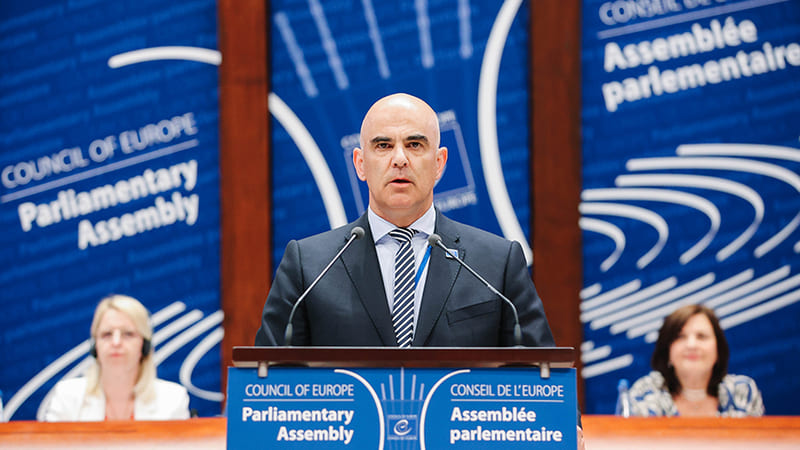
A high-level debate recently held at the Council of Europe in Strasbourg highlighted a growing tension in digital governance: the need to protect children from online risks without infringing upon their fundamental rights. Council of Europe Secretary General Alain Berset warned against framing the issue as a choice between security and rights, calling it a “false choice” that leads to a dead end.
Instead, policymakers are being urged to establish conditions where digital freedom is compatible with the best interests of the child. This discussion is particularly timely as mental health statistics reveal a troubling trend; one in seven children in Europe currently suffers from a mental-health disorder, with the rate rising to one in four among girls aged 15 to 19.
Our children’s mental health is not just another public health issue. It is also a matter of democratic health.
A Growing Mental Health Crisis
The call for regulation is fueled by data showing that social media plays an overwhelming role in adolescent lives. In OECD countries, 66% of 15-year-old girls and 61% of boys spend three or more hours daily on these platforms, with over half reporting exposure to disturbing content. Furthermore, 11% of adolescents now report “addiction-like” symptoms related to social media use. Beyond health, Berset emphasized that youth mental well-being is a matter of “democratic health,” linking it to the New Democratic Pact for Europe, which focuses on learning, protecting, and innovating within the framework of human rights and the rule of law.
Global Legislative Trends and Bans
National governments are taking increasingly decisive action. By the end of 2025, Australia planned to implement a full mandate banning social media for minors under 16, following a successful Age Assurance Technology Trial. Similarly, the Indian state of Karnataka has announced a state-wide ban for children under 16, citing smartphone addiction and online safety risks. Other European nations are following suit with various strategies:
- The United Kingdom and Finland are discussing similar age-based safeguards.
- France and Spain have implemented restrictions on smartphone use in schools to improve student focus.
Data from India’s Economic Survey 2025–26 further supports these moves, linking high smartphone usage to anxiety, sleep problems, and increased vulnerability to cybersecurity risks like identity theft and online grooming.
In the European space of rights we are building, the digital sphere cannot become an exception zone. Children’s rights must be as real, effective, and protective online as they are elsewhere.
Emerging Threats: AI and Exploitation
The Council of Europe’s Lanzarote Committee is also pivoting to address new technological challenges. A primary concern is the rise of AI-generated child-sexual-abuse material, including “nudifying” tools that can alter clothed photographs. The Council is hosting dialogues to explore how AI impacts the prevention and prosecution of such exploitation, ensuring the digital sphere does not become an “exception zone” where rights are not protected.
The Path Forward: Finding the “Middle Path”
While the momentum for bans is strong, some experts advocate for a “middle path”. They warn that blanket prohibitions might drive children toward unregulated platforms or the use of VPNs, making them even harder to protect. Instead, many suggest a combination of age-based safeguards, digital literacy programs, and stronger parental controls. The discussions in Strasbourg will eventually feed into a guidance note developed by the steering committee for the rights of the child (CDENF) to help countries shape balanced, effective policies.
💛 Support Independent Journalism
If you find RMN News useful, please consider supporting us.