


Defiant Bhagwant Mann Denies ‘Guru Dokhi’ Charges: A Crisis of Credibility and Governance in Punjab
Punjab Chief Minister Bhagwant Mann has dismissed the Akal Takht’s “Guru Dokhi” declaration as a politically motivated fabrication, denying his presence in the controversial video that sparked the religious censure. This defiance marks a new peak in the state’s leadership crisis, where allegations of executive dishonesty collide with a ₹4 lakh crore debt and systemic administrative collapse.
Raman Media Network Political Desk
New Delhi | June 16, 2026
The Denial: Mann Attacks Clergy Credibility
A day after the Akal Takht Jathedar Kuldip Singh Gargaj pronounced the Punjab Chief Minister as “Guru Dokhi” (anti-Guru) and “Panth Virodhi” (anti-community), a defiant Bhagwant Mann claimed that the person seen in the controversial video was not him. In a formal video statement, Mann asserted that while he maintains reverence for the institution of the Akal Takht, its current officials are merely “political appointees” serving their masters through baseless allegations. He further alleged that a “false narrative” is being intentionally manufactured by the political bosses of the Akal Takht management to defame him.
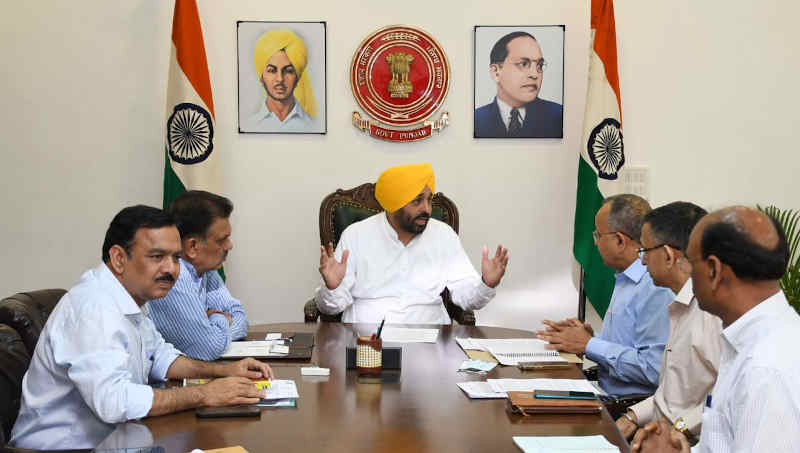
Defiance or Deception? Mann dismisses the Akal Takht as “political appointees” while Punjab burns under ₹4 lakh crore of debt.
A Record of Deception and Misrule
Despite Mann’s denials, critics argue that the Chief Minister cannot be trusted, as he frequently employs falsehoods to hoodwink the public while Punjab descends into a “living hell” under his administration. There are growing assertions that honesty is fundamentally absent within the Aam Aadmi Party (AAP) ranks, where survival is allegedly predicated on being dishonest. This religious delegitimization by the Akal Takht—the supreme temporal authority of the Sikh faith—represents a total erosion of political legitimacy for a leader whose personal conduct is now under intense scrutiny.
A Credibility Gap: As the Chief Minister denies his own image in “objectionable” footage, the AAP administration faces a terminal loss of public trust.
Governance in Freefall
The religious crisis is only one facet of a broader systemic failure under Mann’s leadership. The state’s collapse is currently defined by four catastrophic pillars:
- Crushing Debt: Punjab’s debt has surged beyond ₹4 lakh crore, effectively stripping the government of its fiscal autonomy.
- The Drug Epidemic: A “lethal drug trade” continues to hollow out the state’s youth, with judicial concerns highlighting criminal collusion between police and drug mafias.
- Executive Misconduct: Allegations of intoxication have reached the floor of the Punjab Assembly, where the opposition has demanded alco-meter tests for the Chief Minister.
- Federal Isolation: Mann’s “irresponsible” rhetoric has led to a functional travel veto from the Union government, isolating Punjab from international investment.
Institutional Capture and Electoral Risks
The Akal Takht’s verdict was also fueled by opposition to the Jaagat Jot Sri Guru Granth Sahib Satkar (Amendment) Act, 2026, which the clergy views as an attempt at “institutional capture” by the state. By summoning all Sikh MLAs who supported the Bill, the clergy has forced a high-stakes choice between party loyalty and religious identity. As the 2027 elections approach, the perception of an unstable and “illiterate” executive in a sensitive border state has transformed from a personal scandal into a major national security vulnerability.
💛 Support Independent Journalism
If you find RMN News useful, please consider supporting us.