


Modi Sapta Dhara: Analysis of 2047 Vision
Modi’s ‘Sapta Dhara’ Framework: Strategic National Vision or a Decoy for Governance Failures?
Prime Minister Narendra Modi’s ‘Sapta Dhara’ initiative, targeting the year 2047, is identified as a calculated psychological strategy to deflect attention from a twelve-year trail of unfulfilled socio-economic commitments. By anchoring national progress to a distant twenty-year horizon, the administration effectively bypasses empirical accountability for immediate administrative and economic distress.
Raman Media Network Political Desk
New Delhi | August 15, 2026
The Red Fort Announcement: Pushing Goals to 2047
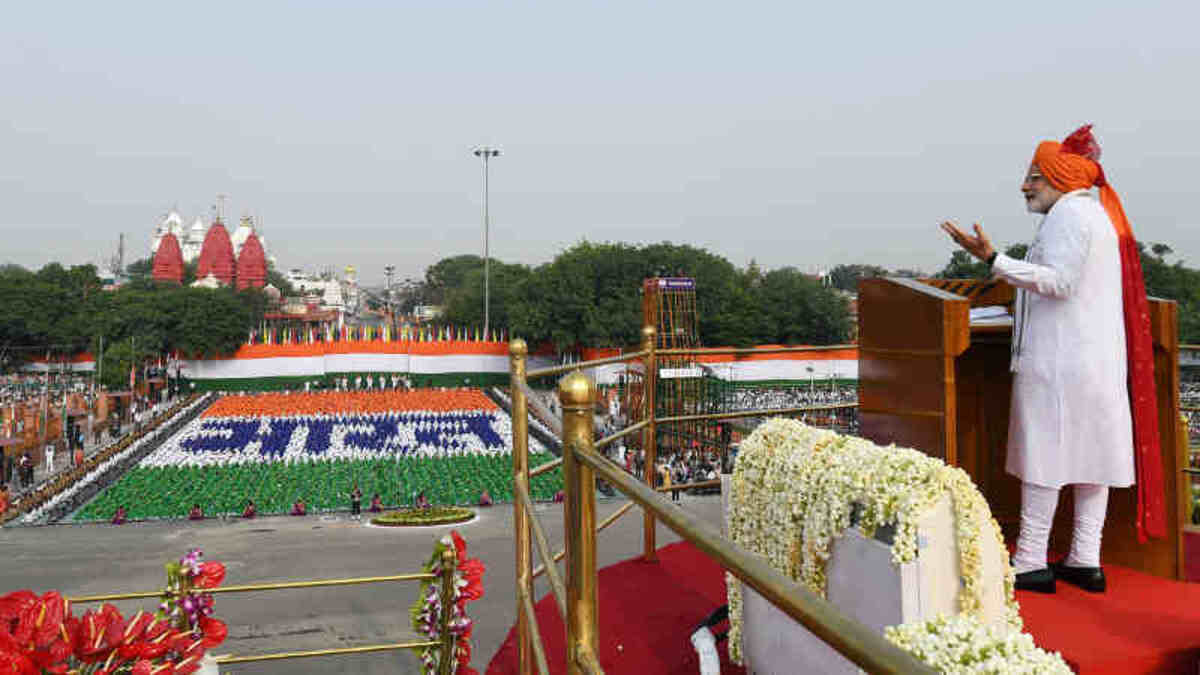
During his 13th consecutive Independence Day address on August 15, 2026, Prime Minister Narendra Modi introduced ‘Sapta Dhara’, a seven-stream reform framework. This vision encompasses manufacturing, agriculture, technology, logistics (Gati Shakti), defense, the green/blue economy, and soft power.
However, forensic analysis suggests that beneath the high-decibel rhetoric, the announcement serves as a political tactic. By setting targets for 2047, the administration ensures that current citizens cannot hold the government accountable today. The framework notably lacks concrete financial allocations, measurable quarterly milestones, or statutory enforcement mechanisms, leading critics to label it a public relations exercise.
[ 🔊 मोदी सप्त धारा: झूठे वादों का पर्दाफाश: ऑडियो विश्लेषण ]
The Economic Audit
The skepticism surrounding ‘Sapta Dhara’ is rooted in a twelve-year history of high-profile pledges that have failed to materialize. Key areas of unfulfilled promises include:
- Employment: The recurring pledge to generate 20 million jobs annually has collapsed in the face of historic unemployment rates and declining labor force participation.
- Black Money: Early campaign promises to recover offshore wealth and deposit ₹15 lakh into every citizen’s account were later dismissed by party leadership as “political hyperbole”.
- Agriculture: The celebrated goal of doubling farmers’ income by 2022 passed without fulfillment. Furthermore, despite nationwide protests, the government has refused to provide a statutory guarantee for the Minimum Support Price (MSP).
Electoral Welfare and Local Betrayals
The pattern of setting future goals while ignoring immediate commitments extends to state-level politics. Pre-election welfare promises are frequently used to capture votes and then abandoned once polling concludes.
A primary example is the ₹2,500 Delhi Allowance promised during the 2025 Delhi Assembly election under the Delhi Lakshmi Yojana. Following the election, the promise vanished, and no funds were disbursed to the eligible women. Similarly, in Bihar, pre-poll cash distributions of ₹10,000 were criticized by analysts as short-term bribes designed to manipulate marginalized voters.
Conclusion: Illusion vs. Empirical Reality
The ‘Sapta Dhara’ framework is the latest in a series of slogans, such as “Housing for All by 2022,” that rely on perpetual distraction. While the administration promotes futuristic visions, current economic indicators tell a different story: public debt is surging, Net Foreign Direct Investment (FDI) is collapsing, and real wages remain stagnant. Until there is a demand for empirical audits of past commitments, the cycle of deceptive rhetoric and futuristic targets is expected to continue.
💛 Support Independent Journalism
If you find RMN News useful, please consider supporting us.