


Global Tech and AI Intelligence Briefing: Enterprise Infrastructure Shifts, Market Realignments, and Frontier Governance
Global technology hyperscalers are aggressively reallocating capital toward a $700 billion artificial intelligence infrastructure expansion, driving major data center acquisitions, custom silicon developments, and capital market offerings. Key global summits like MWC27 Barcelona and government-backed startup partnerships are accelerating 5G, satellite connectivity, and deep-tech adoption across industrial verticals. Simultaneously, international bodies including the United Nations are rolling out municipal AI governance frameworks to ensure human oversight amidst executive volatility and structural enterprise shifts.
Raman Media Network Technology Desk
New Delhi | November 13, 2026
The following information has been excerpted from the Technophile | Tech Insights November 12, 2026 Issue of the LinkedIn newsletter.
Global Tech and AI Intelligence Briefing
Hyperscale Realignment & The $700B AI Infrastructure Push
Major technology conglomerates are systematically downsizing legacy human headcount to reallocate capital toward a projected $700 billion expansion in artificial intelligence infrastructure. Artificial intelligence has been explicitly cited in over 12,000 U.S. job cuts, as hyperscalers—including Alphabet, Meta, Microsoft, and Amazon—streamline administrative overhead to fund massive compute clusters and high-density data centers. To manage international labor regulations, corporations are leveraging statutory exit programs like France’s Rupture Conventionnelle Collective.
As part of this capital reallocation, Google officially acquired a major data center campus in Wyoming from Crusoe following a $17 billion investment commitment in the state. Developed alongside Tallgrass Energy, Black Hills Energy, American Electric Power, and Related Digital, the facility provides high-density server capacity to train and run large-scale AI models like Google Gemini. Concurrently, SpaceX unveiled a $24 billion data center expansion project in Texas paired with a strategic network partnership with Qualcomm.
Silicon Innovations & Strategic Startup Funding
In hardware and silicon developments, Google deployed its next-generation custom silicon lineup featuring TPU 8-series processors for high-throughput cloud and generative AI workloads. Apple expanded its silicon ecosystem by debuting five hardware models, including an OLED iPad mini alongside M6-powered Mac desktop and laptop configurations.
On the public-private partnership front, NVIDIA teamed up with South Korea’s Ministry of Science and ICT (MSIT) to invest in leading AI startups during the MSIT-NVIDIA AI Startup Partnership Forum at COEX in Seoul. Direct equity commitments, technical guidance, and cloud credits were extended to startups across the AI computing stack, including Point2 Technology (infrastructure interconnects), Motif Technologies (open-weight agentic models), RLWRLD (physical robotics with five-finger dexterity), and Upstage (enterprise document AI).
Global Connectivity: MWC Barcelona Unveils Vertical Hubs
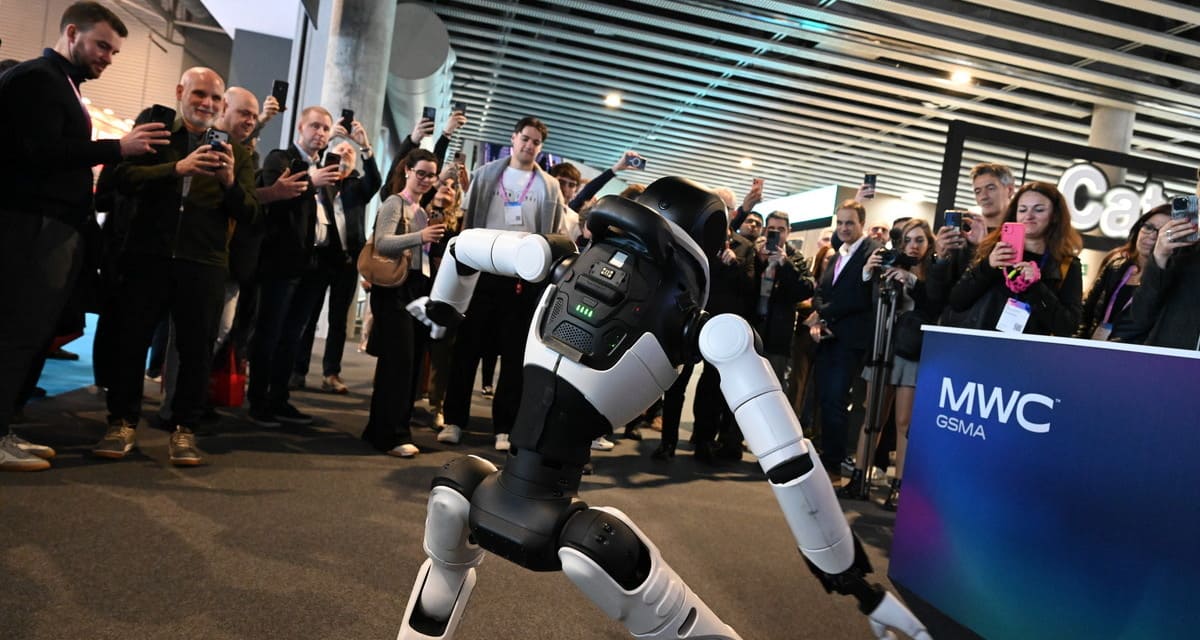
The GSMA unveiled the preliminary framework for MWC27 Barcelona, returning to Fira Gran Via from March 1–4, 2027. SoftBank will make its debut appearance on the main show floor alongside returning giants such as Amazon, Cisco, Ericsson, Google, Hewlett Packard Enterprise, Huawei, Meta, Nokia, Qualcomm, Samsung, and ZTE.
The upcoming edition introduces three specialized vertical industry hubs—Connect Health, Connect Auto, and Connect Aviation—to showcase operational 5G, satellite connectivity, and AI use cases across non-telecom sectors. Hall 6 will feature the “New Frontiers” pavilion, spotlighting quantum computing, physical AI, humanoid robotics, and non-terrestrial satellite networks.
In regional infrastructure developments, Ericsson and HBL successfully validated 5G standalone integration with India’s Kavach 4.0 railway safety system for mission-critical signaling, while ACT Fibernet announced nationwide broadband speed upgrades up to 500 Mbps. Enterprise technology leaders are also finalizing keynotes for upcoming global events, including Microsoft Ignite (Nov 17–20, 2026) and AWS re:Invent (Nov 30–Dec 4, 2026).
Capital Markets, M&A, and Corporate Governance
In financial markets, Anthropic launched its official IPO roadshow with a revised base target of up to $64.35 billion, complemented by a $26 billion concurrent private placement from Google, Microsoft, Nvidia, and AMD—bringing the potential capital raise to $90.4 billion. Meanwhile, KKR initiated maneuvers to sell STT Global Data Centres India for over $5.5 billion, whereas SoftBank recorded a $7 billion quarterly loss due to U.S. data center asset writedowns.
In merger and acquisition activity, Amdocs completed its acquisition of BSS provider EIS for $340 million, while observability startup Cribl acquired automated data routing platform Tero.
Corporate leadership encountered turbulence after Nvidia’s Board of Directors opened an independent investigation following CEO Jensen Huang’s public disclosure of an extramarital affair with Alice Huang, a former executive at Megaspeed International. The board inquiry follows counterintelligence briefings evaluating whether Megaspeed—which procured $4.8 billion in specialized AI hardware—exerted undue influence, though Nvidia confirmed no evidence of compromised trade secrets or national security. In executive appointments, legaltech startup Lexroom named Siyanna Lilova as Head of CEE Expansion.
Policy Frameworks, Smart Cities & Frontier Technologies
Addressing automated municipal services, the United Nations launched its landmark Toolbox for People-Centred Smart Cities in the AI Era, developed jointly by the ITU and UN-Habitat. Marking the tenth anniversary of the United for Smart Sustainable Cities (U4SSC) initiative, the framework mandates four administrative principles: problem-first alignment, meaningful human oversight, proportional risk safeguards, and responsible decommissioning.
On the national regulatory front, India’s TRAI finalized reduced IP interconnection port charges for 2027 alongside telecom AI governance guidelines, while CERT-In introduced a mandatory 6-hour breach notification window for enterprise AI systems. Additionally, government metrics confirmed that unserved 4G villages in India declined by 75% since 2022.
Finally, enterprise architectures are increasingly defined by seven core frontier technologies: Quantum Computing, Humanoid Robotics, Direct-to-Cell Satellite Connectivity, Physical AI, Small Language Models (SLMs), Test-Time Compute (System 2 AI), and Agentic Workflows—shifting enterprise execution from single-prompt cloud models toward localized, high-reasoning execution.
💛 Support Independent Journalism
If you find RMN News useful, please consider supporting us.