


Legal Analysis: The Appeals Chamber Ruling on Jurisdiction in The Prosecutor v. Rodrigo Roa Duterte
In international treaty law, the object and purpose of the instrument are paramount; for the Rome Statute, that purpose is the eradication of impunity for the most serious crimes of international concern.
Raman Media Network Legal Desk
New Delhi | April 24, 2026
1. Executive Summary of the Procedural History
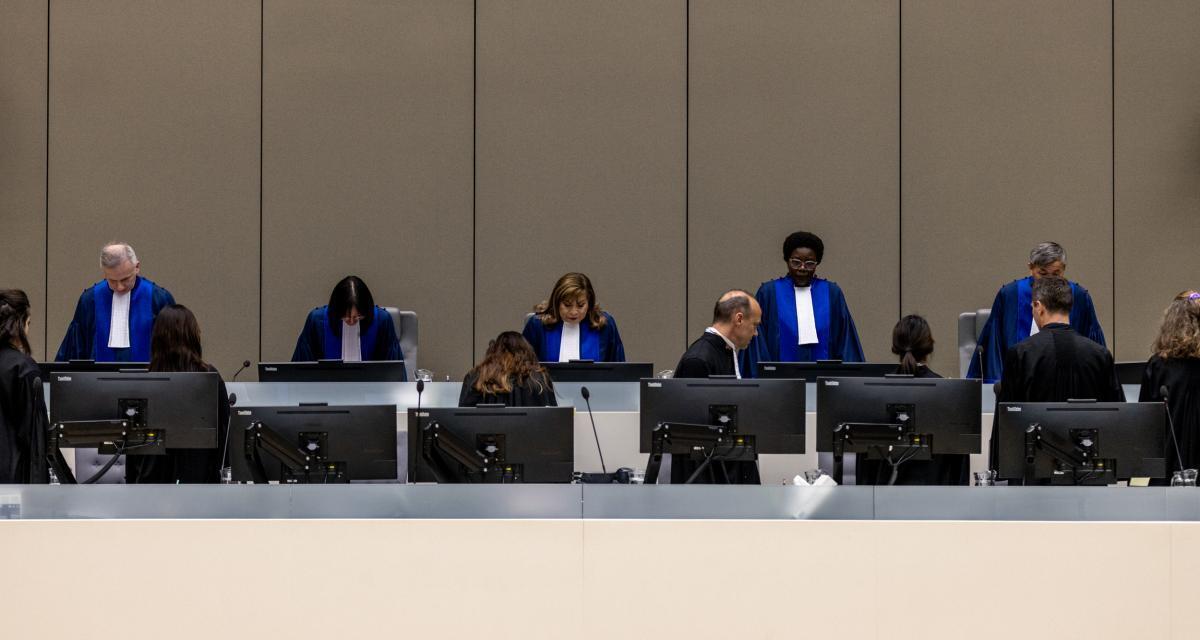
The Appeals Chamber’s judgment of 22 April 2026 serves as a definitive assertion of the International Criminal Court’s (ICC) compétence de la compétence, effectively insulating the Court’s mandate from the unilateral “withdrawal strategy” employed by non-cooperative states. By affirming the jurisdiction of the Court in the matter of The Prosecutor v. Rodrigo Roa Duterte, the Chamber—composed of Presiding Judge Luz del Carmen Ibáñez Carranza, Judge Tomoko Akane, Judge Solomy Balungi Bossa, Judge Gocha Lordkipanidze, and Judge Erdenebalsuren Damdin—delivered a majority ruling that clarifies the temporal continuity of legal obligations. This decision ensures that the act of withdrawal under Article 127 cannot retroactively extinguish the Court’s authority over crimes committed during a state’s period of membership, thereby preserving the integrity of the Rome Statute system.
The procedural trajectory of this case is marked by several critical milestones:
- 1 November 2011: The Republic of the Philippines ratifies the Rome Statute, formally becoming a State Party.
- 17 March 2018: The Philippines deposits its written notification of withdrawal with the UN Secretary-General.
- 17 March 2019: The withdrawal becomes effective, terminating the Philippines’ status as a State Party.
- 7 March 2025: Pre-Trial Chamber I (PTC I) issues a warrant of arrest for Mr. Duterte, initially classified as “Secret.”
- 11 March 2025: The warrant is reclassified as “Public.”
- 12 March 2025: Mr. Duterte is surrendered to the ICC and transferred to the detention centre.
- 14 March 2025: The initial appearance of the suspect takes place before PTC I.
- 23 October 2025: Pre-Trial Chamber I issues its formal decision affirming the Court’s jurisdiction.
- 23–27 February 2026: The confirmation of charges hearing is conducted.
- 22 April 2026: The Appeals Chamber issues its final ruling, rejecting the Defense’s jurisdictional challenge by majority.
By upholding the Pre-Trial Chamber’s decision of 23 October 2025, the Appeals Chamber has signaled that jurisdictional persistence is a core tenet of the Statute. This mandate rests upon a sophisticated synthesis of the Statute’s exercise of jurisdiction and its withdrawal protocols.
2. The Statutory Framework: Synthesizing Articles 12, 13, and 127
The crux of the jurisdictional dispute centers on the interplay between the Court’s exercise of power and the cessation of treaty membership. The Defense contended that the Court’s ability to act is contingent upon a state’s current status as a “State Party,” a position that seeks to isolate the wording of Articles 12 and 13 from the broader statutory context.
The Appeals Chamber rejected this fragmented approach, establishing a unified jurisdictional regime based on the following:
2.1 Articles 12 and 13: Exercise of Jurisdiction: The Chamber acknowledged that while Articles 12 and 13 require a state to be a Party at the time jurisdiction is exercised, these provisions must be harmonized with the specific limitations imposed by Article 127. Under the principle of ratione loci (jurisdiction by place) and ratione temporis (jurisdiction by time), the Court’s authority is anchored to the moment the alleged crimes were committed, provided the state was a signatory during that window.
2.2 Article 127: The Persistence of Obligations: Article 127(2) serves as the statutory “hook” that prevents a state from escaping its duties. The Chamber noted that withdrawal does not affect any cooperation with the Court in connection with criminal investigations and proceedings which were commenced prior to the effective date of withdrawal. Furthermore, it does not prejudice the continued consideration of any matter which was already under consideration by the Court. This creates a “frozen” jurisdictional window, ensuring that the ICC retains its reach over the period from 1 November 2011 to 16 March 2019.
This statutory synthesis confirms that the Philippines’ withdrawal did not result in a jurisdictional vacuum, but rather a temporal boundary that protects the Court’s ability to adjudicate crimes committed while the state was bound by the treaty. This interpretation is further reinforced by the Chamber’s reliance on broader principles of international law.
3. Systemic Interpretation: Object, Purpose, and the Prevention of Impunity
The Appeals Chamber’s reasoning was anchored in a “teleological interpretation,” moving beyond the “statutory literalism” advanced by the Defense. In international treaty law, the object and purpose of the instrument are paramount; for the Rome Statute, that purpose is the eradication of impunity for the most serious crimes of international concern.
The Chamber found the Defense’s position—that jurisdiction evaporates upon withdrawal—to be fundamentally “incompatible” with this objective. If a state could unilaterally terminate the Court’s authority the moment a Prosecution examination began, the Statute would be rendered a dead letter. The Chamber’s ruling effectively validates the Office of the Prosecutor’s “Examination-to-Investigation” pipeline, ensuring that the transition from a preliminary examination to a full investigation remains legally robust even if a state exits the treaty during the process.
“The Appeals Chamber ruled that it would be incompatible with the object and purpose of the Statute to enable a State Party to evade its responsibilities under the Statute by depositing a written notice of withdrawal once it discovers that alleged crimes committed on its territory or by its nationals are being examined by the Prosecution.”
By dismantling the Defense’s literalist reading, the Chamber affirmed that a state cannot retroactively “un-accept” the responsibilities it incurred during its period of accession. This ensures that the sovereign right to withdraw is balanced against the enduring legal consequences of prior consent.
4. The Judicial Balancing Act: Sovereign Rights vs. Accepted Responsibilities
A central tension in this case involved the reconciliation of state sovereignty with the principle of pacta sunt servanda—the doctrine that treaty obligations must be performed in good faith. The Appeals Chamber sought an “appropriate balance” that respects the finality of a state’s exit while upholding the sanctity of its prior commitments.
4.1 Preserving the Efficacy of Withdrawal: To ensure the right to withdraw remains “effective,” the Chamber clarified that the ICC cannot exercise jurisdiction indefinitely. Crimes committed after the effective withdrawal date (17 March 2019) fall outside the Court’s ratione temporis. This protects the sovereign right of a state to change its international affiliations and terminate future obligations.
4.2 Protecting the Integrity of Investigations: Conversely, the Chamber held that the Court must have a “clear timeline” to conclude matters initiated or relevant to the membership period. This prevents a “race against the clock” where states attempt to outrun the Prosecutor by depositing a withdrawal notice. By validating the Court’s jurisdiction over the 2011–2019 window, the Chamber protected the integrity of the judicial process from political interference, ensuring that the “war on drugs” investigation could proceed on its merits.
This judicial equilibrium provides the necessary legal certainty for the current proceedings, defining the exact parameters under which Mr. Duterte must now answer to the charges.
5. Material Scope and Case Status: Crimes Against Humanity in the “War on Drugs”
The material scope of the case against Mr. Duterte is strictly defined by the allegations arising from the Philippine government’s “war on drugs” campaign. The Prosecution alleges that the state orchestrated a widespread and systematic attack against the civilian population, characterized by a policy of extrajudicial killings.
The current legal status and scope include:
- Material Charges: Alleged crimes against humanity, specifically murder and attempted murder, pursuant to Article 7(1)(a) of the Rome Statute.
- Jurisdictional Window: Acts committed between 1 November 2011 and 16 March 2019.
- Current Status: Following the February 2026 confirmation of charges hearing and this definitive Appeals Chamber ruling of 22 April 2026, the case has cleared all jurisdictional hurdles. Mr. Duterte remains in ICC custody, and the matter is poised to proceed to the trial phase.
The implications of this ruling are transformative for the international community. It establishes a potent precedent: the ICC’s jurisdiction is not a discretionary tool that can be deactivated by a state’s departure. Once a state joins the Rome Statute, it enters into a permanent covenant of accountability for all acts committed during its tenure. This ruling ensures that for the victims of the “war on drugs,” the path to justice remains open, regardless of the Philippines’ current status as a non-member state.
💛 Support Independent Journalism
If you find RMN News useful, please consider supporting us.