


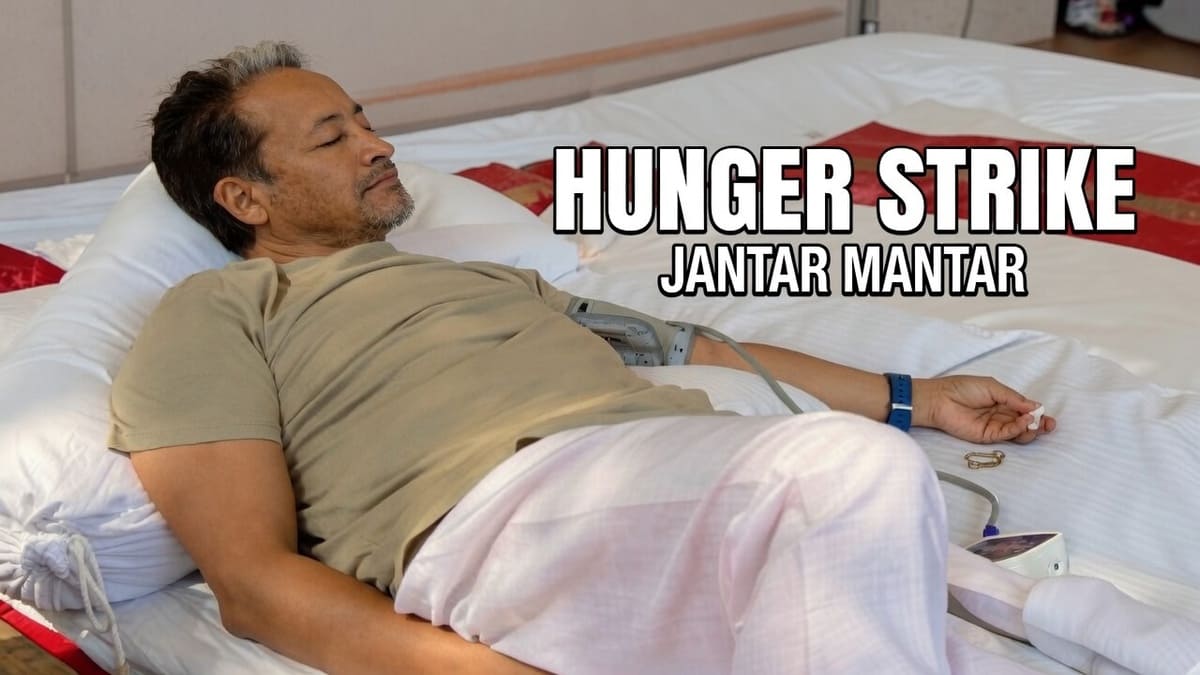
Sonam Wangchuk’s Jantar Mantar Hunger Strike Ends in Staged Hospital Exit as Activist’s Publicity Stunt Unravels Amid Zero Impact
Sonam Wangchuk, once positioned as a climate and education reformer, has seen his latest high-profile protest at Jantar Mantar collapse under scrutiny, revealing what critics describe as a carefully orchestrated fraud designed for personal visibility and financial gain.
Raman Media Network Political Desk
New Delhi | July 18, 2026
Sonam Wangchuk’s much-hyped Delhi protest ended not with victory but a calculated medical evacuation to Safdarjung Hospital on July 18, 2026, exposing it as a failing publicity stunt rather than a genuine movement. The activist, long accused of building a career on hype over substance, achieved none of his core demands, including the resignation of Education Minister Dharmendra Pradhan. This episode underscores a pattern of deceptive activism that prioritizes international attention and funding over real reform.
On Saturday, July 18, Delhi Police removed Wangchuk from the protest site citing a Delhi High Court order and health concerns, relocating him to Safdarjung Hospital. Medical updates indicated he remained conscious with stable vitals. Far from a spontaneous health crisis, the move appears as a tactical retreat, allowing the activist to exit without admitting defeat after weeks of negligible public support and government indifference.
The Anatomy of a Professional Protest Business
Wangchuk’s career trajectory reveals a consistent reliance on dramatic hunger strikes and media spectacles that generate headlines but deliver scant on-ground results. Despite claims of environmental and educational advocacy in Ladakh, investigations highlight a near-total absence of verifiable, sustained initiatives in these areas. Instead, his model thrives on targeting sympathetic audiences with emotional narratives that secure foreign attention and associated funding streams.
[ YouTube Podcast: जंतर-मंतर विरोध का अंत: वांगचुक का ‘नियोजित अस्पताल निकास’ और विफलता का खुलासा। ]
The Jantar Mantar sit-in, backed by elements linked to the so-called Cockroach Janta Party (CJP), promised a youth-driven groundswell but materialized as a sparse gathering of bystanders, YouTubers, and opportunistic figures. Digital claims of massive support clashed sharply with physical reality: low turnout, passive participation, and zero policy influence. The protest’s central demand went entirely unheeded by the Modi administration.
This was never about systemic change. It exemplified modern digital activism’s core weakness — heavy on optics and social media friction, desperately short on organization, stamina, and genuine grassroots backing. Wangchuk’s relocation provides a face-saving narrative of “martyrdom” while shielding him from accountability for yet another high-visibility failure.
Broader Implications for Indian Activism
Wangchuk’s approach highlights deeper issues within sections of India’s protest ecosystem. Reliance on shadowy political patronage from opposition elements unwilling to confront challenges directly, combined with celebrity endorsements, creates movements built for optics rather than outcomes. Such efforts routinely evaporate when faced with institutional resolve, leaving only temporary media cycles and sustained personal brands.
By shifting the focus from Ladakh’s regional issues to Delhi’s national stage, Wangchuk attempted to refresh a waning profile. The result instead exposed the fragility of protest-as-subsistence models that depend on public gullibility and international validation rather than measurable impact or broad domestic legitimacy.
This analysis draws from on-site developments and patterns in Wangchuk’s public record, adding critical scrutiny to a figure whose methods continue to prioritize personal branding over substantive advocacy for the causes he claims to champion.
💛 Support Independent Journalism
If you find RMN News useful, please consider supporting us.