


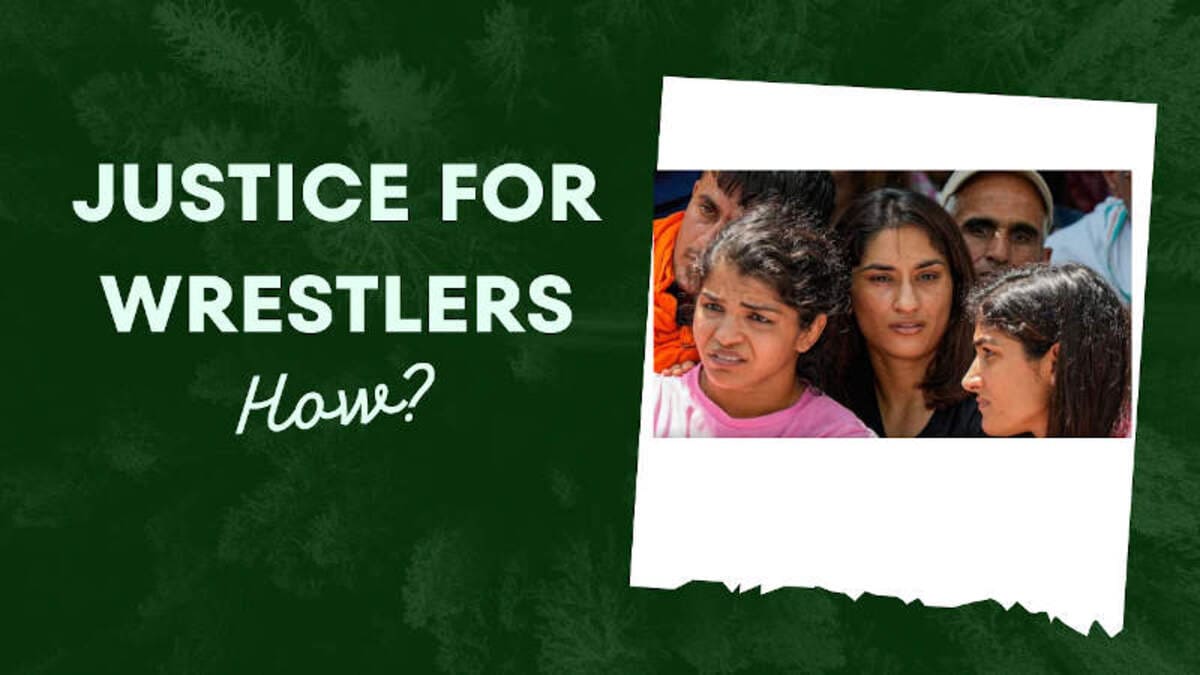
Delhi Court Acquits Brij Bhushan Sharan Singh of Sexual Harassment Charges as Women Wrestlers Vow Appeal Against a Judicial System Beholden to Political and Financial Power
A Delhi court has acquitted former Wrestling Federation of India chief Brij Bhushan Sharan Singh of all sexual harassment charges, exposing once again how India’s judiciary bends under political and financial influence. Wrestlers including Vinesh Phogat have vowed an immediate appeal, condemning a system that prioritizes protecting the powerful over delivering justice to survivors. The verdict underscores deep institutional failures that allow money and muscle to override accountability.
Raman Media Network Human Rights Desk
New Delhi | August 4, 2026
A Delhi court delivered a devastating blow to gender justice and institutional accountability in August 2026 by acquitting former Wrestling Federation of India (WFI) president Brij Bhushan Sharan Singh and his associate Vinod Tomar of all sexual harassment charges.
The in-camera proceedings before Additional Chief Judicial Magistrate Ashwini Panwar of the Rouse Avenue Court concluded a trial lasting more than two years, during which the prosecution examined 32 witnesses. While Singh hailed the outcome as an “honourable acquittal,” the complainants—led by prominent athletes Vinesh Phogat and Sakshi Malik—responded with sharp defiance and an immediate decision to appeal.
This verdict is not merely the end of one criminal trial. It stands as a stark illustration of how India’s judicial system repeatedly succumbs to financial and political power, shielding influential figures while survivors are left to navigate a process designed for attrition and exhaustion.
From the outset, the wrestlers’ struggle highlighted the extraordinary barriers faced when challenging entrenched authority. Mass protests at Jantar Mantar in early 2023 forced the issue into public view, yet FIRs were registered only after direct Supreme Court intervention in April 2023. Delhi Police later filed a chargesheet covering sexual harassment, stalking, and criminal intimidation.
Also Read:
[ Brij Bhushan Sharan Singh Acquitted: Wrestlers Appeal ]
[ UN Human Rights Petition to Get Justice for Women Wrestlers of India ]
By May 2025, a POCSO case involving a minor complainant was closed after the allegations were withdrawn amid claims of intimidation. The pattern of witness attrition was predictable: the accused retained significant political clout, including the successful election of his son Karan Bhushan Singh on a BJP ticket in the 2024 Lok Sabha polls, even as the father faced serious accusations.
Critics argue that state machinery shifted from prosecution to protection. Vinesh Phogat stated that “the entire state machinery, the government, and the system have been working to protect Brij Bhushan” from the moment the allegations surfaced. The National Human Rights Commission faced sharp criticism for its failure to safeguard the athletes, while early Supreme Court handling was described as perfunctory—requiring sustained public pressure simply to secure basic investigative steps. Such institutional reluctance reflects a broader decay in oversight bodies when powerful political interests are involved.
The case also involved allegations of “sextortion”—the abuse of authority to obtain sexual benefits—yet the prolonged timeline appeared structured to wear down survivors rather than rigorously test evidence. Senior Advocate Rebecca John, representing several complainants, called the acquittal “deeply, deeply disturbing,” noting that the court disregarded sound, corroborated testimonies elicited during trial.
In response, more than 250 feminists, lawyers, and activists—including Teesta Setalvad, Mallika Sarabhai, Aruna Roy, and Indira Jaising—have expressed solidarity and demanded systemic reform. Their calls include rigorous implementation of the Prevention of Sexual Harassment (POSH) Act across sporting federations, the removal of money and muscle power from sports administration, and robust protections for athletes who report grievances.
The wrestlers’ resolve remains unbroken. Their commitment to appeal signals a refusal to accept that political and financial influence can permanently masquerade as judicial impartiality. This case serves as a critical reminder that without structural safeguards against the capture of institutions by the powerful, justice for survivors of sexual violence will continue to remain elusive in India.
💛 Support Independent Journalism
If you find RMN News useful, please consider supporting us.