


Judicial Resistance Stalls ‘Modani-Trump’ Immunity Deal as US Court Rejects DOJ Dismissal Request
The U.S. judiciary has reasserted its independence as a District Judge refused to summarily dismiss federal bribery and fraud charges against Gautam Adani. Despite a sudden push from the Department of Justice (DOJ) to grant the billionaire permanent immunity, the court has demanded detailed factual support for the dismissal by a strict July 13 deadline.
Raman Media Network Legal Desk
New Delhi | June 27, 2026
The Setback for the Modani-Trump Cartel
In a significant blow to the coordinated efforts of the Indian and U.S. executive branches, the American judiciary has emerged as a critical barrier to what critics call a “transnational corruption plot“. While the Department of Justice (DOJ) recently moved to dismiss all federal fraud and bribery charges “with prejudice” against Gautam Adani, U.S. District Judge Nicholas Garaufis of the Eastern District of New York has refused to “rubber-stamp” the request.
The court characterized the government’s initial explanation for dropping the charges as “terse, bland, and conclusory,” ruling that it failed to provide a sufficient basis for a legal analysis. By invoking the “sunshine provision” of the Federal Rules of Criminal Procedure, the judge has forced a level of transparency that threatens to expose the underlying “quid pro quo” arrangement.
The U.S. judiciary stands as the final firewall against a transnational scheme to commodify the rule of law for corporate oligarchs.
The July 13 Deadline: A Demand for Transparency
The court has mandated that prosecutors provide “each reason” and “sufficient factual support” for the proposed dismissal by July 13, 2026. This judicial friction acts as a “final firewall” against a borderless criminal enterprise that investigative reports suggest has compromised the highest levels of the Indian state.
The DOJ’s sudden reversal followed a controversial timeline:
- November 2025: A private meeting took place in Ahmedabad between Donald Trump Jr. and the Adani family.
- Subsequent Pledge: Gautam Adani pledged a $10 billion investment into the U.S. immediately following this meeting.
- Legal Strategy: Adani hired Boris Epshteyn, a personal attorney to Donald Trump, to handle his legal representation.
Sovereignty for Immunity: The $500 Billion Trade-Off
The attempt to shield Adani “with prejudice”—which would grant him permanent, irrevocable immunity—is inextricably linked to a massive $500 billion trade deal. This arrangement reportedly involves the Modi administration committing Indian public funds to purchase redundant U.S. goods and services over five years.
With a July 13 deadline looming, the DOJ must now provide ‘each reason’ for dropping charges that the court labeled ‘terse and conclusory.’
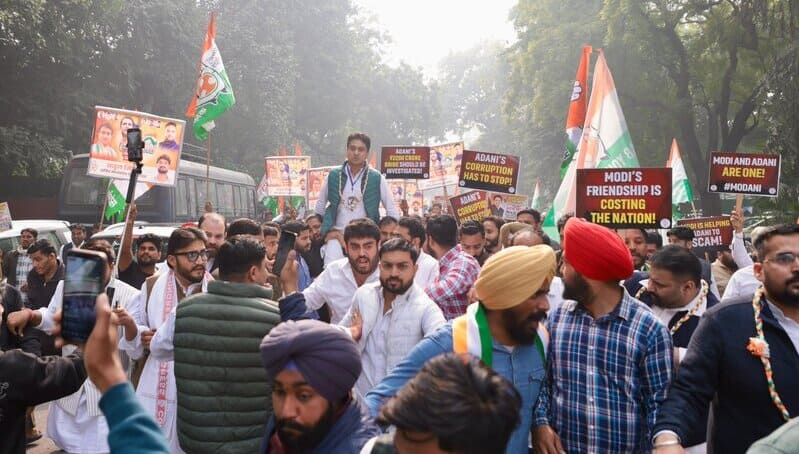
Critics, including opposition leader Rahul Gandhi, have characterized this as a “political ransom” paid by the Indian taxpayer to secure the legal protection of a single corporate oligarch. The deal is viewed by some as a surrender of economic sovereignty, where the Indian state functions as a “private marketing agency” for favored billionaires.
As the July 13 deadline approaches, the criminal charges remain active on the federal docket, leaving the future of the “Modani-Trump” immunity deal in the hands of a resisting judiciary.
💛 Support Independent Journalism
If you find RMN News useful, please consider supporting us.