


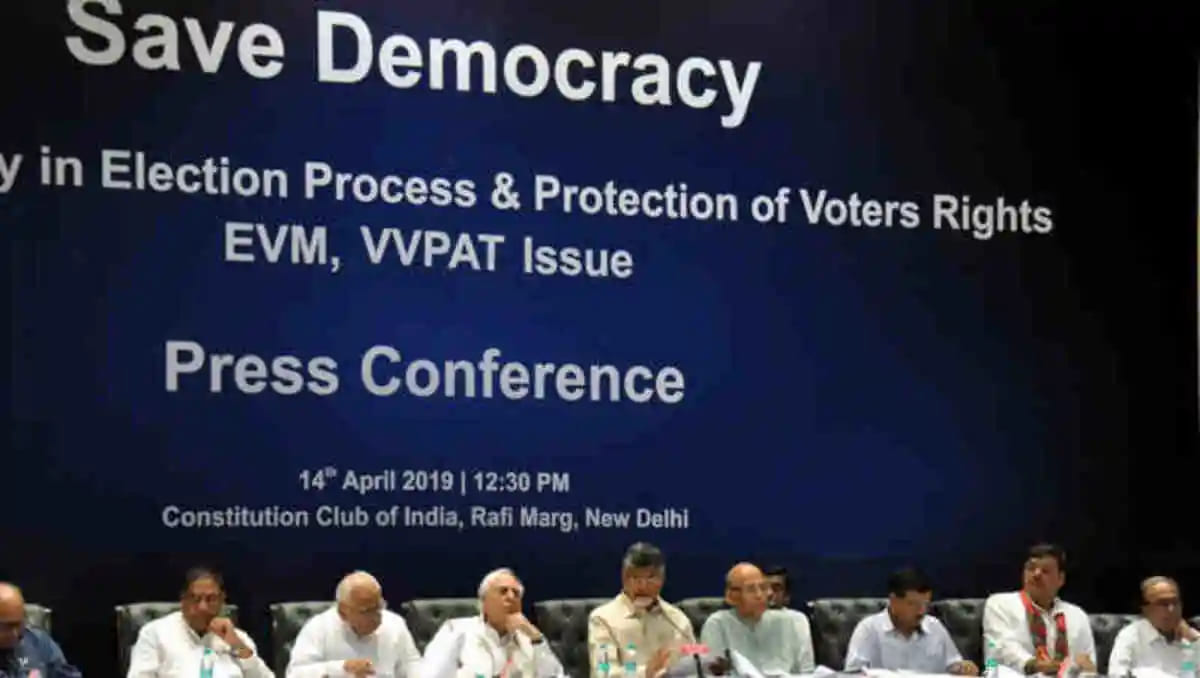
From India’s EVM Controversy to AI Governance, Press Freedom Battles, and Global Fraud Scandals: A Snapshot of Institutional and Technological Upheaval
Opposition leaders in India have intensified demands to scrap Electronic Voting Machines amid allegations of electoral manipulation, while global developments highlight parallel crises in AI control, press freedom, human rights, and large-scale fraud. From Sam Altman’s UN call for human oversight of artificial intelligence to a U.S. court blocking White House restrictions on journalists, institutions worldwide face mounting scrutiny. These interconnected stories reveal deepening tensions between technology, power, and democratic accountability.

Raman Media Network The Unrest Desk
New Delhi | October 3, 2026
A wave of institutional and technological challenges is reshaping politics, governance, and public trust across multiple continents. In India, the integrity of Electronic Voting Machines has emerged as a flashpoint. Congress leader Rahul Gandhi has accused the Election Commission of India and the ruling administration of systemic “vote theft” through alleged EVM manipulation and compromised voter rolls.
Bahujan Samaj Party chief Mayawati has formally called for the complete abolition of EVMs and a return to paper ballots. Election Commission officials, led by Chief Election Commissioner Gyanesh Kumar, have responded with high-profile displays of internal unity aimed at restoring public confidence. Analysts observe that while opposition rhetoric remains sharp, the absence of sustained street-level pressure has so far limited immediate institutional impact. Parallel reporting has also exposed local administrative corruption, including the illegal occupation of luxury government residences in Punjab by defeated Aam Aadmi Party leaders.
Beyond electoral technology, artificial intelligence is triggering urgent governance debates. OpenAI CEO Sam Altman addressed the United Nations Security Council, urging international cooperation to ensure AI remains firmly under human control. In the United States, President Donald Trump launched a public poll proposing alternative names for artificial intelligence, including “Supreme Intelligence.” A global IBM study added a workforce dimension, finding that 60 percent of employees fear AI is eroding critical professional skills—particularly critical thinking—underscoring the need to preserve uniquely human cognitive capabilities amid rapid automation.
Legal and human-rights developments further illustrate institutional strain. A U.S. federal judge issued a restraining order preventing the White House from stripping press credentials from journalists at CNN, MS NOW, and Politico, marking a significant affirmation of press access. On the diplomatic front, the Council of Europe opened its first permanent Observer Office to the United Nations in New York.
Iranian human-rights lawyer Nasrin Sotoudeh received the 2026 Václav Havel Human Rights Prize for her long-standing opposition to compulsory hijab laws and the death penalty; her daughter accepted the award on her behalf. In contrast, international parliamentary leaders sharply condemned Russia’s recent Duma elections as a tightly controlled exercise designed to entrench autocratic power rather than reflect genuine democratic choice.
Investigative reporting has also exposed sophisticated criminal networks. Emmy-winning journalist Mariana van Zeller went undercover for the National Geographic special Super Scam Me, revealing the scale of a $1 billion romance-fraud industry operating across digital platforms. Domestically, detailed coverage continued to document the unauthorized takeover of official residences in Punjab by former AAP politicians.
In media and entertainment technology, the White House launched “Trump TV,” a direct-to-viewer streaming platform for presidential remarks and official content. Samsung TV Plus expanded its free creator-channel lineup across Europe, Asia-Pacific, and Latin America, reaching more than 100 million monthly active users. These moves reflect the accelerating convergence of politics, technology, and content distribution.
Collectively, these stories—from questions over electoral machinery in India to global struggles over AI control, press freedom, human rights, and digital fraud—paint a picture of institutions under pressure in an era of rapid technological change. The common thread is a search for greater transparency, accountability, and human oversight as power and technology continue to intersect.
💛 Support Independent Journalism
If you find RMN News useful, please consider supporting us.