


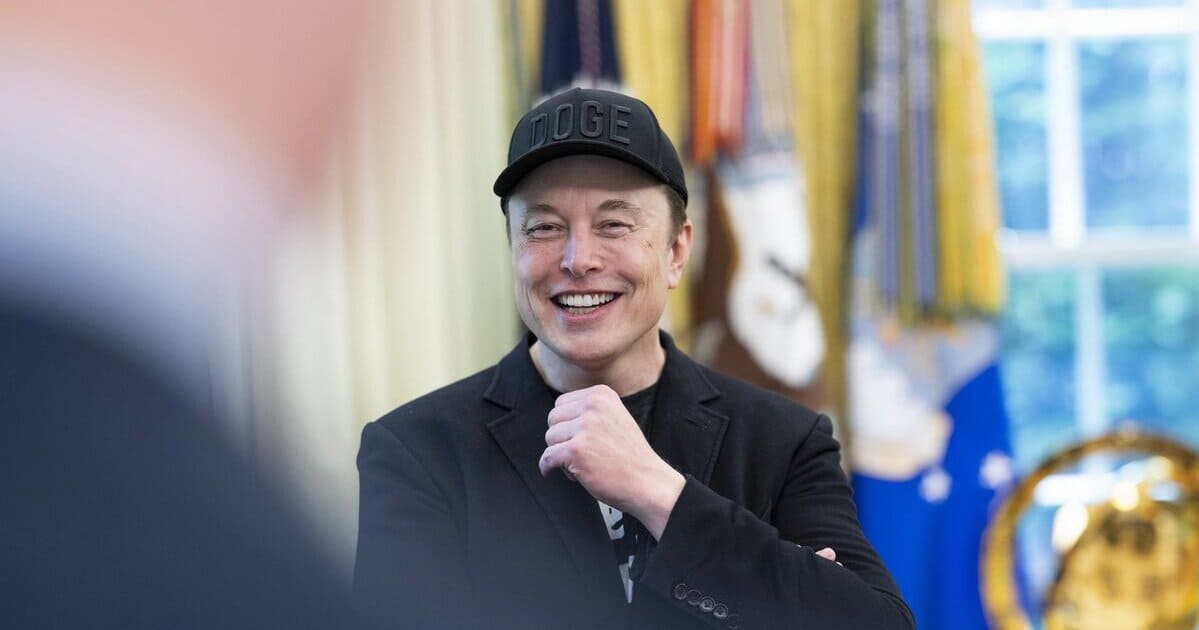
Musk’s Trillionaire Ascent Sparks Global Debate Amid OpenAI Legal Defeat and Papal Critique
Elon Musk is poised to become the world’s first trillionaire following a landmark SpaceX IPO filing, despite suffering a definitive legal blow in his lawsuit against OpenAI. This unprecedented concentration of wealth has triggered a sharp rebuke from Pope Leo XIV, who warns that the widening rich-poor divide signals “big trouble” for the global economy.
Raman Media Network Corporate Desk
New Delhi | May 22, 2026
The Trillion-Dollar Milestone
Elon Musk’s financial trajectory is currently set to surpass all historical precedents. Following a recent filing for an initial public offering (IPO) for SpaceX, the aerospace giant—which encompasses Starlink and the social media platform X—has reached a valuation of $1.25 trillion. Musk’s majority ownership in the firm is estimated to be worth over $600 billion which, when added to his other holdings, is expected to push his total net worth beyond the $1 trillion mark. This follows a record period in late 2025 when his fortune had already hit $749 billion.
However, the path to this milestone is fraught with complexity. While Musk’s paper wealth soars, SpaceX reported a net loss of $4.9 billion last year against $18.6 billion in revenue. Additionally, the enterprise faces over $500 million in anticipated legal costs related to patent infringements and lawsuits involving the “Grok” chatbot.
Papal Alarm on Wealth Concentration
The scale of Musk’s wealth has drawn unprecedented criticism from the Vatican. Pope Leo XIV specifically identified Musk’s potential $1 trillion pay package as an “egregious example” of executive excess. The 70-year-old pontiff expressed deep concern over a systemic income gap where modern CEOs earn upwards of 600 times more than their average employees, a staggering increase from the four-to-six times ratio seen 60 years ago.
Data from the Institute for Policy Studies reinforces these concerns, revealing that at 100 S&P 500 corporations with the lowest median worker pay, the average CEO compensation reached $17.2 million in 2024. This results in a ratio of 632 to 1 when compared to the average median worker pay of $35,570. While billionaire wealth increased three times faster in 2024 than the previous year, everyday workers continue to struggle with wage stagnation and inflation.
The Silicon Schism and Legal Setbacks
Simultaneous to his financial growth, Musk has faced significant legal hurdles. On May 19, 2026, a California jury unanimously rejected Musk’s legal challenge against OpenAI. The jury found that the statute of limitations had lapsed on Musk’s claims of “charitable looting” and breach of trust regarding OpenAI’s transition into an $850 billion commercial entity.
The trial exposed deep personal fissures between Musk and OpenAI CEO Sam Altman. While Musk argued his $38 million in donations were intended for public-good Artificial General Intelligence (AGI), the defense revealed Musk had previously petitioned for a majority equity stake—as high as 90%—before his 2018 departure. Musk dismissed the verdict as a “calendar technicality,” but the decision effectively secures Altman’s leadership and OpenAI’s current hybrid corporate structure.
The Philanthropy Paradox
The ethical debate extends beyond income to the efficacy of billionaire philanthropy. Of the 256 signatories of The Giving Pledge, only nine have fully honored their commitment to donate the majority of their wealth. Reports indicate that 80% of funds donated by original 2010 pledgers—totaling roughly $164 billion—have been diverted into private foundations rather than active charitable causes.
As Musk nears trillionaire status, the intersection of his corporate dominance, legal failures, and the mounting moral critiques from the Vatican fuels an intensifying global conversation regarding the governance of technology and the ethics of concentrated wealth.
💛 Support Independent Journalism
If you find RMN News useful, please consider supporting us.