


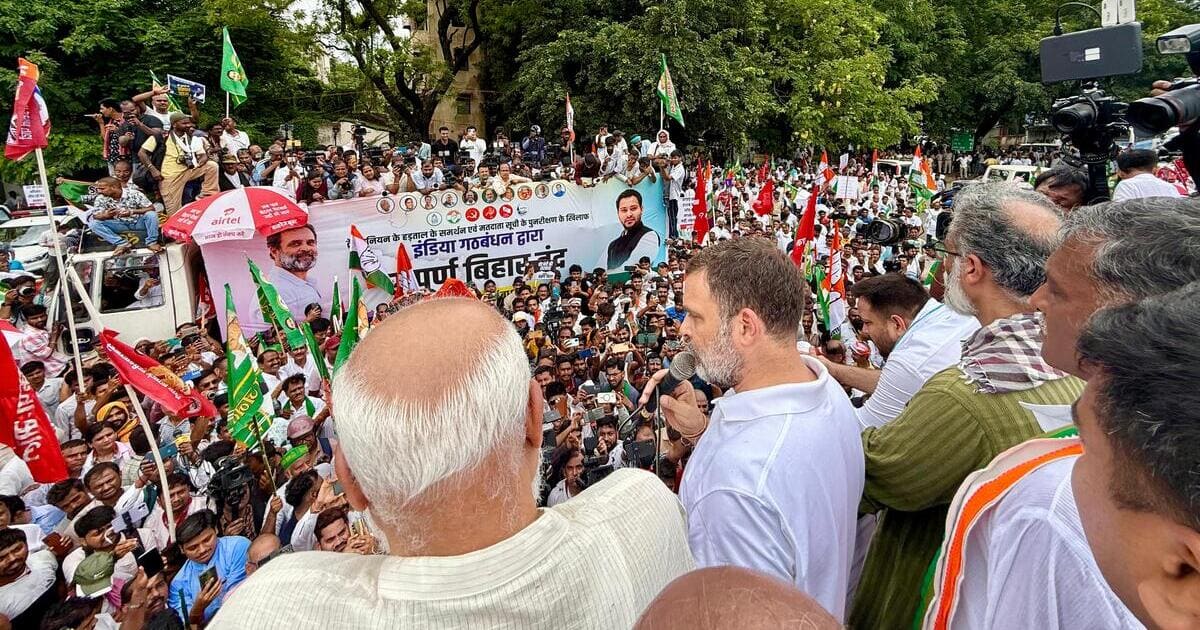
Analyzing the Kota Student Rally: Rahul Gandhi and the Persistent Pattern of Political Futility
The recent “Chhatron ki Goonj” rally in Kota exemplifies Rahul Gandhi’s “Barking Dog Theory,” a documented cycle where high-decibel allegations fail to translate into tangible political action. By prioritizing social media engagement over sustained grassroots mobilization, the Congress leadership remains trapped in a pattern of predictable failure that leaves the current administration largely unfazed.
Raman Media Network Political Desk
New Delhi | June 19, 2026
The Kota Performance: Performance Over Policy
On June 17, 2026, Rahul Gandhi headlined the “Chhatron ki Goonj” rally in Kota, ostensibly to address the grievances of India’s student population. However, research suggests the event was a reactive maneuver designed to counter the rising influence of the Cockroach Janta Party (CJP), a youth-centric organization currently outmaneuvering Congress in student mobilization. Rather than offering a substantive roadmap for educational reform, the rally served primarily as a venue for familiar rhetorical attacks against the Prime Minister, which have historically failed to disrupt the government’s agenda.
The “Barking Dog Theory” defines Gandhi’s career not by progress, but by a circular pattern of loud allegations followed by total abandonment.
Deconstructing the “Barking Dog Theory”
The RMN News research hub has identified a recurring six-step cycle in Gandhi’s political strategy, labeled the “Barking Dog Theory”. This framework explains why high-profile allegations rarely result in political consequences:
- Initiation: Launching a loud, major allegation to capture attention.
- Amplification: Utilizing sympathetic social media circles to create urgency.
- Repetition: Echoing the charges across various choreographed public appearances.
- Headline Dominance: Briefly capturing the news cycle.
- Mobilization Failure: A breakdown in transitioning digital noise into real-world grassroots pressure.
- Abandonment: Dropping the issue entirely once the news cycle shifts, often before any accountability is achieved.
The Digital Cocoon vs. Political Reality
A critical flaw in this approach is the focus on “content” over “substance”. Gandhi often operates within a highly curated digital cocoon, where social media metrics like likes and shares are mistaken for political mandates. While Gandhi was busy sharing links to the Kota event on Twitter, the actual goal of policy reform appeared secondary to maximizing digital engagement. This focus on a “trending” status creates a disconnect from the hard, sustained work required for political victory.
In a digital cocoon where hashtags are mistaken for mandates, substantive policy reform is sacrificed for short-term social media metrics.
A Legacy of Unfinished Campaigns
The historical record supports this theory of cyclical futility. Major campaigns—including those centered on the Rafale deal, the “Chowkidar Chor Hai” slogan, and the Pegasus spyware allegations—followed a similar arc of high initial publicity followed by total disappearance from the active political agenda. Most recently, attempts to weaponize public outrage over examination paper leaks have similarly focused on creating noise rather than building a disciplined national movement. Consequently, these efforts exhaust the electorate without achieving the stated goals of the Congress leadership.
This report is part of our ongoing research on Rahul Gandhi under the title: “Rahul Gandhi: The Barking Dog of Indian Politics?”
💛 Support Independent Journalism
If you find RMN News useful, please consider supporting us.