


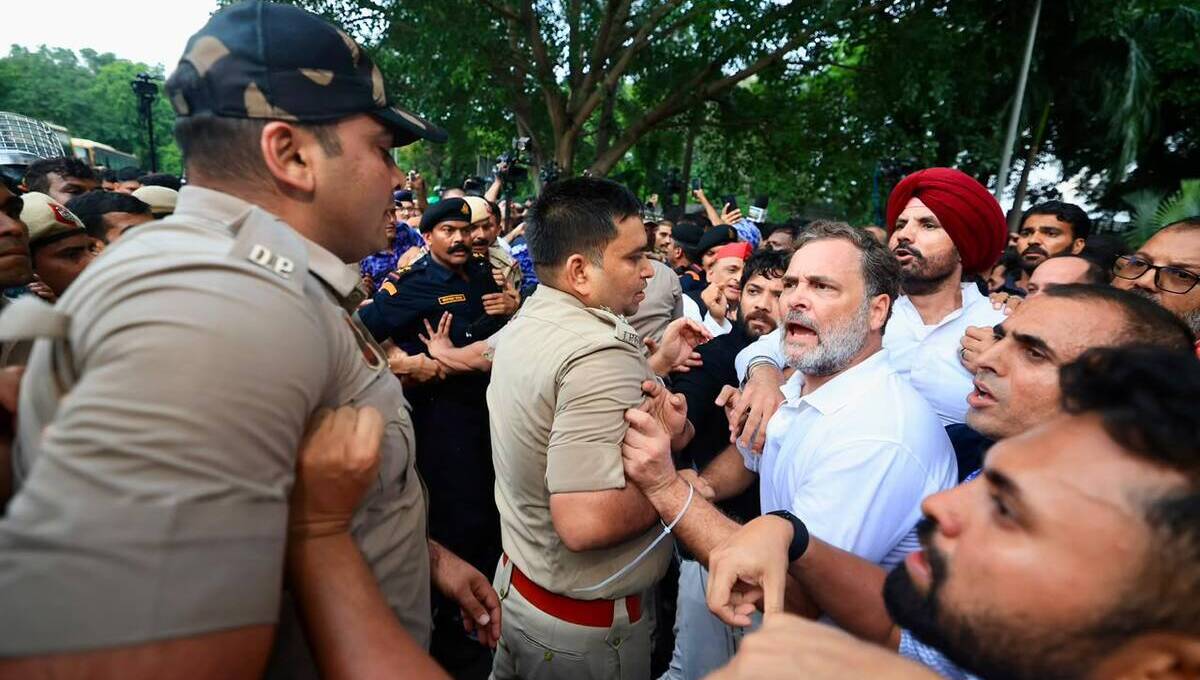
Rahul Gandhi’s Weak Opposition Exposed – Short-Lived Protest at PM Modi’s Residence Ends in Swift Retreat
Rahul Gandhi’s much-hyped July 21, 2026, protest outside Prime Minister Narendra Modi’s residence proved to be yet another episode of political theater—loud demands for resignation quickly dissolved into social media posts after a brief police intervention. Instead of sustaining pressure for students affected by paper leaks and alleged brutality, Gandhi retreated home, highlighting the Congress leader’s pattern of performative opposition without real commitment or results. This failure underscores the broader weakness of India’s opposition under Gandhi: prioritizing viral optics over the sustained, high-friction agitation needed to challenge the government.
By Rakesh Raman
New Delhi | July 22, 2026
On July 21, 2026, Rahul Gandhi led a protest near Prime Minister Narendra Modi’s residence at 7, Lok Kalyan Marg, demanding the PM’s resignation over NEET-UG paper leak issues and police action against student protesters. Accompanied by Priyanka Gandhi Vadra and other Congress leaders, the demonstration ended predictably with detentions by Delhi Police. What began as aggressive posturing rapidly faded, exposing the hollowness of Gandhi’s leadership.
Performance Art Over Genuine Agitation
Gandhi’s appearance at the PM’s residence initially suggested a shift from digital rhetoric to on-ground action. He vowed to sit indefinitely until demands were met. Yet, this resolve evaporated almost immediately upon police intervention. Rather than enduring hardship alongside the students he claimed to champion, Gandhi returned home to rest comfortably, leaving others to face the consequences.
This episode mirrors a consistent pattern. Gandhi excels at identifying targets and generating headlines but lacks the endurance for prolonged struggle. His reliance on polished videos and tweets creates the illusion of resistance while achieving little tangible accountability against the “one-man government.”
Social Media Optics vs. Street Reality
In today’s digital landscape, Gandhi has mastered content creation over concrete political gains. The July 21 event prioritized shareable moments—dramatic images of detention and fiery statements—over building unstoppable momentum. True opposition requires persistent physical presence and organizational grit, qualities repeatedly absent in Congress-led efforts.
Also Read:
[ Rahul Gandhi’s Social Media Politics Under Fire ]
[ Rahul Gandhi’s Resignation Demands: An Analysis ]
[ Rahul Gandhi’s 2026 Protest: All Bark, No Bite ]
Past movements under similar leadership, including farmers’ protests and other agitations, have similarly dissipated under pressure. By retreating to the safety of social media, Gandhi signals to the establishment that such demonstrations pose no genuine threat.
Legacy of Unfulfilled Demands
Gandhi’s street theatrics carry little weight given his track record of unresolved issues in Parliament, from Rafale allegations and Pulwama to Manipur violence and broader governance concerns. Moving protests outside the House admits parliamentary failure, yet the streets reveal the same lack of staying power.
In a robust democracy, opposition must deliver results through sustained pressure. Gandhi’s approach—mild statements, fleeting appearances, and rapid withdrawals—ensures the status quo remains unchallenged. As long as the Congress relies on “barking” without biting, the Modi government faces minimal disruption.
This latest failure reinforces that Rahul Gandhi’s brand of opposition remains fundamentally weak: high on optics, desperately low on impact. Indian voters and affected youth deserve more than temporary spectacles disguised as resistance.
By Rakesh Raman, who is a national award-winning journalist and social activist. He is the founder of a humanitarian organization RMN Foundation which is working in diverse areas to help the disadvantaged and distressed people in the society.
Rakesh Raman | LinkedIn | Facebook | Twitter (X) | Instagram
💛 Support Independent Journalism
If you find RMN News useful, please consider supporting us.