


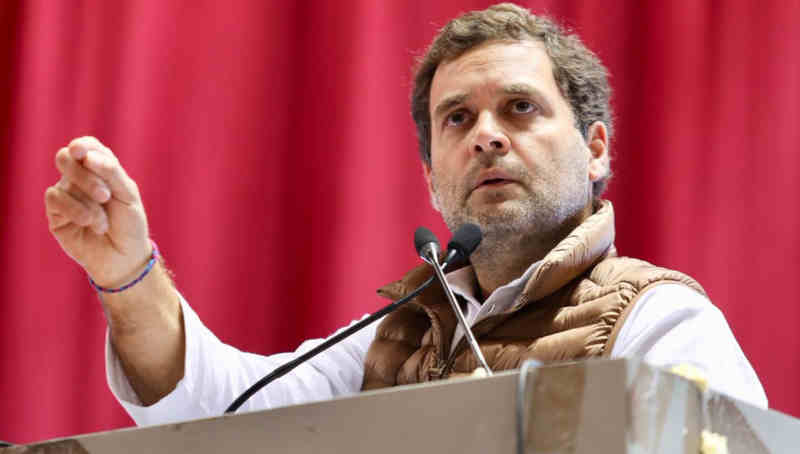
Visibility Without Disruption: An Investigative Critique of Rahul Gandhi’s “Barking Dog” Opposition Strategy
Research reveals Rahul Gandhi’s “visibility without disruption” strategy effectively insulates the ruling establishment from genuine pressure. By prioritizing media headlines over sustained national movements, the opposition creates a theater of dissent that leaves Narendra Modi’s power fundamentally unchallenged.
By Rakesh Raman
New Delhi | June 8, 2026
1. Introduction: The Strategic Context of Visibility Without Disruption
By June 2026, the Indian political landscape has settled into a predictable, yet perilous, equilibrium. In a healthy democracy, an effective opposition acts as a kinetic force, capable of shifting policy and forcing accountability. However, the evidence gathered over the past decade reveals a systemic failure within the primary opposition. While Rahul Gandhi has mastered the art of the headline, his strategy lacks the disruptive power necessary to challenge the status quo. This state of affairs is not merely a political slump; it is a calculated performance of dissent that fails to deliver a measurable impact.
The “Barking Dog Theory,” synthesized from RMN News research, identifies this phenomenon as a state of high-intensity political noise that yields zero consequence. It unmasks a strategy where allegations—no matter how grave—are treated as content for social media consumption rather than catalysts for national change. This theory directly challenges the persistent media narrative of Gandhi as a “potent challenger” to Narendra Modi. Instead, the data suggests that Gandhi’s interventions, such as the recent 2025 “Vote Chori” campaign, serve as a pressure-release valve for public frustration rather than a genuine threat to the BJP’s dominance. This decade-long pattern of behavior highlights a strategic retreat from the difficult work of ground-level mobilization into a more comfortable role of public commentary.
The “Barking Dog Theory” unmasks an opposition strategy that relies on ritualistic noise rather than the political “bite” of sustained mass mobilization.
2. The Anatomy of the Allegation Cycle
In investigative politics, the “cycle” of a campaign is its pulse. A successful campaign builds momentum until it forces a concession. Conversely, the “Allegation Cycle” identified in Rahul Gandhi’s record is a recursive loop that leads to stagnation. This cycle is the engine of the “Barking Dog Theory,” ensuring that the ruling party is never forced to pay a political price for even the most serious charges of institutional capture or corruption. The research identifies six distinct stages in this ritual:
- The Initial Allegation: A high-decibel charge is leveled against the Prime Minister.
- Media Amplification: Digital echo chambers and news cycles pick up the scent.
- Repetition: Gandhi reiterates the charge across various public and digital platforms.
- Dominance: The issue creates a temporary perception of political crisis.
- Stagnation: Crucially, no national mass movement or institutional pressure is organized.
- Abandonment: The issue is dropped in favor of the next trending controversy.
The “So What?” factor here is devastating for democratic accountability. This cycle allows the government to treat opposition charges as a manageable news cycle rather than a political threat. By the time the “Vote Chori” or “Operation Sindoor” allegations reached their peak in 2025, the administration already knew the script: wait for the stagnation phase, and the opposition will simply move on. This predictability transforms the opposition into a “controlled” entity, strengthening the government’s hand by providing a veneer of debate without the risk of disruption.
[ 🔊 क्या राहुल गांधी एक असफल राजनेता हैं? ऑडियो विश्लेषण ]
3. Case Study: The EVM Contradiction and Institutional Critique
Strategic legitimacy rests on the integrity of the ballot. If the mechanism of voting is compromised, the very foundation of the state is in question. Rahul Gandhi has frequently leaned into this gravity, famously asserting that the “soul of the King is in the EVM.” By this logic, the 2024 and 2025 electoral processes were not just flawed, but “stolen.” Yet, this is where the investigative eye finds a profound and disqualifying contradiction: the gap between rhetoric and mobilization.
By labeling EVMs as the “soul of the King” yet refusing to lead a definitive movement for paper ballots, Rahul Gandhi reveals a crippling strategic contradiction.
If Gandhi truly believes the “soul” of the regime’s power lies in machine manipulation, the only logical political response is a single-minded, national crusade for paper ballots—a movement that should, by definition, supersede all other issues. Instead, Gandhi has consistently participated in the very system he decries as fraudulent, leading the Congress party into repeated defeats while failing to build the “sustained bite” of a mass movement for reform. This strategic paralysis suggests that the critique is a tool for commentary rather than a blueprint for change. This refusal to lead a definitive battle for electoral integrity renders his institutional critiques toothless and allows the ruling establishment to ignore his protestations as mere political theater.
4. Politician vs. Commentator: The Digital Mirage
In the 2026 political environment, digital visibility is often confused with power. Rahul Gandhi’s recent history reveals a dangerous reliance on the “digital mirage“—the belief that YouTube views and Twitter impressions are equivalent to political mobilization. This has resulted in Gandhi functionally retreating into the role of a commentator. While a leader organizes the human and institutional machinery required to confront a regime, a commentator merely identifies problems for an audience.
Gandhi’s public interactions—symbolic meetings with delivery workers or students—are optimized for social media engagement, creating a “social media influencer” persona that satisfies his digital base but fails to penetrate the rural or industrial heartlands where elections are won. The 2025 “Vote Chori” campaign failed precisely because it was a digital-first narrative that lacked a ground-level follow-through. By prioritizing symbolic visibility over organizational grit, Gandhi remains a vocal observer of India’s challenges rather than a serious threat capable of disrupting the status quo. This shift from leader to commentator is the final stage of the Barking Dog’s evolution into a permanent, non-threatening fixture of the political landscape.
The 2025 “Vote Chori” campaign highlights a systemic failure: an opposition that identifies institutional capture but lacks the organizational machinery to confront it.
5. The Archive of Unfinished Campaigns (2018–2026)
Longevity and follow-through are the only metrics that matter in investigative political analysis. A review of the research archive reveals a consistent pattern of “strategic abandonment,” where national controversies are raised with high-decibel energy only to be discarded before they can achieve a measurable political outcome.
| Year | Issue / Campaign | Rahul Gandhi’s Position | Observable Outcome |
| 2018-19 | Rafale & “Chowkidar” | Alleged corruption in jet procurement | BJP mandate increased; campaigns abandoned |
| 2020-21 | China Incursions & Farmers | Accused govt of misleading country | Farmers led their own movement; China issue faded |
| 2022-23 | Adani & Pegasus | Alleged cronyism and illegal surveillance | No sustained mass movement; Adani status unchanged |
| 2023-24 | Manipur & EVM “Soul” | Accused govt of failure and machine fraud | No nationwide movement; continued participation |
| 2025 | Vote Chori Campaign | Alleged systematic election theft | No disruption of the electoral status quo |
| 2025-26 | Operation Sindoor / Integrity | Questioned govt accountability & voter rolls | Issues remained media-centric; no ground reform |
The critical takeaway from nearly a decade of data is the recurring theme of “No sustained national movement.” Whether the issue was national security (Pulwama/China) or economic collusion (Adani), the pattern remained identical: identify the friction, generate the headline, and then fail to apply the persistent pressure required to force a change in government policy or public sentiment.
6. Conclusion: The Persistence of the Status Quo
The long-term consequence of an opposition that generates noise without consequence is the fossilization of the status quo. Narendra Modi remains politically secure not because his government is invulnerable, but because the primary opposition operates within a self-imposed cycle of futility. By repeatedly raising the alarm on issues like “Vote Chori” and institutional capture without ever leading the “bite” of a mass movement, Rahul Gandhi has provided the ruling establishment with a decade of predictable, manageable dissent.
The “Barking Dog” metaphor, grounded firmly in the research archive of 2018–2026, perfectly captures the state of Indian democratic accountability. This strategy of “visibility without disruption” satisfies the digital audience and provides the appearance of a functioning opposition, while in reality, it ensures that the ruling power remains unfazed. As long as opposition politics remains a ritual of digital publicity and abandoned campaigns, the status quo will not only persist—it will thrive on the very noise meant to challenge it.
By Rakesh Raman, who is a national award-winning journalist and social activist. He is the founder of the humanitarian organization RMN Foundation which is working in diverse areas to help the disadvantaged and distressed people in the society.
💛 Support Independent Journalism
If you find RMN News useful, please consider supporting us.