


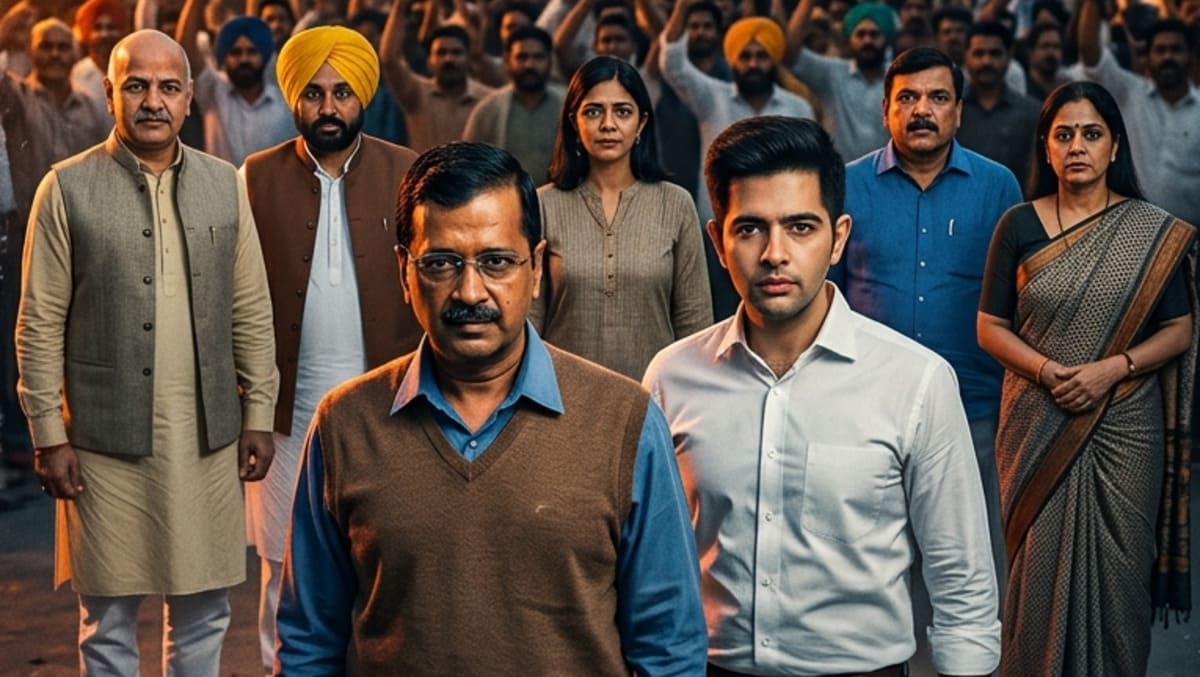
Arvind Kejriwal, Raghav Chadha, and Manish Sisodia Linked to Delhi Excise Policy Case and AAP Corruption Model
The current state of AAP’s leadership is a portrait of systemic collapse, defined by a historic loss of parliamentary support, allegations of a ₹1,000 crore fiscal dispute, and a defiant standoff with the judiciary that marks the definitive end of the party’s anti-corruption pretenses.
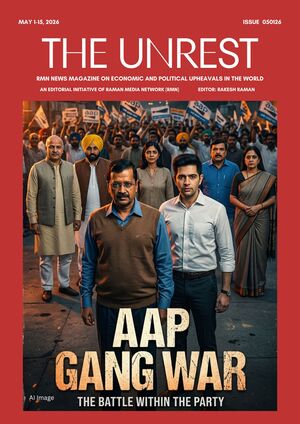
By Rakesh Raman
New Delhi | May 2, 2026
1. The Internal Fragmentation and the Rajya Sabha Defection
As of May 2026, the Aam Aadmi Party (AAP) has entered a state of terminal political instability, characterized by a fundamental breakdown of institutional discipline and a total fiduciary failure. In the landscape of Indian parliamentary governance, the erosion of a party’s Rajya Sabha strength is not merely a political setback; it is a liquidation of its legislative leverage. The current collapse signifies more than internal dissent—it is a “historic blow” that indicates the executive leadership has lost the mandate to command its most senior representatives.
This institutional hemorrhaging reached its zenith when seven out of ten AAP Rajya Sabha MPs announced their mass defection. This group, led by Raghav Chadha, has moved to join the Bharatiya Janata Party (BJP), effectively neutralizing AAP’s presence in the upper house of Parliament.
Immediate Implications of the Defection:
- Procedural and Legislative Paralysis: The loss of 70% of its Rajya Sabha representation strips the party of its ability to contest federal legislation, resulting in a total loss of veto power and strategic influence.
- Erosion of National Fiduciary Credibility: The exit of a politician like Chadha signals a vote of no confidence in the party’s financial and ideological integrity, diminishing its stature as a national alternative.
- Consolidation of Hostile Power: The transition of these legislators to the BJP represents a total rejection of the Kejriwal executive model and a realignment of political capital toward the central ruling authority.
- Systemic Attrition Risk: This high-profile exodus serves as a precedent for further procedural subversion and defection at the state and municipal levels, threatening the party’s surviving infrastructure.
This parliamentary exit is not merely a strategic pivot; it is a symptom of a deeper “systemic rot” inextricably linked to unreconciled illicit capital flows and burgeoning financial disputes within the party’s central command.
2. Financial Disputes and the AAP Gang War Allegations
In the forensic evaluation of a political entity, the emergence of a “gang war” denotes a transition from ideological alignment to a hostile confrontation over the control of unverified fiscal outlays. For an organization founded on the rhetoric of anti-corruption, this shift into open conflict over “dirty money” represents a catastrophic breakdown of public trust. The transition suggests that the party’s internal architecture is no longer governed by policy, but by the management and retention of illicit resources.
Investigative synthesis of current allegations reveals an intensifying internal rift between Raghav Chadha and the Arvind Kejriwal leadership. The “gang war” is fueled by the following:
- The Dispute Over Unreconciled Capital: Sources allege that the primary catalyst for this internal warfare is the refusal of Raghav Chadha to return over ₹1,000 crore in “dirty money” to the party’s central leadership.
- Internal Fiscal Friction: This alleged retention of massive, unverified funds has created a volatile impasse, leading to the eventual splintering of the party’s legislative wing.
- Catalyst for Institutional Exit: The financial standoff over these funds is identified as the prime driver behind the mass defection to the BJP, as the leadership’s ability to enforce financial loyalty has been effectively compromised.
These individual disputes are not isolated events of personal greed; they are part of a broader, more structured framework for institutional exploitation.
🔊 आम आदमी पार्टी के भ्रष्टाचार का मॉडल और राजनीतिक पतन: ऑडियो विश्लेषण
3. Mechanics of the AAP Corruption Model
A “corruption model” functions as a designed framework for fiscal extraction, utilizing state machinery to siphon resources while maintaining a deceptive public-facing narrative. Within the AAP framework, there is a profound tension between populist messaging and the alleged systematic utilization of government departments for individual profit. This is not incidental malfeasance; it is a structured operational cycle.
This framework is branded in recent investigative reports as “Kejriwal ke bhrashtachar ka model” (Kejriwal’s Corruption Model). It is identified as a 16-step “vyavasthit” (systematic) operational cycle. The primary objectives of this designed framework include:
- Maintenance of a Populist Veneer: Exploiting public welfare initiatives to provide a “moral” cover for underlying fiscal extractions.
- Large-Scale Fiscal Extraction: Engineering state policy to facilitate the siphoning of funds from the public exchequer into private or party-affiliated accounts.
- Systematic Institutional Exploitation: Utilizing the streamlined architecture of the state—including software and administrative levers—to maximize individual profit at the expense of governance.
This “vyavasthit” approach ensures that extraction is consistent and scalable, even as it erodes the integrity of the institutions it inhabits. The operational failures and public exposure of this model have now precipitated a constitutional crisis.
4. Judicial Standoff in the Delhi Excise Policy Case
The judiciary serves as the ultimate auditor of the public exchequer, tasked with maintaining the integrity of the state’s financial systems. When high-ranking officials—specifically Arvind Kejriwal and former Deputy Chief Minister Manish Sisodia—engage in a total boycott of judicial proceedings, it represents a total subversion of the public exchequer’s oversight and a direct challenge to the rule of law.
The Delhi Excise Policy case has reached a critical point of escalation involving:
- Presiding Judicial Authority: The proceedings currently being boycotted are held before Justice Swarna Kanta Sharma.
- The “Spine” Mandate: The “Legal Case Memorandum” emphasizes that the protection of the public exchequer requires the judiciary to exercise significant “spine” in addressing high-stakes political corruption. It posits that the courts must remain a resilient barrier against political evasion to ensure accountability for the excise system’s integrity.
- Constitutional Standoff: By refusing to participate in the hearings before Justice Swarna Kanta Sharma, the AAP leadership has moved beyond political defense into a territory of institutional defiance, creating a judicial impasse that threatens the very foundations of democratic pluralism.
The current state of AAP’s leadership is a portrait of systemic collapse, defined by a historic loss of parliamentary support, allegations of a ₹1,000 crore fiscal dispute, and a defiant standoff with the judiciary that marks the definitive end of the party’s anti-corruption pretenses.
By Rakesh Raman, who is a national award-winning journalist and social activist. He is the founder of the humanitarian organization RMN Foundation which is working in diverse areas to help the disadvantaged and distressed people in the society.
💛 Support Independent Journalism
If you find RMN News useful, please consider supporting us.