


Delhi CEO Ashok Kumar Faces Pending MHA Corruption Inquiries as Chief Election Commissioner Gyanesh Kumar Offers No Response to Statutory Representation
Formal Ministry of Home Affairs inquiries into financial irregularities from his prior role as Secretary (Cooperation) continue against Delhi Chief Electoral Officer Ashok Kumar, IAS. A statutory representation seeking review under Article 324 and Section 13CC was submitted to Chief Election Commissioner Gyanesh Kumar on September 23, 2026, with a September 30 deadline. The Election Commission of India has issued no response or action, allowing the officer to retain plenary electoral powers amid unresolved federal scrutiny.
By Rakesh Raman
New Delhi | October 20, 2026
Electoral integrity depends on the impartiality of officers who manage democratic processes. When a senior official overseeing elections remains under active federal examination for alleged financial irregularities, questions of institutional credibility inevitably arise.
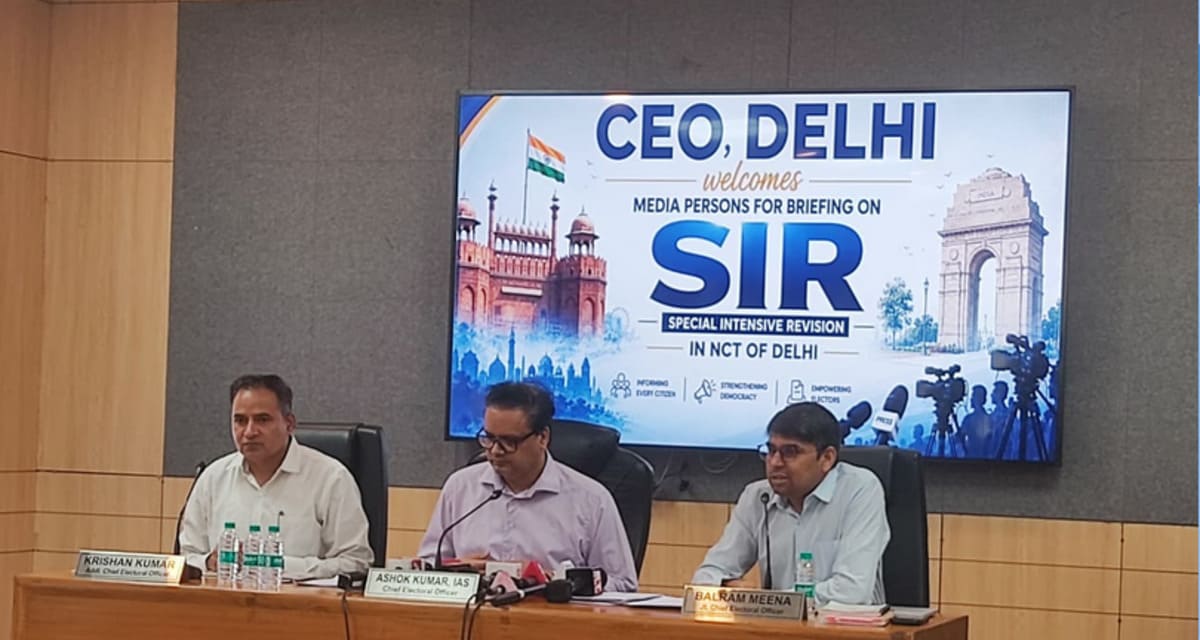
Ashok Kumar, IAS (AGMUT: 2006), currently serves as Chief Electoral Officer of Delhi. He was appointed by the Election Commission of India in February 2026. Prior to this role, he held the position of Secretary (Cooperation) in the Government of NCT of Delhi. During and after that tenure, multiple formal complaints alleged administrative failures and financial irregularities linked to the Registrar Cooperative Societies and specific cooperative housing societies.
These matters entered official channels through successive filings on the Centralized Public Grievance Redress and Monitoring System (CPGRAMS). Key milestones include:
- A 2022 grievance registered with the Ministry of Home Affairs.
- Subsequent complaints in 2023 and 2025 that named multiple senior IAS officers and were referred by the Department of Personnel and Training to the Cabinet Secretariat.
- A February 2026 complaint that specifically cited offences under the Prevention of Corruption Act, 1988, against officers associated with the Department of Cooperation and the Registrar Cooperative Societies.
On April 23, 2026, the Ministry of Home Affairs (UT Division) issued Letter No. 14036/85/2022-UTS-I. The letter named Ashok Kumar, IAS, and Krishna Kumar Singh, IAS (then Registrar Cooperative Societies), and sought confirmation and supporting documents from the complainant within 15 days. The required confirmation and evidence were submitted on April 26, 2026. Official records indicate that a factual report from the Government of NCT of Delhi remains under examination.
One documented strand of the allegations concerns the Delhi Public School Cooperative Group Housing Society in Dwarka. Society records from 2019–2020 acknowledged unrecovered dues exceeding ₹52.74 lakh. Despite this acknowledgment, a No-Dues Certificate was issued that enabled transfer of the property. A separate statutory inquiry into broader irregularities estimated at approximately ₹20 crore produced a report that residents challenged as incomplete. Complaints seeking supersession of the managing committee and protection of records were submitted to the Registrar Cooperative Societies and the Chief Secretary of Delhi as recently as September 21, 2026.
[ Also Read: Delhi CEO Ashok Kumar IAS Corruption Case ]
[ दिल्ली सीईओ अशोक कुमार आईएएस भ्रष्टाचार मामला: ऑडियो विश्लेषण ]
On September 23, 2026, journalist and social activist Rakesh Raman submitted a statutory representation to Chief Election Commissioner Gyanesh Kumar at Nirvachan Sadan. Copies were also sent to the Department of Personnel and Training and the Ministry of Home Affairs. The representation requested five specific actions:
- An immediate status report from the Ministry of Home Affairs and DoPT on the pending examination.
- An evaluation of whether Ashok Kumar can appropriately continue as Delhi CEO while under federal scrutiny.
- Consideration of holding the appointment in abeyance pending the outcome of the inquiry.
- Consideration of the related cooperative-society complaints and earlier DoPT office memorandums as material background.
- A written response by September 30, 2026.
No response, status report, or administrative communication was received by the stated deadline.
Under Article 324 of the Constitution, the Election Commission holds plenary powers of superintendence, direction, and control over elections. Section 13CC of the Representation of the People Act, 1950, places Chief Electoral Officers on deemed deputation to the Commission and subjects them to its exclusive administrative control and disciplinary jurisdiction. Standing Commission directives reinforce that state governments cannot independently transfer or alter the status of electoral officers without prior Commission approval.
The absence of any public or formal response from the Election Commission leaves an officer under active Ministry of Home Affairs examination in charge of Delhi’s electoral machinery, including electoral-roll revision and election preparedness. This situation creates an unresolved conflict-of-interest perception that constitutional and statutory frameworks were designed to prevent.
RMN News will continue to monitor developments in the federal inquiries and any subsequent action by the Election Commission of India.
By Rakesh Raman, who is a national award-winning journalist and social activist. He is the founder of the humanitarian organization RMN Foundation which is working in diverse areas to help the disadvantaged and distressed people in the society.
He also runs the RMN Consumer Rights Network, a public-interest initiative to protect consumers from corporate negligence, misleading advertising, government apathy, and other practices that harm people’s rights, health, and financial interests.
💛 Support Independent Journalism
If you find RMN News useful, please consider supporting us.