


EVM Integrity Crisis and Timeline of Key Incidents: How Physical Breaches, Theft, and Storage Failures Undermine Confidence in India’s Electronic Voting System
Recurring incidents of Electronic Voting Machine destruction, theft, unauthorized transport, and compromised storage from 2017 to 2026 have raised serious questions about the physical security and chain of custody of India’s electoral hardware. RMN research documents multiple breaches that make independent verification of vote counts difficult and highlight structural vulnerabilities in the EVM system. These documented events fuel the broader debate over election transparency and the call for a return to paper ballots.
By Rakesh Raman
New Delhi | October 6, 2026
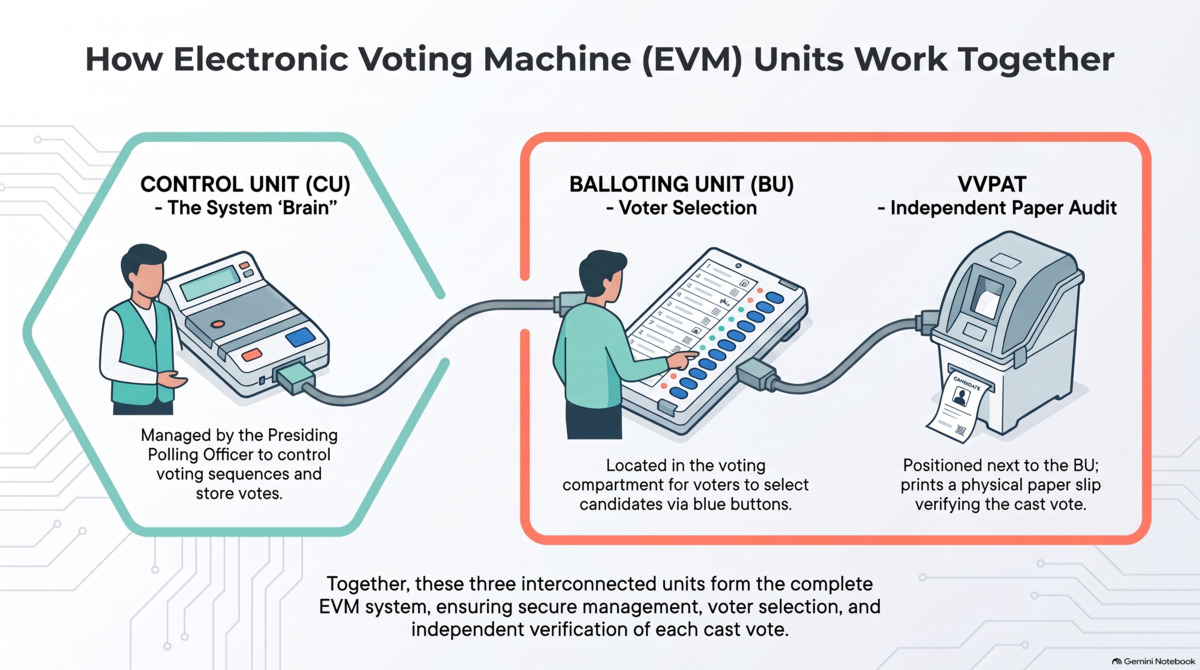
Electronic Voting Machines form the backbone of India’s modern electoral process. The Election Commission of India describes the system as comprising three cable-connected components—the Control Unit, Balloting Unit, and Voter Verifiable Paper Audit Trail (VVPAT)—that operate together during voting. The Balloting Unit allows voters to select a candidate, the Control Unit is managed by polling officials, and the VVPAT produces a paper slip that voters can briefly verify before it is sealed.
Despite official assurances that technical and administrative safeguards protect these machines, a series of physical incidents has repeatedly exposed weaknesses in their custody, transport, and storage. These events form the core of what RMN research identifies as the EVM integrity crisis: a pattern of destruction, theft, unauthorized movement, and compromised strongrooms that undermines public confidence in the accuracy and auditability of electronic results.
The EVM Integrity Crisis
Across state and Lok Sabha elections, recurring incidents of EVM destruction, theft, unauthorized transport, and broken storage locks have raised fundamental questions about whether the voting process remains free from physical interference. While the Election Commission maintains that EVMs are secure, documented cases show machines being smashed, burned, stolen, or moved outside official protocols.
RMN research indicates that vulnerabilities extend beyond theoretical software concerns to practical failures in chain of custody. Machines have been transported in unsecured vehicles, strongrooms have suffered fires or breaches, and warehouses have been left inadequately protected. Such incidents make it difficult for voters, candidates, and observers to independently confirm that recorded votes match the choices cast at polling stations.
The crisis is compounded by limited independent access to the technology and restricted VVPAT verification. When physical evidence is destroyed or machines go missing, the ability to audit results is permanently impaired. This has led RMN research to conclude that returning to physical paper ballots would eliminate these specific vulnerabilities and restore a higher degree of observable integrity.
Timeline of Key Incidents (2017–2026)
RMN has compiled chronological evidence of physical compromises involving EVMs. The following table summarizes major documented incidents:
| Date | Location & Election | Incident Summary | Core Democratic Vulnerability |
|---|---|---|---|
| April 9, 2017 | Srinagar, J&K (Lok Sabha Bypolls) | Widespread clashes led to 33 EVMs being physically smashed and burned, while 16 machines disappeared completely. | Complete breakdown of polling hardware security; repolls ordered by ECI. |
| May 10, 2023 | Vijayapura, Karnataka (Assembly Election) | Local residents intercepted an officer’s vehicle illegally transporting reserve EVMs and physically destroyed the units. | Unsafe, unmonitored transportation of spare EVMs outside official custody protocols. |
| April 19, 2024 | Inner Manipur (Lok Sabha Election) | Armed chaos and booth capturing resulted in EVMs being smashed across multiple polling stations in Imphal East, Imphal West, and Kakching. | Complete physical destruction mid-poll, forcing ECI to void polling data across several booths. |
| April 23, 2026 | Tiruvannamalai, Tamil Nadu (Assembly Election) | A polling booth agent deliberately damaged an active EVM after alleging voters were being forced to vote for a specific party. | Live polling booth vulnerability and widespread lack of voter confidence in machine fairness. |
| June 10, 2026 | Alipore (Kolkata), West Bengal (State Election) | A suspicious fire in a high-security government building destroyed approximately 4,000 EVM units stored in a strongroom. | Potential destruction of physical recount evidence right after contested state elections. |
| September 2026 | Anuppur, Madhya Pradesh (Panchayat Byelections) | A verification audit revealed that 24 EVM units (8 ballot units, 16 control units) were stolen from a broken warehouse. | Extreme negligence in physical warehouse security and failure of long-term inventory tracking. |
Two recent cases illustrate the scale of the problem. In June 2026, a fire in the New Administrative Building in Alipore, Kolkata, selectively consumed a strongroom housing roughly 4,000 EVM control units, ballot units, and VVPATs shortly after contested elections. Reports noted that the blaze bypassed intermediate floors to target the exact storage location, permanently eliminating hardware that could have supported judicial recount petitions.
In September 2026, officials in Anuppur, Madhya Pradesh, discovered during a routine audit that 24 EVM units had been stolen after thieves broke through a warehouse wall that had remained damaged and unsecured for months. The absence of regular physical stock reconciliation left the machines vulnerable to theft, substitution, or tampering.
These incidents form part of a broader pattern. EVMs have been moved in private vehicles without proper monitoring, seals have been compromised, and storage facilities have repeatedly failed basic security standards. Because the machines function as a closed system, the loss or destruction of units removes the only physical record available for verification beyond limited VVPAT sampling.
Why Physical Security Matters
The integrity of any voting system depends on an unbroken chain of custody from manufacture through counting. When machines can be intercepted in transit, destroyed mid-poll, or eliminated from strongrooms, the electronic totals become difficult to challenge or independently confirm. Traditional paper ballots, by contrast, allow direct counting in the presence of party representatives and preserve physical evidence that can be recounted under judicial order.
RMN research emphasizes that the volume of documented physical compromises makes it impossible for ordinary voters to verify that their choices were accurately recorded and tallied. The Election Commission’s position that EVMs cannot be manipulated to alter results coexists with these repeated failures in real-world handling.
As political parties, civil society groups, and citizens continue to demand greater transparency—including expanded VVPAT verification or a full return to paper ballots—the timeline of key incidents serves as a factual record of the vulnerabilities that fuel the ongoing debate. Continuous documentation of such events remains essential for assessing the long-term reliability of electronic voting in India’s democratic process.
By Rakesh Raman, who is a national award-winning journalist and social activist. He is the founder of a humanitarian organization RMN Foundation which is working in diverse areas to help the disadvantaged and distressed people in the society.
💛 Support Independent Journalism
If you find RMN News useful, please consider supporting us.