


Hazardous Garbage Mountains Near Homes and Schools Expose Delhi Government’s Corruption, Incompetence, and Complete Civic Collapse
Delhi’s 30 million residents are trapped in a public-health nightmare of stinking hazardous waste heaps dumped next to residential complexes and government schools, open manholes, broken roads, and stagnant sewage. Systemic corruption and unskilled bureaucracy have rendered official grievance portals useless, leaving citizens without any state protection. Independent platforms such as Clean House remain the only structured avenue for documenting official negligence and demanding accountability.
By Rakesh Raman
New Delhi | October 4, 2026
Delhi has descended into a full-scale civic emergency. Mountains of hazardous, disease-breeding garbage now sit directly beside residential complexes and government schools, while open manholes, crumbling roads, and pools of stagnant filthy water turn ordinary streets into daily hazards. This is not an isolated local failure. It is the visible result of prolonged administrative carelessness, entrenched corruption, and a profound skills deficit inside the Delhi government.
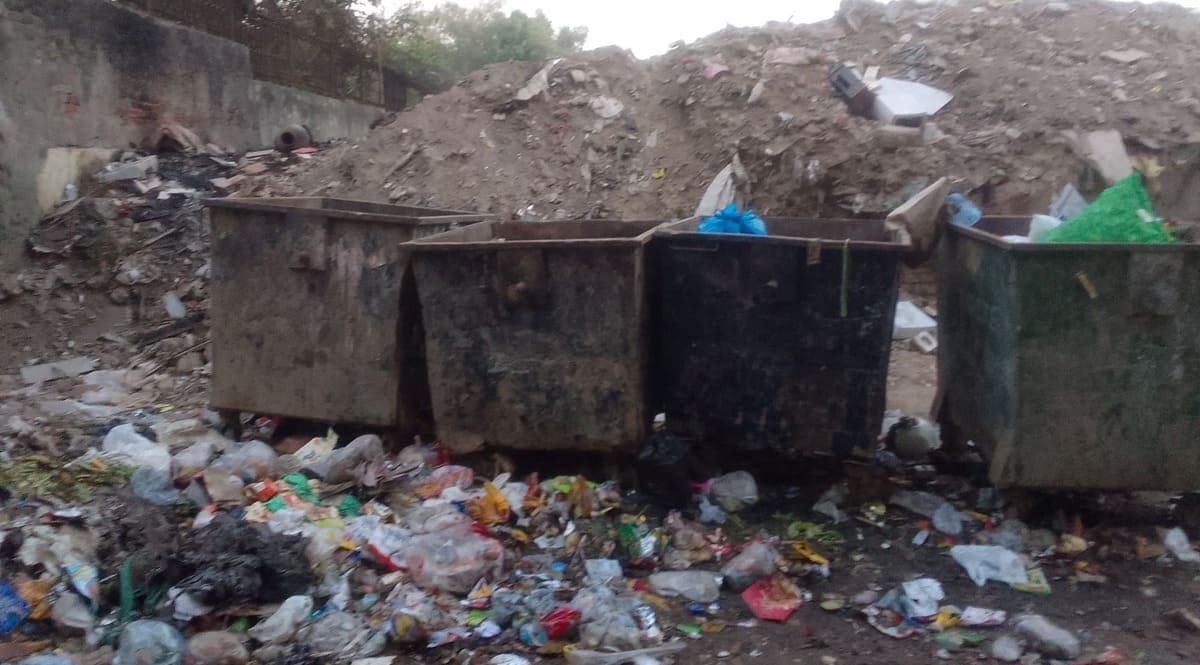
Photographic evidence recorded in September 2026 by RMN News editor Rakesh Raman shows massive heaps of rotting waste piled against housing complexes and school premises. These dumps release foul odours, attract disease vectors, and expose children and families to serious health risks. Similar scenes appear across large parts of the capital. Clean conditions are maintained only in the privileged enclaves occupied by politicians and senior officials. Everywhere else, basic municipal services have effectively stopped.
The scale of the problem is staggering. A city of nearly 30 million people requires competent urban management, functioning waste logistics, and continuous infrastructure maintenance. Instead, the Chief Minister’s Office, the Lieutenant Governor’s administration, and the Municipal Corporation of Delhi have allowed institutional inertia to replace active governance. Broken roads, exposed manholes, and uncollected sewage are now routine. Residents must navigate raw filth simply to move through their own neighbourhoods.
[ दिल्ली का नागरिक पतन और प्रशासन की विफलता: ऑडियो विश्लेषण ]
[ Also Read: Delhi Disaster Reports ]
This collapse is rooted in two interconnected failures: systemic corruption and a severe shortage of administrative competence. Ruling politicians and many bureaucrats lack the specialised knowledge required for modern city management. Rather than data-driven planning or professional service delivery, the system operates on indifference and rent-seeking. Official grievance mechanisms illustrate the problem clearly.
The Public Grievance Monitoring System and the CM Jan Sunwai Portal function as digital façades. Emails listed on government sites are frequently wrong, telephone lines go unanswered, and submitted complaints disappear without response. Citizens have no reliable official channel left through which to seek redress.
Corruption has turned these portals into tools of evasion rather than accountability. Officials ignore communications, close files without action, and shield one another from scrutiny. The result is a city in which the rule of law has eroded and public welfare holds little political value. When leaders believe power can be retained without genuine responsiveness to voters, citizen welfare becomes expendable.
In the vacuum created by state failure, independent citizen platforms have become essential. Journalist Rakesh Raman launched the Clean House service in 2017 and expanded it in 2025. It covers DDA flats, cooperative group housing societies, JJ colonies, unauthorised colonies, and resettlement colonies. Residents use it to document management-committee corruption, housing-society crimes, and government carelessness. The companion Consumer Rights Network addresses corporate fraud, unsafe products, and broader administrative negligence. These structured mechanisms convert individual complaints into documented cases that create public pressure where official channels have collapsed.
The primary civic failures remain consistent: hazardous waste heaps next to homes and schools, collapsing infrastructure, open manholes, stagnant sewage, and completely unresponsive government portals. Residents who wish to challenge this negligence can register detailed reports through the independent Clean House and Consumer Rights Network platforms. Organised documentation and public reporting remain the most practical tools available for forcing accountability in a system that has abandoned its statutory duties.
Delhi’s current condition is not an accident of weather or temporary overload. It is the predictable outcome of sustained governmental carelessness, corruption, and competence failure. Until the administrative machinery is forced to restore basic municipal functions and answerable grievance systems, the capital will continue to impose an unacceptable public-health and safety burden on its 30 million residents.
By Rakesh Raman, who is a national award-winning journalist and social activist. He is the founder of the humanitarian organization RMN Foundation which is working in diverse areas to help the disadvantaged and distressed people in the society.
💛 Support Independent Journalism
If you find RMN News useful, please consider supporting us.