


The Unrest Nov 2026: Global Upheavals
The Unrest Magazine (Nov 1–15, 2026) Documents Global Political Upheavals, Election Integrity Challenges, Authoritarian Accountability, and Democratic Pressures
The Unrest magazine issue covering November 1–15, 2026, examines intensifying global political friction, international legal efforts targeting authoritarian rulers, and election-manipulation concerns. Investigative reports detail governance issues in India, U.S. security actions on Chinese AI, human-rights crises, and institutional accountability gaps. The fortnightly open-access publication highlights structural tensions between domestic control and expanding mechanisms of democratic oversight.
Raman Media Network The Unrest Desk
New Delhi | November 2, 2026
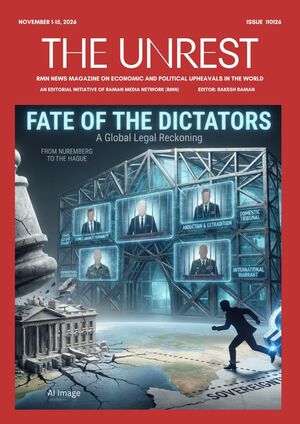
The Unrest magazine of November 1–15, 2026, produced by RMN News Service and archived on Zenodo, presents a detailed survey of concurrent political, institutional, and technological pressures across multiple regions. The issue frames these developments under the theme of structural tension between absolute authoritarian control and modern international accountability mechanisms.
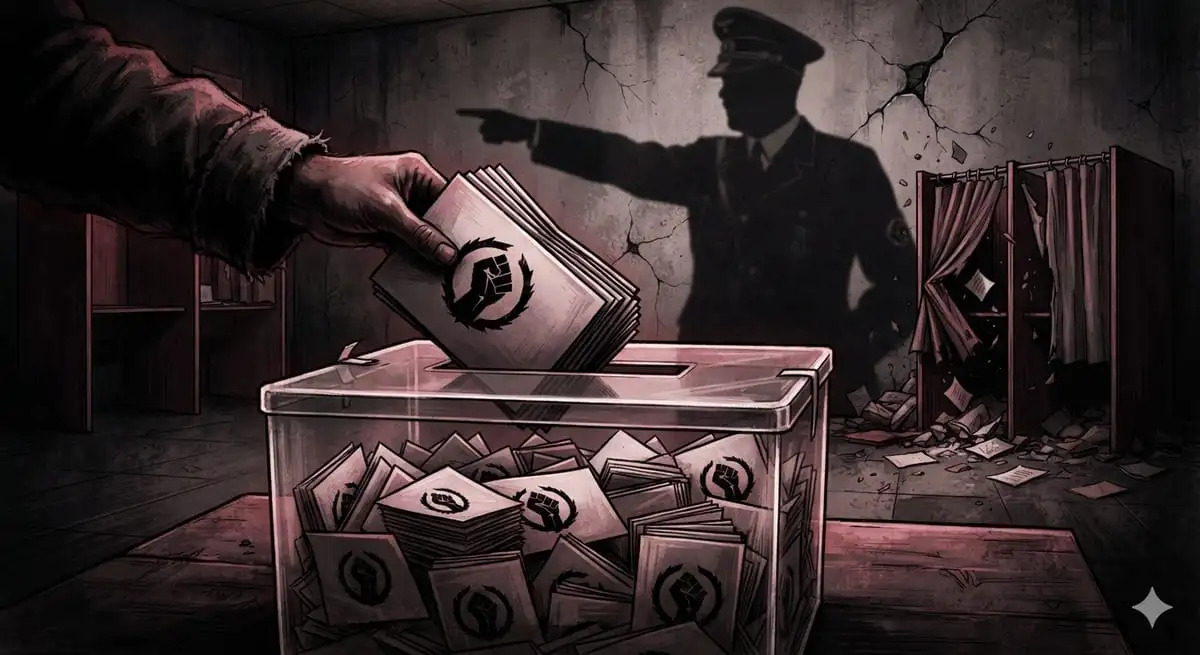
Global governance and authoritarian accountability form a central focus. A featured investigative portal titled “Fate of the Dictators: A Global Legal Reckoning” traces judicial trajectories of authoritarian leaders from Nuremberg to contemporary Hague tribunals. The analysis describes how certain rulers—characterized as “ballot-box hijackers”—have used electoral systems to manufacture mandates while suppressing opposition, even as extraditions, domestic tribunals, and international warrants expand. In Strasbourg, Council of Europe Secretary General Alain Berset told the Congress of Local and Regional Authorities that municipal and regional governments serve as primary early-warning systems against democratic backsliding; he also advocated progressive, health-oriented European drug policies.
International geopolitical notes in the same issue record several flashpoints. After defeat in Brazil’s presidential run-off, candidate Flávio Bolsonaro left for Miami with his family. Iranian authorities staged a public display featuring a live impersonator of Donald Trump inside a mock jail cell. In the United States, President Donald Trump engaged in a tense exchange with a reporter who questioned his health and campaign commitments.
Turning to India, The Unrest examines ongoing debates over Electronic Voting Machine security and election integrity. Despite calls for greater transparency and paper-ballot options, the Central Government and Election Commission continue to prioritize EVMs; dedicated research hubs track related legal, technical, and civic disputes. Political rhetoric intensified: the Bharatiya Janata Party released the campaign song “Modi Kahin Nahi Jaayega” in response to remarks by Congress President Mallikarjun Kharge.
Opposition leader Rahul Gandhi’s allegations of vote tampering and claims that Prime Minister Narendra Modi and Home Minister Amit Shah have undermined democratic norms drew criticism for lacking judicial corroboration. Reports also noted that six U.S. Democratic lawmakers had been influenced by contested narratives surrounding India’s Special Intensive Revision of voter lists. Separate investigative material addresses allegations of state-backed regulatory restructuring aligned with corporate interests linked to industrialist Gautam Adani.
Human-rights coverage centers on Punjab, where the daylight murder of anti-drug campaigner Parvinder Singh Jhota in Mansa triggered public outrage and civil unrest. Parallel reports document state security actions against student and women activists; veteran actor Naseeruddin Shah publicly criticized administration interventions targeting demonstrators, while further accounts detail pushback against Delhi Police measures involving female political activists.
Institutional and corruption inquiries receive sustained attention. Anti-corruption proceedings continue against Delhi Chief Electoral Officer Ashok Kumar, IAS, stemming from irregularities during his earlier tenure as Secretary (Cooperation). At Indira Gandhi National Open University, Vice Chancellor Prof. Uma Kanjilal faces scrutiny over administrative delays affecting an estimated 3.5 million students, including unresolved grievances and delayed results. A SEM Court ordered the release of members of the Cockroach Janta Party—described as a proxy entity—after their arrest for trespassing at Jantar Mantar in New Delhi.
Technology and digital-policy developments close the issue. The U.S. Department of Homeland Security directed federal civilian agencies to remove software from Chinese AI firm DeepSeek on national-security grounds. RMN Digital launched a Chief AI Officer (CAIO) Hub to support corporate executives navigating AI integration, while related publications—Technophile and Movie Mate—continued coverage of tech governance and entertainment trends.
Collectively, the November 1–15, 2026 edition of The Unrest positions these stories as interconnected indicators of democratic stress, electoral transparency contests, and the evolving reach of international accountability frameworks. The open-access fortnightly remains permanently citable through DOI records on the CERN-operated Zenodo platform.
👉 You can click here to read all issues of The Unrest magazine of RMN News.
👉 You can click here to download and read the November 1-15, 2026 issue of The Unrest magazine which is also given below.
Rakesh Raman | LinkedIn | Facebook | Twitter (X)
💛 Support Independent Journalism
If you find RMN News useful, please consider supporting us.