Mosquito Crisis Explodes in Delhi
Mosquito Crisis Explodes in Delhi
With official measures falling short, desperate residents have turned to household repellents, inadvertently creating new health hazards.
By RMN News Service
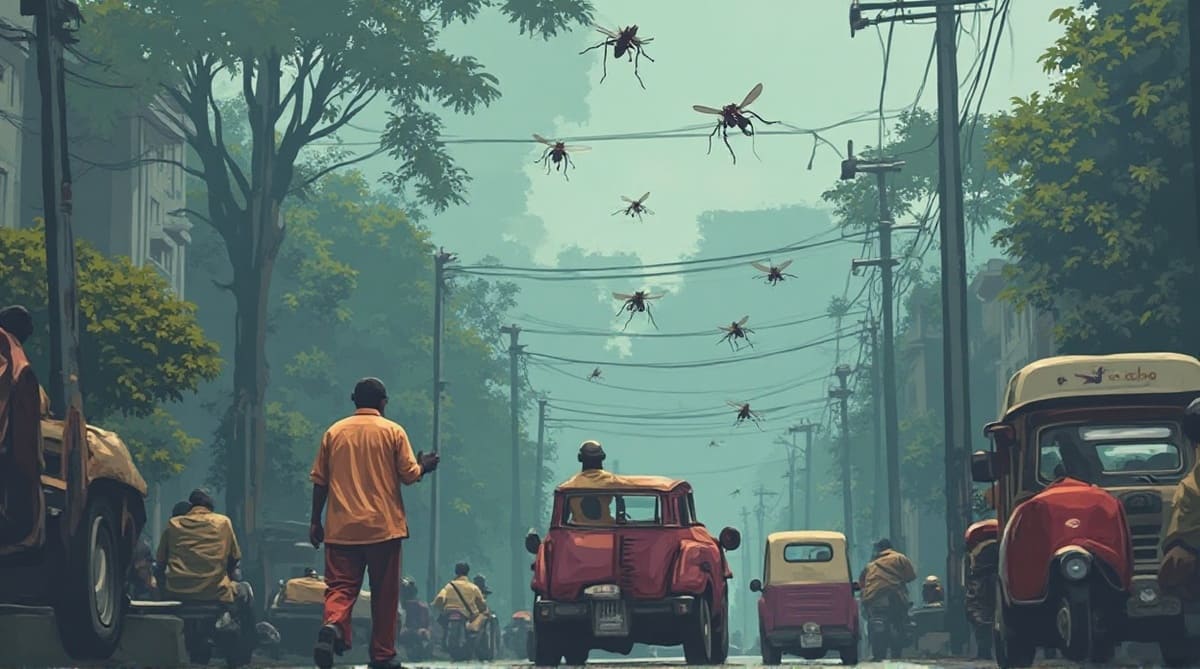
New Delhi, April 13, 2026 – Delhi is facing an unprecedented mosquito crisis that has transformed a seasonal nuisance into a year-round public health disaster and a crippling economic burden for millions of residents.
Mosquito density across the capital has skyrocketed to nine times the normal average, fueling a sharp rise in vector-borne diseases. Malaria cases reached a six-year high in late 2025, while early 2026 data already shows new infections emerging as early as March. The extended breeding season—now stretching to eight months instead of the traditional one-month spike—has left the city’s 30 million residents in near-constant exposure, with no recovery period for public health systems.
Health authorities recorded 6,391 dengue cases, 784 malaria cases, and 259 chikungunya cases in 2024. Although dengue numbers dipped to 1,509 in 2025, malaria surged again, confirming the worsening trend. Household, Container, and Breteau indices, which measure breeding intensity, are peaking far beyond historical norms, particularly during what were once the high-risk months of July and August.
[ दिल्ली का मच्छर संकट: ऑडियो विश्लेषण ]
The economic toll is equally devastating. A single hospitalized dengue case results in an average loss of 10.7 workdays, while even non-hospitalized cases drain 7.1 workdays. These absences account for nearly 42% of the total economic burden of the diseases. When a primary breadwinner falls ill, households suffer a 28% drop in monthly per capita income, pushing many working-class families—especially in vulnerable areas—toward debt and poverty. Experts warn that vector-borne diseases already impose a $12 billion annual burden globally, with Delhi emerging as a major contributor.
The crisis has hit specific zones hardest. Najafgarh recorded the highest mosquito density at 9.8 man-per-hour units, largely due to unmanaged open drains such as the Najafgarh Nallah. Shahdara South reported over 14,000 positive breeding sites, the highest in the city, while West and South zones continue to log the most malaria and chikungunya cases.
Critics point to administrative failures by the Municipal Corporation of Delhi (MCD) as a key factor. Despite conducting more than 25 lakh house visits early this year, the number of legal notices and prosecutions has declined. Fogging operations, traditionally starting in September, were only shifted to July in a belated response. The current fine for allowing mosquito breeding remains just ₹500—a sum many view as ineffective—while a proposed increase to ₹5,000 has been stalled by bureaucratic delays.
With official measures falling short, desperate residents have turned to household repellents, inadvertently creating new health hazards. Burning a single mosquito coil in a closed room releases toxic particulate matter equivalent to smoking 75 to 137 cigarettes and formaldehyde levels comparable to 51 cigarettes. A recent survey found that over 57% of doctors have treated patients for acute toxicity linked to these products. Common side effects include breathing difficulties (35%), eye irritation (27%), and headaches (14%). Active ingredients such as prallethrin and allethrin are neurotoxins that can cause tremors, dizziness, and long-term damage to the liver, kidneys, and brain.
“What was once a manageable seasonal issue has become a living hell of filth, disease, and administrative paralysis,” the report notes, underscoring how climate-driven environmental changes, combined with governance lapses, have turned Delhi’s mosquito problem into a systemic emergency affecting public health, productivity, and household finances.
💛 Support Independent Journalism
If you find RMN News useful, please consider supporting us.