
Congress Rally Spotlights Ongoing Reluctance to Challenge Core of Alleged Vote Rigging in India
Congress Rally Spotlights Ongoing Reluctance to Challenge Core of Alleged Vote Rigging in India
Slogans like “Vote Chor Gaddi Chhod” may rally the faithful in the moment, but they do little to dismantle a system allegedly reliant on opaque technology, institutional loyalty, and intimidation.
By Rakesh Raman
New Delhi | December 15, 2025
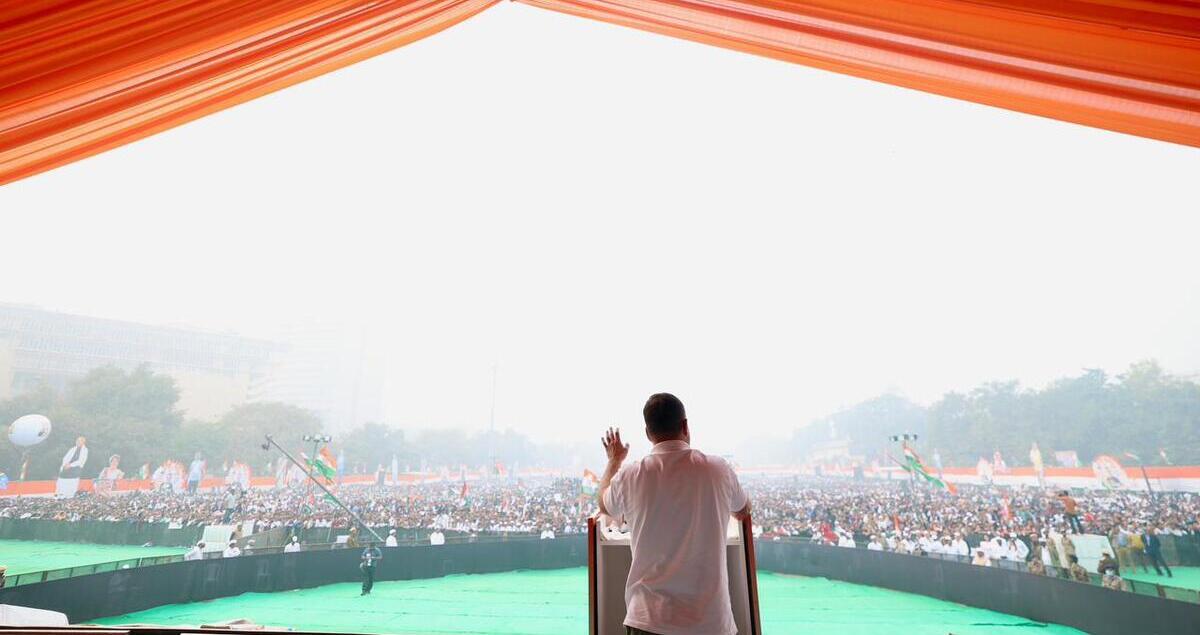
In a fiery address at Delhi’s Ramlila Maidan on December 14, Congress leader and Lok Sabha Opposition head Rahul Gandhi doubled down on accusations against the Narendra Modi-led government, labeling it a “Narendra Modi–RSS regime” and pledging allegiance to truth in a bid to oust it from power. The event, dubbed the “Vote Chor Gaddi Chhod” rally, saw Gandhi directly implicate the Election Commission of India (ECI) in electoral foul play, claiming it operates as an extension of the Bharatiya Janata Party (BJP).
Gandhi didn’t mince words, publicly calling out the Chief Election Commissioner and other commissioners by name, accusing them of acting as BJP operatives. “We align with satya (truth) to dismantle this power-hungry setup that thrives on vote chori (vote theft),” he proclaimed to the gathered crowd. This marks the latest in a series of similar charges leveled by Gandhi since 2023, encompassing issues like manipulated voter rolls, targeted additions and removals of voters, sudden special intensive revisions, and vote-buying through welfare schemes.
Yet, despite the passion, observers note that these claims echo a well-worn pattern—one filled with bold statements but lacking in substantive action against the purported machinery of widespread election manipulation. While factors like voter list irregularities or inducements might tip the scales in isolated races, they fall short of explaining the BJP’s dominant sweeps in major state and national polls involving vast voter bases.
[ 🔊 राहुल गांधी की ‘वोट चोर गद्दी छोड़’ रैली: ऑडियो विश्लेषण ]
Critics point to a more insidious culprit: the potential for large-scale tampering within India’s Electronic Voting Machine (EVM) and Voter Verifiable Paper Audit Trail (VVPAT) systems. The lack of transparency and comprehensive public audits in this setup could theoretically enable systematic fraud on a grand scale. However, Gandhi’s speech once again sidestepped elevating EVM scrutiny to the forefront of his agenda, opting instead to target ECI officials—who are often viewed as mere cogs in a broader, compromised apparatus without deep technical insight into possible EVM vulnerabilities.
This avoidance raises pointed questions about the Congress party’s strategy. Why has there been no push for a relentless, countrywide campaign to scrap EVMs entirely, revert to traditional paper ballots, and mandate full, transparent vote verification? Without such demands backed by sustained protests, attacks on the ECI come across as symbolic gestures that pose little real threat to the status quo, serving more as outlets for frustration than catalysts for change.
The November 2025 Bihar Assembly elections exemplify this recurring dynamic. With BJP-allied parties securing over 200 of 243 seats—a result foreshadowed during campaigning—Gandhi’s efforts were confined to standard rallies and tours, steering clear of direct assaults on the EVM framework. Only in the aftermath did opposition voices, including Congress, cry foul over anomalies such as eerily uniform vote tallies for BJP candidates across constituencies, patterns that skeptics argue scream of programmed interference rather than organic voting.
This post-defeat outcry, absent preemptive mass mobilization, has historically yielded no shifts in electoral practices. It perpetuates the image of a fragmented opposition that inadvertently bolsters what detractors call a “one-man rule” under Modi, where key institutions, media narratives, and even election results seem firmly under central influence.
Slogans like “Vote Chor Gaddi Chhod” may rally the faithful in the moment, but they do little to dismantle a system allegedly reliant on opaque technology, institutional loyalty, and intimidation. By participating in EVM-dependent polls without fierce opposition, parties like Congress arguably lend legitimacy to disputed outcomes. Parliamentary debates, media briefings, and sporadic gatherings have proven inadequate against a government accused of engineering victories effortlessly.
Ultimately, dismantling entrenched power structures demands more than speeches—it requires unyielding public action. Until Congress and allies launch indefinite nationwide demonstrations explicitly decrying EVMs as the heart of electoral deceit and demanding verifiable ballot systems, such rallies risk fading into irrelevance. In the meantime, the BJP’s electoral dominance persists, while opposition leaders recycle rhetoric that neither unsettles the powerful nor safeguards democratic integrity.
By Rakesh Raman, who is a national award-winning journalist and social activist. He is the founder of a humanitarian organization RMN Foundation which is working in diverse areas to help the disadvantaged and distressed people in the society.
💛 Support Independent Journalism
If you find RMN News useful, please consider supporting us.