
Modi’s Abrupt Pivot to Gen Z: A Veil Over India’s Eroding Democratic Institutions
Modi’s Abrupt Pivot to Gen Z: A Veil Over India’s Eroding Democratic Institutions
Modi’s effusive commendation of Gen Z as pivotal to national progress should be viewed as a defensive maneuver rather than genuine inclusion.
By Rakesh Raman
New Delhi | December 27, 2025
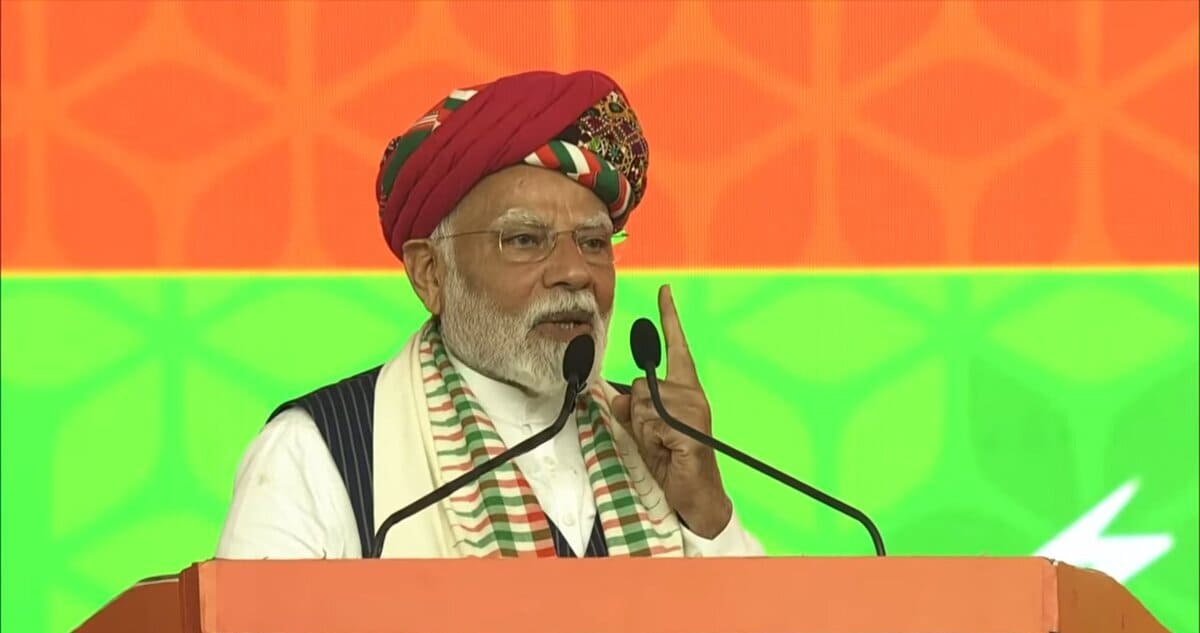
In a surprising turn on December 26, 2025, Indian Prime Minister Narendra Modi proclaimed that Generation Z would spearhead the nation’s journey toward a “Viksit Bharat,” or developed India. This unexpected embrace of the youth demographic—those born from the late 1990s to early 2010s—signals a notable evolution in Modi’s communication strategy, as he actively seeks to engage a group previously overlooked in his political narrative.
This shift comes amid persistent calls from opposition figure Rahul Gandhi, often criticized for his limited political impact, urging young Indians to confront alleged electoral fraud, the takeover of key institutions, and the suspected tampering of electronic voting machines (EVMs) by Modi’s Bharatiya Janata Party (BJP). Gandhi’s efforts have mostly been limited to public addresses, online statements, and organized demonstrations, yet Modi’s response suggests underlying concern within the ruling establishment.
The Unease Surrounding Gen Z’s Potential Influence
India’s Gen Z has traditionally shown limited political involvement, even as they grapple with soaring joblessness, deteriorating education standards, economic pressures, curtailed civil liberties, and rising communal tensions. However, the Modi administration appears rattled by recent youth-driven upheavals in nearby nations like Nepal, Bangladesh, and Sri Lanka, where young protesters have toppled long-standing corrupt regimes without relying on established political parties.
In a landscape where opposition forces have been systematically weakened and democratic safeguards dismantled, Gen Z emerges as the last wildcard that could disrupt the status quo.
[ 🔊 भारतीय लोकतंत्र और मोदी की जेन-जेड रणनीति: ऑडियो विश्लेषण ]
The Erosion of Democratic Pillars
During Modi’s tenure, the government has tightened its grip on essential democratic structures:
– The Election Commission of India (ECI) has undergone reforms that enhance executive oversight in appointing commissioners, while providing them with protections against legal challenges.
– The judiciary, including the highest court, has consistently avoided in-depth examinations of EVM integrity, discrepancies in voter registries, and overall electoral transparency.
– Legislative proceedings in Parliament have become orchestrated events, stifling opposition voices and rushing through significant bills with minimal discussion.
– The press has largely transformed into a tool for state promotion, bolstered by official funding and regulatory coercion.
With rival parties facing harassment, legal entanglements, or outright co-optation, meaningful electoral challenges have devolved into superficial gestures that fail to threaten the incumbent power.
The Persistent Issue of EVM Vulnerabilities
Allegations of EVM manipulation persist, supported by patterns of irregularities, withheld surveillance recordings, restrictions on simulated voting tests, and abrupt changes to voter lists. Experts continue to highlight risks, yet these systems remain shielded from scrutiny.
Targeted interference with EVMs allows the BJP to secure victories in crucial national and state contests, while permitting minor defeats in less strategic areas to preserve an appearance of fair competition. Under an ECI perceived as biased and with non-transparent technology in play, election results in pivotal races seem orchestrated in advance.
Decoding Modi’s Youth Engagement Strategy
Modi’s effusive commendation of Gen Z as pivotal to national progress should be viewed as a defensive maneuver rather than genuine inclusion. By integrating young people into the vision of a prosperous India, the strategy aims to:
– Mitigate growing frustration over economic hardships and social inequities,
– Redirect potential unrest toward government-endorsed ideologies,
– Avert the formation of street-level protests inspired by regional examples.
Should Gen Z be effectively sidelined through assimilation or indifference, the Modi-BJP dominance would face no viable opposition.
Toward an Electoral Facade in a Controlled System
India risks evolving into a framework where polls occur on schedule, campaigns generate fervor and division, but victories are predetermined via institutional dominance and technological obscurity. This setup resembles an authoritarian regime cloaked in parliamentary trappings, using elections merely to validate pre-existing authority.
For change to occur, India’s youth must transcend rhetoric and digital activism, demanding a return to accountable methods like paper ballots. Without this, the BJP’s selective triumphs will endure, perpetuating the illusion of democracy.
By Rakesh Raman, who is a national award-winning journalist and social activist. He is the founder of a humanitarian organization RMN Foundation which is working in diverse areas to help the disadvantaged and distressed people in the society.
💛 Support Independent Journalism
If you find RMN News useful, please consider supporting us.