
New Roadmap Targets India’s Crisis of Institutional Corruption
New Roadmap Targets India’s Crisis of Institutional Corruption
The judicial system often acts as a safe haven where significant delays allow cases to languish for years, effectively eroding the deterrent power of the law.
By RMN News Service
New Delhi | March 15, 2026
The India Corruption Research Report 2025 characterizes the nation’s current governance challenges not as simple administrative lapses but as a fundamental democratic crisis that requires urgent attention. Released by the RMN News Anti-Corruption Desk, the report highlights a dangerous ecosystem where corruption generates the resources for political power, which is then utilized to shield corrupt individuals from legal consequences. This self-reinforcing cycle of impunity necessitates a complete realignment of the governance architecture to uphold the constitutional values of transparency and the rule of law.
Research indicates that corruption has evolved from isolated occurrences into a functional norm embedded within every level of Indian governance, from local administration to national policymaking. Central to this decay is a political leadership that functions as the primary barrier to accountability by exerting control over regulatory bodies and investigative agencies.
[ Also Read: India Judicial Research Report 2025 – Decline of the Indian Judiciary ]
Furthermore, the judicial system often acts as a safe haven where significant delays allow cases to languish for years, effectively eroding the deterrent power of the law. This environment is further complicated by corporate-state collusion that distorts markets and ensures powerful entities remain shielded from scrutiny, while digital tools fail to dismantle these networks without accompanying political will. Consequently, citizens find themselves increasingly silenced by weak whistleblower protections and a shrinking space for independent media, leaving them unable to demand accountability.
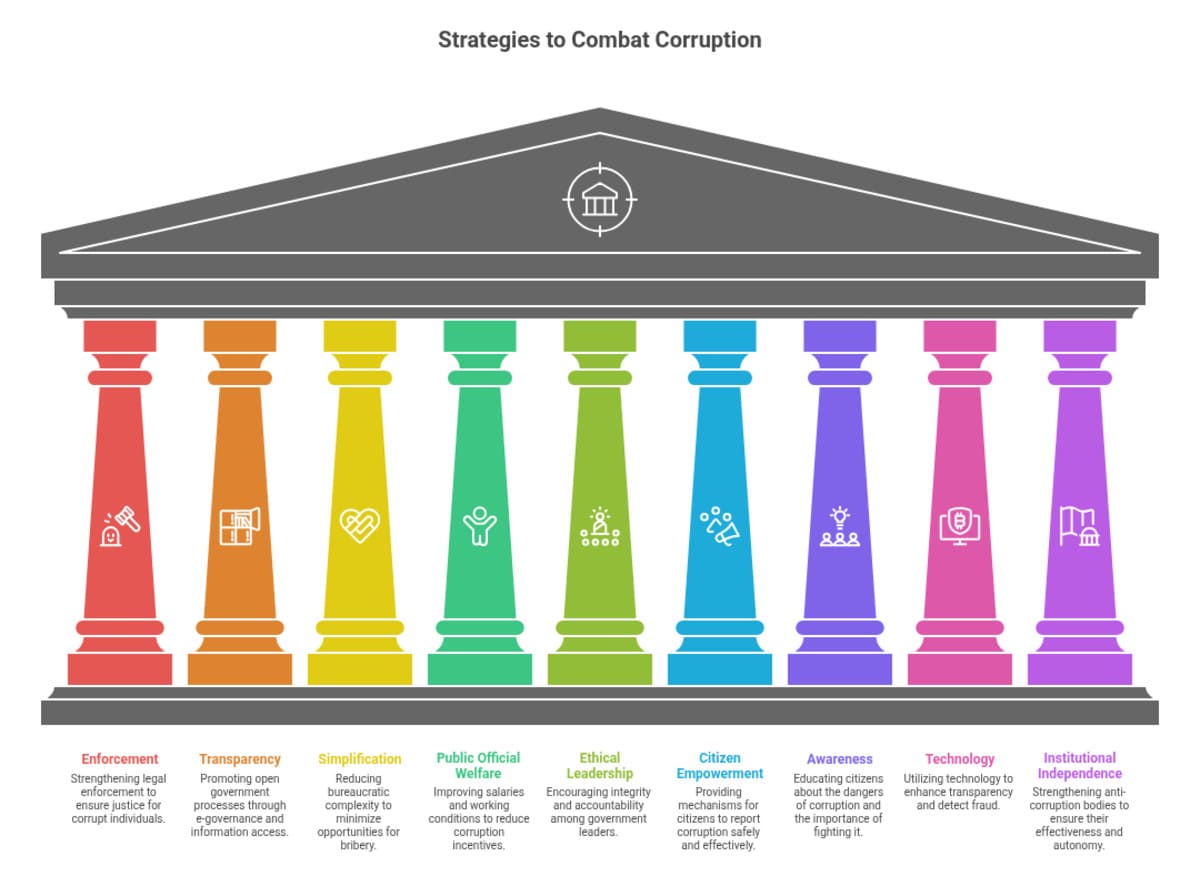
To address these systemic failures, the report proposes a comprehensive roadmap focused on restoring institutional integrity through several strategic reforms. One primary recommendation is to establish independent, broad-based appointment committees to lead premier agencies such as the CBI, ED, and the Election Commission.
To sever the link between corporate donations and political favors, the report suggests replacing opaque funding instruments with publicly accessible contribution registries and strict caps on corporate donations. Administrative accountability could be further enhanced by implementing a unified, AI-supported national complaints management system that ensures transparent, time-bound resolutions and penalties for non-responsive officials.
The roadmap also calls for a major overhaul of the legal and technological frameworks by mandating full digitalization of administrative procedures to eliminate manual processes and reduce discretionary power. The creation of specialized financial-crime courts and the full operationalization of the Whistle Blowers Protection Act are deemed essential for providing absolute anonymity and legal immunity to those exposing wrongdoing in the public interest.
Finally, the report advocates for an open data ecosystem where all government datasets are machine-readable and the deployment of AI for real-time monitoring of public procurement and financial flows to detect and predict fraud. Through these coordinated measures, the research suggests that India can begin to dismantle its architecture of systemic corruption and rebuild the public trust that has been severely eroded in state institutions.
💛 Support Independent Journalism
If you find RMN News useful, please consider supporting us.