Karnataka Pioneers Hate Speech Legislation: A Deep Dive into India’s Regulatory Landscape and the 2025 Bill
Karnataka Pioneers Hate Speech Legislation: A Deep Dive into India’s Regulatory Landscape and the 2025 Bill
As India grapples with rising polarization, this legislation highlights the urgent need for targeted reforms to safeguard vulnerable communities and uphold democratic harmony.
By Rakesh Raman
New Delhi | December 6, 2025
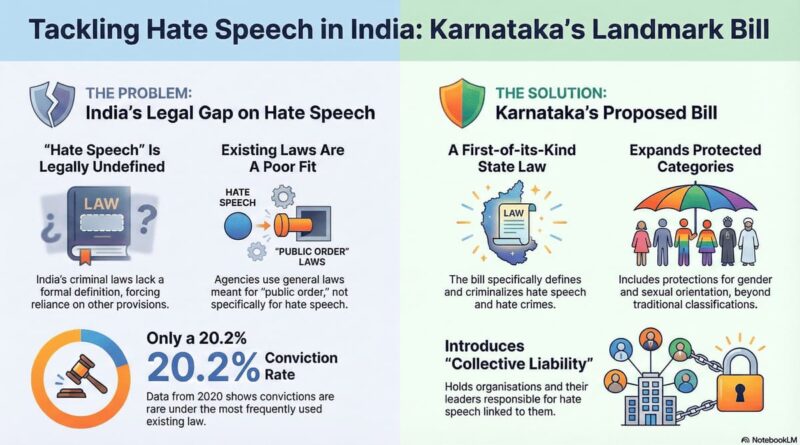
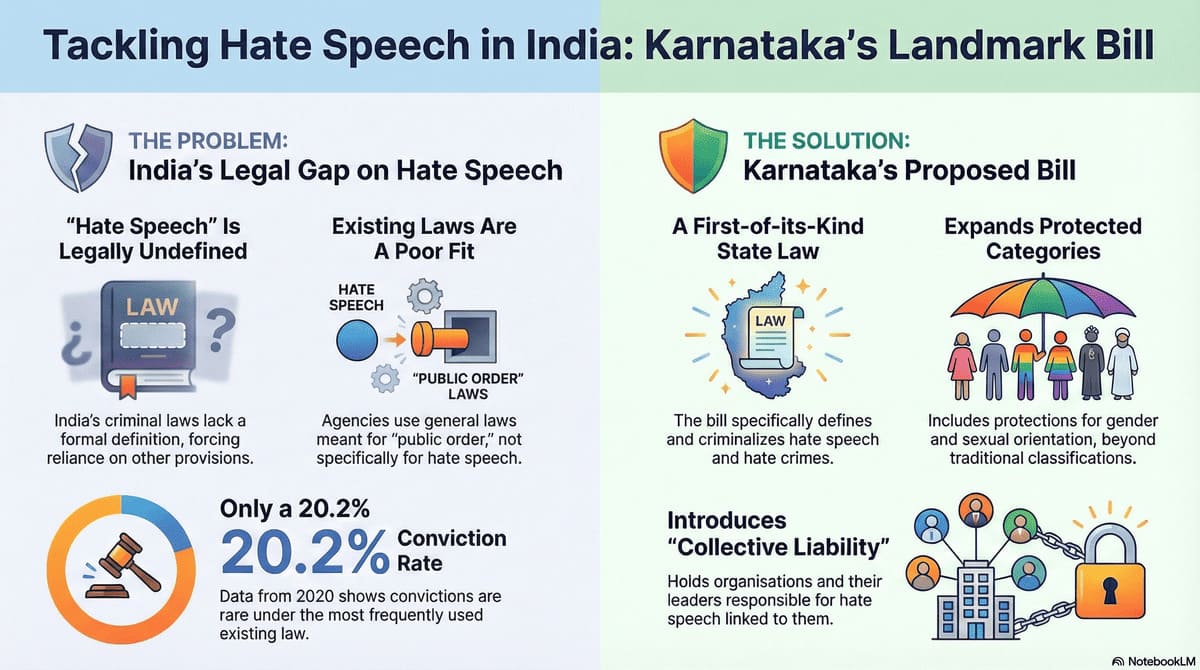
In a bold move to address a longstanding gap in India’s criminal justice system, the state of Karnataka has introduced the Hate Speech and Hate Crimes (Prevention) Bill, 2025, marking it as the first Indian state to propose dedicated laws targeting hate speech. This initiative comes amid growing concerns over communal disharmony and online vitriol, where the term “hate speech” is frequently invoked but lacks a clear definition in national criminal statutes.
Without a specialized federal law, authorities have long relied on a patchwork of provisions from the Bharatiya Nyaya Sanhita (BNS)—the modern replacement for the Indian Penal Code (IPC)—which focus more on preserving public order than explicitly punishing hate-based expressions. These measures have proven largely ineffective, evidenced by low conviction rates, such as the mere 20.2% success rate for cases under the predecessor IPC Section 153A in 2020.
The Karnataka Bill, slated for presentation in the upcoming legislative session, seeks to rectify these shortcomings by providing a comprehensive framework. As articulated by Karnataka’s Law and Parliamentary Affairs Minister HK Patil, the legislation fills a critical void, noting that no current law directly confronts hate speech. Drawing inspiration from earlier national proposals, the bill defines hate speech as any form of expression that inflicts harm or fosters discord against individuals or groups based on protected attributes.
It broadens these protections beyond traditional categories like religion, race, and caste to encompass gender, sexual orientation, place of birth, and disability. Offenders could face imprisonment ranging from two to ten years, reflecting a tougher stance on accountability.
A standout innovation is the concept of “collective liability,” which extends responsibility to leaders within organizations if hate speech is linked to their entity, ensuring that institutional complicity does not go unpunished. Additionally, the bill grants the state authority to intervene in digital spaces by blocking or removing inflammatory online content, addressing the rapid spread of hate through social media platforms.
Nationally, India’s approach to hate speech remains fragmented. Key BNS provisions include Section 196, which criminalizes efforts to incite enmity between groups on grounds such as religion, race, language, or residence, with penalties up to three years in prison. Section 299 targets malicious acts that insult religious beliefs and outrage communities, also carrying a maximum three-year term.
Meanwhile, Section 353 addresses the dissemination of false information that could provoke offenses against the state, communities, or public tranquility, again with up to three years’ imprisonment. These offenses are cognizable, allowing arrests without warrants, yet their application has been hampered by enforcement challenges. The now-defunct Section 66A of the Information Technology Act, once a tool for curbing online hate, was invalidated by the Supreme Court in 2015 for its overly broad and vague language, further complicating digital regulation.
The Supreme Court has played a pivotal role in shaping the discourse on hate speech, though its positions have evolved over time. In October 2022, a bench led by Justices K.M. Joseph and Hrishikesh Roy highlighted a prevailing “climate of hate” in the nation and mandated police in Delhi, Uttar Pradesh, and Uttarakhand to initiate suo motu actions against such incidents without awaiting complaints, with threats of contempt for non-compliance.
This directive was broadened nationwide in April 2023. However, by August 2023, Justices Sanjiv Khanna and SVN Bhatti recognized the difficulties in defining and enforcing hate speech laws, emphasizing implementation hurdles over judicial oversight. More recently, on November 25, 2025, Justices Vikram Nath and Sandeep Mehta declined to micromanage every case, asserting that local police and high courts are equipped to handle them under existing guidelines from the 2018 Tehseen Poonawalla judgment, which requires nodal officers to combat mob violence.
Despite these judicial interventions, national legislative progress has stalled. In 2017, the Law Commission’s 267th Report advocated for amendments to the penal code, suggesting new sections: 153C to penalize incitement to hatred and 505A to address provocations leading to violence. These recommendations went unheeded.
Similarly, a 2022 Private Member’s Bill in the Rajya Sabha, introduced by Bharat Rashtra Samithi MP KR Suresh Reddy, aimed to replace outdated IPC sections with precise definitions of hate speech—as expressions that incite discrimination, hatred, or violence—and hate crimes motivated by prejudice against attributes like religion, caste, gender identity, or sexual orientation. The bill ultimately failed to pass, underscoring the political inertia at the federal level.
Karnataka’s pioneering bill could serve as a blueprint for other states, potentially catalyzing a nationwide shift toward more robust protections against hate. As India grapples with rising polarization, this legislation highlights the urgent need for targeted reforms to safeguard vulnerable communities and uphold democratic harmony.
By Rakesh Raman, who is a national award-winning journalist and social activist. He is the founder of a humanitarian organization RMN Foundation which is working in diverse areas to help the disadvantaged and distressed people in the society.
Rakesh Raman | LinkedIn | Facebook | Twitter (X)
💛 Support Independent Journalism
If you find RMN News useful, please consider supporting us.