Official Metrics vs. Public Reality: Decoding the Mann Ki Baat Controversy
Official Metrics vs. Public Reality: Decoding the Mann Ki Baat Controversy
The overarching strategy is detailed in the “Smokescreen 2026” research project, which frames Mann Ki Baat as a pillar of institutional capture.
By Rakesh Raman
New Delhi | March 29, 2026
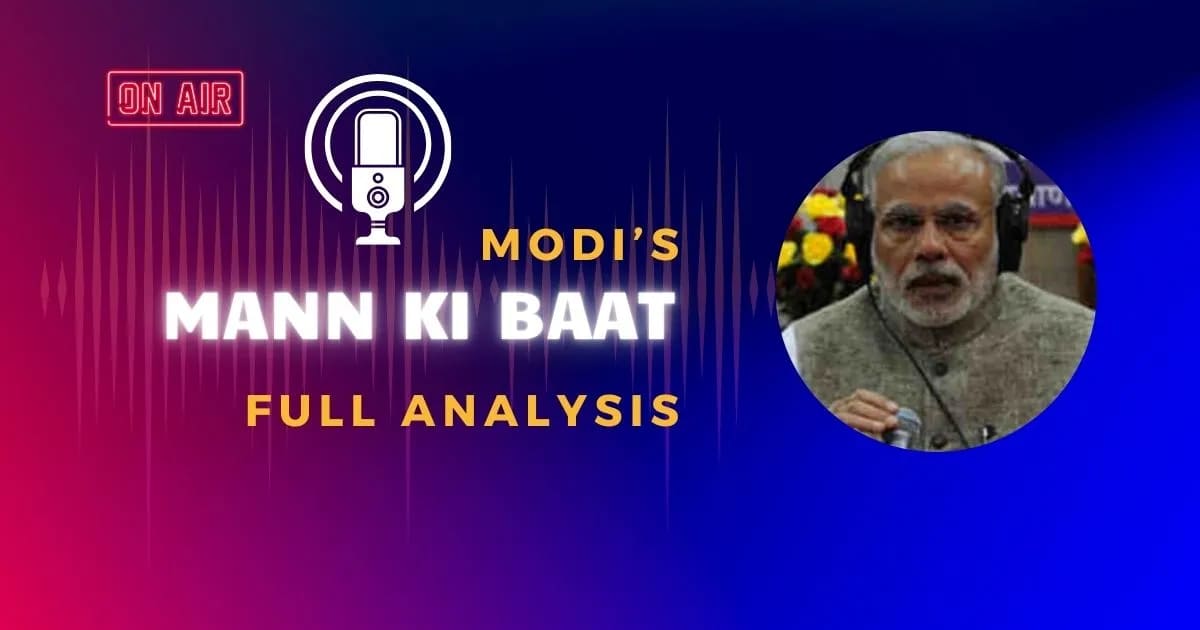
A deepening rift has emerged between official government narratives and independent assessments regarding the reach and purpose of Prime Minister Narendra Modi’s monthly radio program, Mann Ki Baat. While the state promotes the broadcast as a monumental success in national engagement, critics argue it serves as a calculated smokescreen to bypass political accountability and mask systemic governance failures.
The Massive Data Disparity
The central point of contention lies in the program’s listenership metrics. A study commissioned by Prasar Bharati and conducted by IIM Rohtak claims that Mann Ki Baat has reached 1 billion people, with 23 crore (230 million) identified as regular listeners. However, independent data from the 2022 CSDS-Lokniti study paints a starkly different picture, suggesting that regular engagement is as low as 5%. This “data chasm” suggests a manufactured reality designed to create a veneer of democratic legitimacy for a leader who largely avoids traditional, unscripted press forums.
Orchestrated Participation and the “Monologue” Critique
Since its inception in 2014, the 30-minute broadcast has been criticized as an outdated one-way tool. Analysts suggest this format is strategically vital for a leader who prefers scripted environments over interactive governance. Furthermore, reports indicate a culture of “forced” listenership, where BJP workers are allegedly compelled to organize and photograph staged group sessions to simulate widespread popularity on social media. Critics have labeled this pervasive promotion as “noise pollution,” arguing it weaponizes state machinery to saturate the media with a singular, unchallengeable voice.
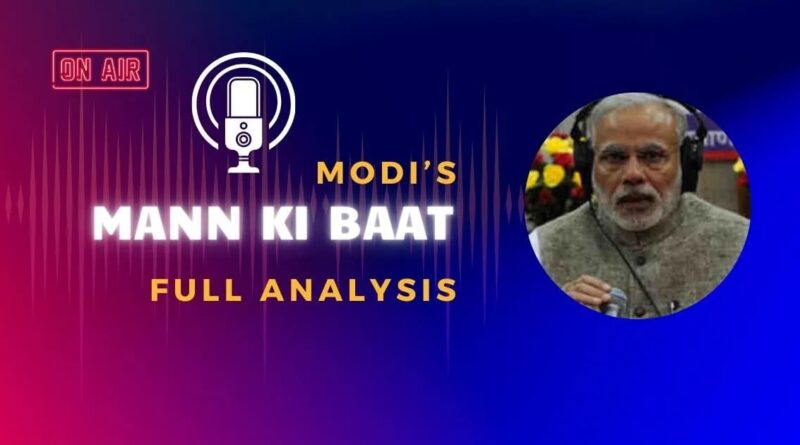
[ भाइयो और बहनो क्या सुनेगे आप मोदी के मन की बात? ऑडियो विश्लेषण ]
[ Global Capital Flees India as AI Infrastructure Deficit and Governance Failures Mount ]
Intellectual Transparency and Avoidance of Scrutiny
The program’s scripted nature has fueled campaigns like the Aam Aadmi Party’s “Show Your Degree,” which questions the Prime Minister’s academic background and intellectual transparency. This narrative of inadequacy is reinforced by the fact that in over twelve years, PM Modi has held only one press conference, during which he reportedly sat silently while aides answered all questions. By retreating into the vacuum of Mann Ki Baat, the leadership avoids being questioned on complex, modern technical subjects.
A Smokescreen for National Scandals
Beyond its format, the program is viewed as a tool for narrative capture, designed to divert attention from pressing national issues. Critics argue that the monologue effectively insulates the administration from being held accountable for several high-profile scandals, including:
- National Sovereignty: Continued silence regarding Chinese incursions on Indian territory.
- The “Modi-Adani” Collusion: Allegations involving the Adani Group’s projects.
- Systemic Corruption: A refusal to allow transparent investigations into the PM-CARES Fund, the Rafale deal, and the Sahara-Birla payoff allegations.
Democratic Backsliding and “Smokescreen 2026”
The overarching strategy is detailed in the “Smokescreen 2026” research project, which frames Mann Ki Baat as a pillar of institutional capture. The project suggests that such programs are intended to hide “electoral opacity” and alleged “election thefts” while maintaining an illusion of democracy. As the gap between manufactured monologues and genuine accountability widens, analysts warn that the future of Indian discourse is being redefined by the strategic opacity of the state rather than the will of the people.
By Rakesh Raman, who is a national award-winning journalist and social activist. He is the founder of a humanitarian organization RMN Foundation which is working in diverse areas to help the disadvantaged and distressed people in the society.
💛 Support Independent Journalism
If you find RMN News useful, please consider supporting us.