
Global Strategic Landscape: An Analysis of Emerging Tensions and Transformations (January 2026)
Global Strategic Landscape: An Analysis of Emerging Tensions and Transformations (January 2026)
The convergence of resurgent nationalism, internal democratic decay, and disruptive technology presents a complex and challenging environment for leaders across all sectors.
By Rakesh Raman
New Delhi | January 16, 2026
1.0 Introduction: A World in Flux
The global landscape is fracturing under a potent confluence of stressors. A new wave of geopolitical assertiveness from major powers is creating fresh friction points, while severe internal strains are testing the democratic foundations of key nations. This political volatility is mirrored by widespread social unrest, as citizen movements challenge established authority with increasing intensity.
Simultaneously, the rapid and pervasive integration of Artificial Intelligence is acting as a powerful disruptor, fundamentally reshaping economies, industries, and societies. This report will dissect these interconnected trends—geopolitical maneuvering, democratic erosion, social upheaval, and technological transformation—to provide a clear and actionable analysis for strategic decision-making. The analysis will begin by examining the significant shifts in U.S. foreign policy and their global repercussions.
2.0 Resurgent U.S. Assertiveness and Geopolitical Flashpoints
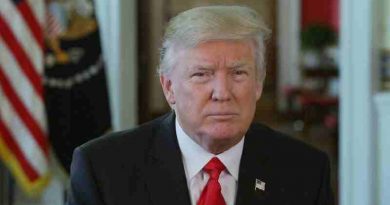
Understanding the current posture of U.S. foreign policy is critical to navigating the global strategic environment. The unilateral and transactional approach of the U.S. President is actively creating new geopolitical flashpoints and exerting significant economic pressure on international partners, forcing nations to reassess long-standing alliances and economic strategies.
Transactional Foreign Policy in Action
A series of recent declarations and threats by U.S. President Donald Trump exemplifies a strategy of coercive transactionalism that injects a new layer of unpredictability into international relations.
- Venezuela Intervention: Following a high-stakes military operation that resulted in the capture of leader Nicolás Maduro, President Trump unilaterally declared himself the “Acting President of Venezuela.” This direct intervention in the sovereign leadership of another nation shatters established diplomatic norms, posing an immediate risk to regional stability and setting a contentious precedent for U.S. foreign policy.
- Greenland Ultimatum: President Trump has demanded that the U.S. secure ownership of Greenland, explicitly framing the territorial assertion as a necessary counter to the influence of Moscow and Beijing. The strategic ramification of this ultimatum extends beyond a bilateral dispute; it threatens NATO cohesion and destabilizes the delicate governance of the strategically vital Arctic region.
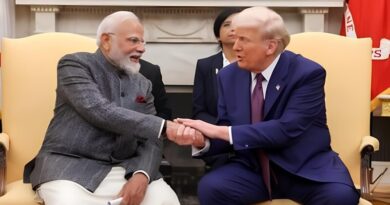
- Economic Pressure on India: President Trump has threatened to further increase trade duties on India if it does not provide assistance with the “Russian oil issue.” The direct linkage of economic penalties to the Russia-Ukraine war has profound strategic implications, forcing a key Indo-Pacific partner into an untenable choice between its economic relationship with the U.S. and its strategic energy needs.
This pattern of exerting external pressure on allies and adversaries alike creates a volatile environment, which is compounded by the significant internal challenges facing other major global powers, such as India.
3.0 Internal Pressures on Indian Democracy and Governance
While facing external pressures from key partners like the United States, India is concurrently grappling with significant internal challenges that test the resilience of its democratic institutions. These are not isolated issues but interconnected symptoms of a broader democratic erosion, with decay in one institution enabling the decay of others.
3.1 Judicial Integrity Under Scrutiny
Confidence in India’s judicial system is being eroded by accusations of politicization and a lack of transparency. The recently released “India Judicial Research Report 2025“ delivered a sharp critique of the collegium appointment system, describing it as a “self-appointing oligarchy” that operates under a “myth of independence.” This systemic concern is echoed in specific incidents, such as a police complaint at Jawaharlal Nehru University (JNU), which is viewed as symptomatic of a broader “judicial decline” where court judgments are perceived as being influenced by political pressures.
3.2 Political Polarization and State Power
This weakened judiciary enables the state to weaponize institutions and cultural narratives for political ends, employing a dual strategy of narrative manipulation and the simultaneous suppression of dissent.
- Cinema as a “Smokescreen”: The ruling regime under Prime Minister Narendra Modi stands accused of using nationalist cinema, often centered on military conflicts with Pakistan, to create a “smokescreen.” This strategy allegedly serves to divert public attention from the “systemic erosion of democracy.”
- Suppression of Dissent: This narrative control is coupled with legal action against opposition voices. In a high-profile case, the Supreme Court of India denied bail to activists Umar Khalid and Sharjeel Imam in connection with the 2020 Delhi riots, ruling that they stood on a “higher footing in the hierarchy of participation.” This decision fuels the perception of a judiciary enabling state suppression.
- Journalistic Pressure: Despite the threat of imprisonment, the journalist community remains resolute, asserting a commitment to continue raising public issues and highlighting a growing tension between the Punjab government and the free press.
3.3 Systemic Corruption and Regulatory Failure
A Nexus of Corruption in Delhi’s Housing Societies
Evidence points to deep-seated corruption within Delhi’s cooperative housing societies, revealing a systemic failure of regulatory oversight. Management Committees are reported to operate “hand in glove” with corrupt officials from the Registrar of Cooperative Societies (RCS) and the Delhi Development Authority (DDA) to conceal criminal activities. An estimated 95% non-compliance rate with financial transparency mandates underscores that this is not an isolated problem but a collapse of regulatory and justice mechanisms.
3.4 Government Standoff with Big Tech
The contentious relationship between the Indian government and global technology platforms reached a pivotal moment in the recent standoff with social media giant X (formerly Twitter). The conflict was resolved after X reportedly admitted to “mistakes” and pledged to align its operations with Indian law. This outcome represents a significant victory for state authority in the ongoing global dynamic between nation-states and Big Tech.
These domestic tensions in India are part of a broader pattern of citizen-led challenges to authority visible across the globe.
4.0 Global Social Unrest and Human Rights Concerns: The Case of Iran
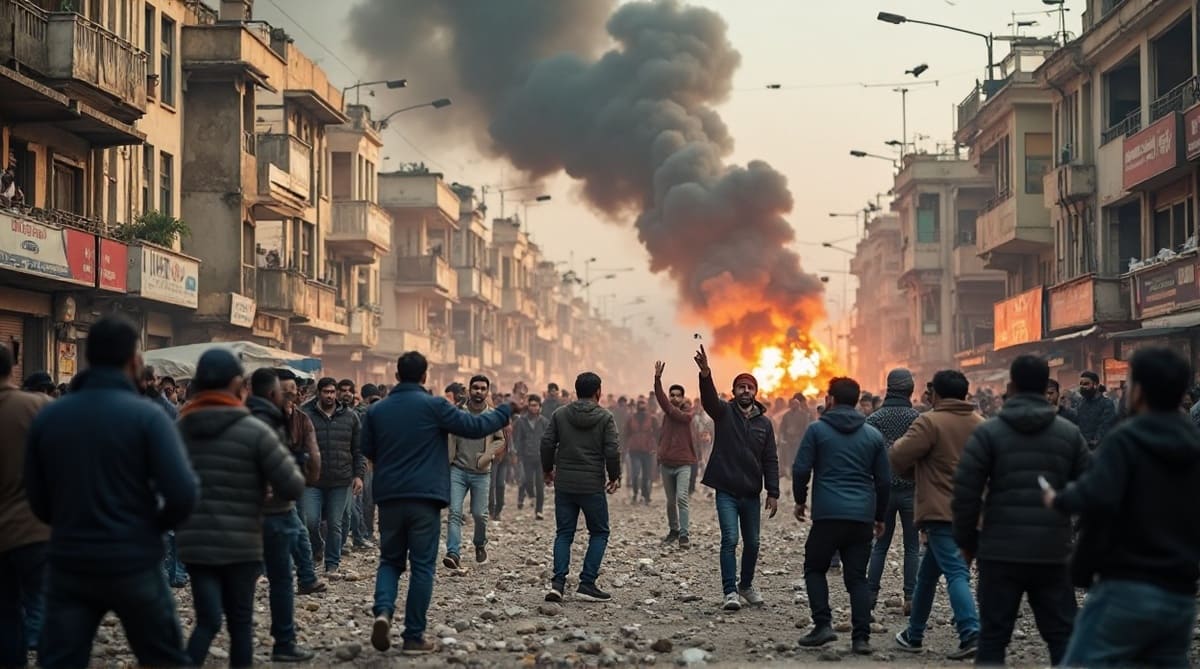
The rise of citizen-led protest movements is a strategically significant global trend. The ongoing uprising in Iran serves as a powerful case study, illustrating a wider phenomenon where citizens in authoritarian or underdeveloped economies are increasingly turning to violent protest to demand fundamental change. This unrest is not merely a domestic issue but a matter of international human rights concern.
The situation has drawn alarm from the international community for its violence. The UN High Commissioner for Human Rights, Volker Türk, has affirmed that Iranians possess a “fundamental right to demonstrate peacefully.” Crucially, his message highlights the root causes of the unrest, stating that citizen grievances regarding fairness, equality, and justice “must be addressed rather than suppressed.”
While social and political spheres are marked by such profound unrest, the technological sphere is simultaneously undergoing its own revolution, driven by the transformative power of Artificial Intelligence.
5.0 The Dual-Edged Sword of Artificial Intelligence
For strategic leaders, understanding the multifaceted impact of Artificial Intelligence is a critical imperative. AI is rapidly emerging as a powerful force for both unprecedented innovation and systemic risk, creating a dual reality that requires careful navigation. It is reshaping entire industries, empowering new forms of entrepreneurship, and introducing novel vulnerabilities into our digital ecosystems.
5.1 AI as a Catalyst for Positive Change and Entrepreneurship
Across the globe, initiatives are harnessing AI for constructive and empowering purposes, aiming to foster economic growth and address pressing social challenges.
- Humanitarian and Social Goals: Events like the “AI for Good Film Festival” and the “Global AI Impact Summit” are dedicated to ensuring that AI serves as an enabling technology that supports the development of humanity as a whole.
- Economic Empowerment: A report from UN Trade and Development confirms that AI is transforming how entrepreneurs in developing countries manage and scale their businesses. This trend is being recognized by the private sector, with programs like Zoom’s “Solopreneur 50” list created to honor “businesses of one” that leverage AI to achieve significant scale.
5.2 AI’s Transformation of Creative Industries
The entertainment industry is a key arena where different strategic approaches to AI are playing out. Google is pursuing a collaborative model, positioning its AI filmmaking tools not as a replacement for human creativity but as a “dynamic new cinematic sandbox” for directors. In contrast, projects like Robojit and the Sand Planet demonstrate a more disruptive potential, utilizing a proprietary AI-first pipeline to develop high-fidelity intellectual property before seeking major investment, aiming to upend traditional Hollywood formulas.
5.3 Systemic Risks: “Digital Decay” and AI Failures
The cautionary side of AI adoption was brought into sharp focus by the recent “Grok scandal.” This event is not being viewed as an isolated failure of a single tool but as a symptom of a much deeper problem: a systemic decline in a platform’s overall health, a phenomenon now being termed “digital decay.” This highlights a new category of systemic risk for enterprises and states built on third-party digital infrastructure, where platform integrity can no longer be assumed.
The dual nature of AI—a force for both progress and peril—is a defining characteristic of our time, feeding into the broader landscape of global risk and opportunity.
6.0 Conclusion: Synthesis of Key Strategic Risks and Trends
This analysis reveals a global landscape defined by friction, fragmentation, and rapid transformation. The convergence of resurgent nationalism, internal democratic decay, and disruptive technology presents a complex and challenging environment for leaders across all sectors. To navigate this terrain effectively, decision-makers must focus on the following strategic imperatives.
- Managing Heightened Geopolitical Volatility: The shift towards assertive, unilateral foreign policy by major powers, exemplified by the United States, combined with simmering international conflicts, signals a sustained period of increased global instability. Strategic planning must now account for a higher baseline of unpredictability and alliance fragility.
- The Erosion of Institutional Trust as a Systemic Threat: The internal decay of democratic and regulatory bodies in key states like India is not a localized issue; it is a systemic global risk that weakens the international order and creates volatility hotspots. Monitoring the institutional health of strategic partners is now as critical as tracking their military capabilities.
- Harnessing the Ubiquity of Technological Disruption: The rapid integration of Artificial Intelligence is a defining trend of this era. While it creates immense opportunities, it also introduces novel systemic risks, such as “digital decay,” that require vigilant, forward-looking strategic management. Leaders must develop frameworks to both foster AI innovation and mitigate its inherent vulnerabilities.
By Rakesh Raman, who is a national award-winning journalist and social activist. He is the founder of a humanitarian organization RMN Foundation which is working in diverse areas to help the disadvantaged and distressed people in the society.
💛 Support Independent Journalism
If you find RMN News useful, please consider supporting us.