
Supreme Court Bans NCERT Class 8 Textbook Over Judiciary Corruption Chapter
Supreme Court Bans NCERT Class 8 Textbook Over Judiciary Corruption Chapter
The development has sparked fresh debate on the boundaries of educational content, freedom of expression, and the judiciary’s role in regulating material about itself.
By RMN News Service
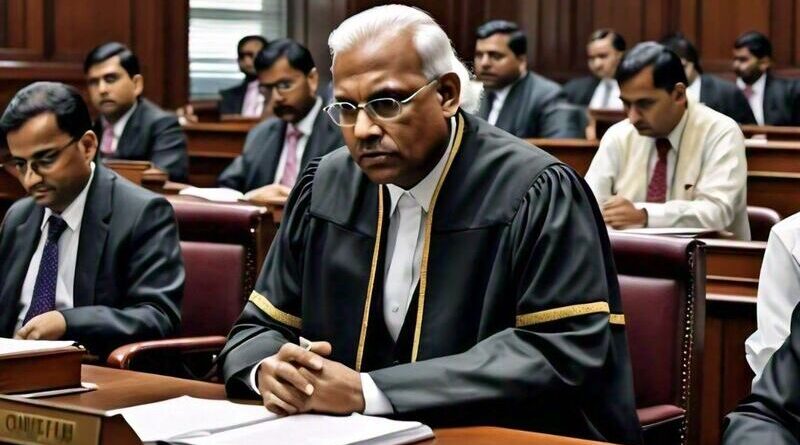
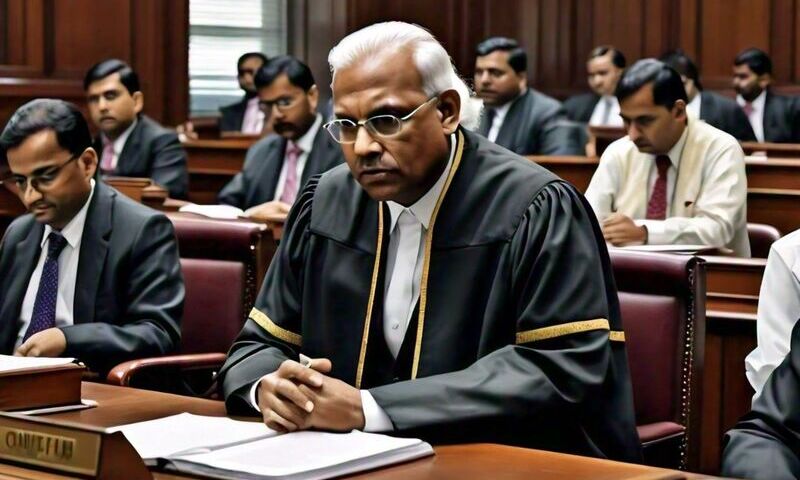
New Delhi, February 26, 2026 — In a sweeping order issued today, the Supreme Court of India imposed a complete ban on the reprinting, distribution, and digital circulation of a newly released Class 8 Social Science textbook, citing a chapter that discusses corruption and backlogs in the judiciary as evidence of a “deep-rooted conspiracy” against the institution.
A three-judge bench headed by Chief Justice of India Surya Kant took suo motu cognizance of the matter and directed the immediate seizure of all physical and digital copies of the book “Exploring Society: India and Beyond, Vol II,” which was officially released by the National Council of Educational Research and Training (NCERT) on February 24, 2026.
The offending content appears in Chapter 4, titled “The Role of the Judiciary in Our Society.” The chapter reportedly highlights massive case pendency — nearly 50 million cases according to the India Judicial Research Report 2025 — and alleges corruption at various levels as major impediments to the delivery of justice.
During the hearing, CJI Surya Kant remarked, “It is fundamentally wrong to expose students to biased misconceptions at this tender age.”
NCERT immediately issued an unconditional apology, describing the inclusion of the material as an “unintentional error of judgment.” Solicitor General Tushar Mehta reportedly informed the court that the individuals responsible for preparing the chapter would be permanently barred from any future work with government ministries or bodies.
The council has confirmed that all distribution has been halted and that the chapter will be rewritten in consultation with “appropriate authorities” ahead of the 2026-27 academic session. Compliance reports have been sought within two weeks.
The ruling comes at a time of heightened public and media scrutiny over judicial accountability. Justice Surya Kant’s own elevation to the post of Chief Justice in late 2025 faced formal appeals seeking greater transparency regarding past ethical concerns and corruption allegations, though the government ultimately confirmed his appointment.
The development has sparked fresh debate on the boundaries of educational content, freedom of expression, and the judiciary’s role in regulating material about itself.
💛 Support Independent Journalism
If you find RMN News useful, please consider supporting us.